Introduction
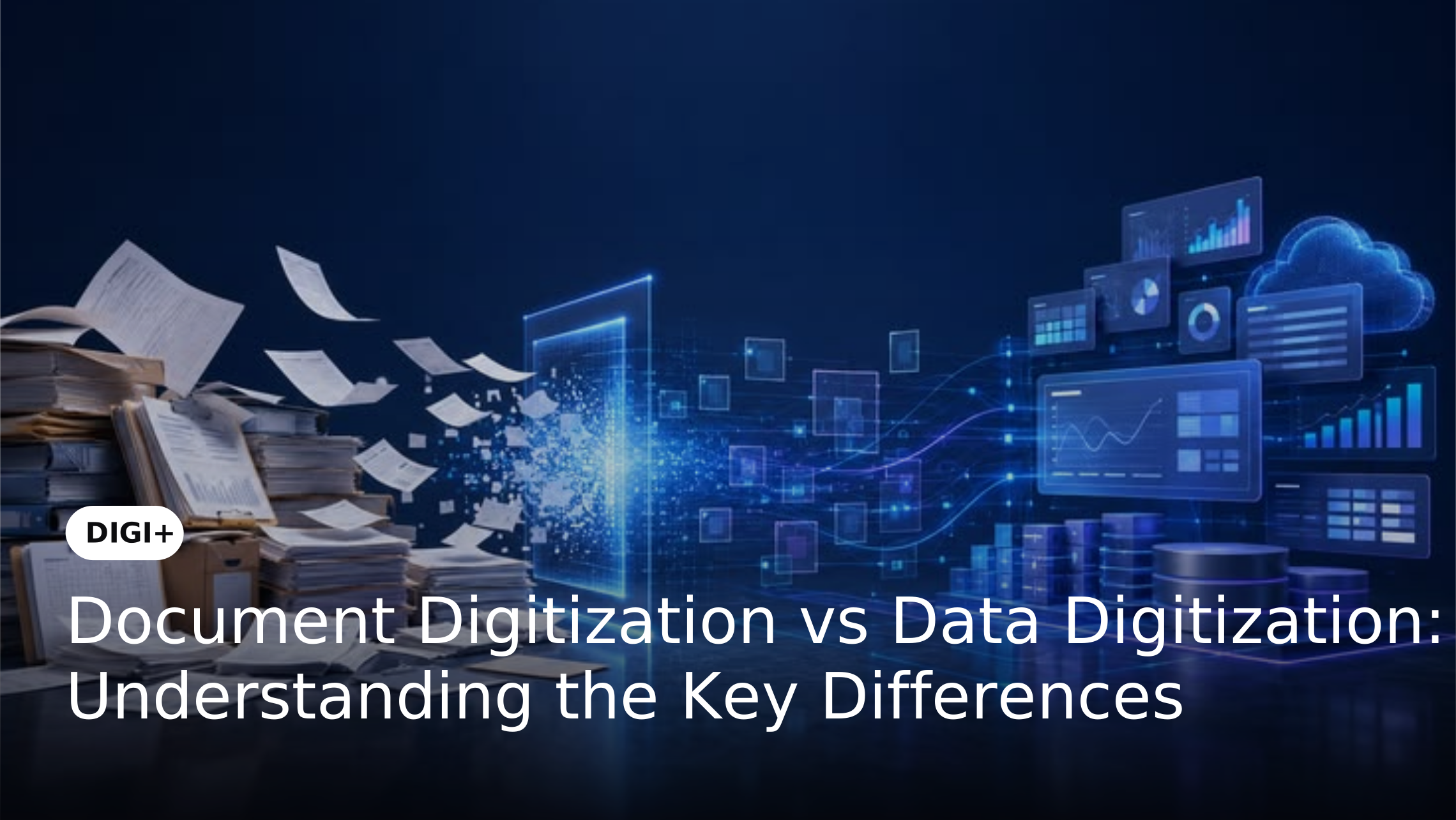
Businesses often use the terms document digitization and data digitization interchangeably. Although both involve converting information into digital formats, they address different stages of information processing. Document digitization focuses primarily on converting physical or analog documents into digital files, while data digitization focuses on transforming information into structured, usable data that can be searched, analyzed, integrated and processed by business systems.
Understanding this distinction is important when planning an enterprise digitization initiative. Scanning a paper invoice into a PDF, for example, creates a digital document. Extracting the invoice number, vendor name, date, tax amount and total into structured fields creates usable digital data. The two processes can work together, but their objectives, technologies and outputs are different.
What Is Document Digitization?
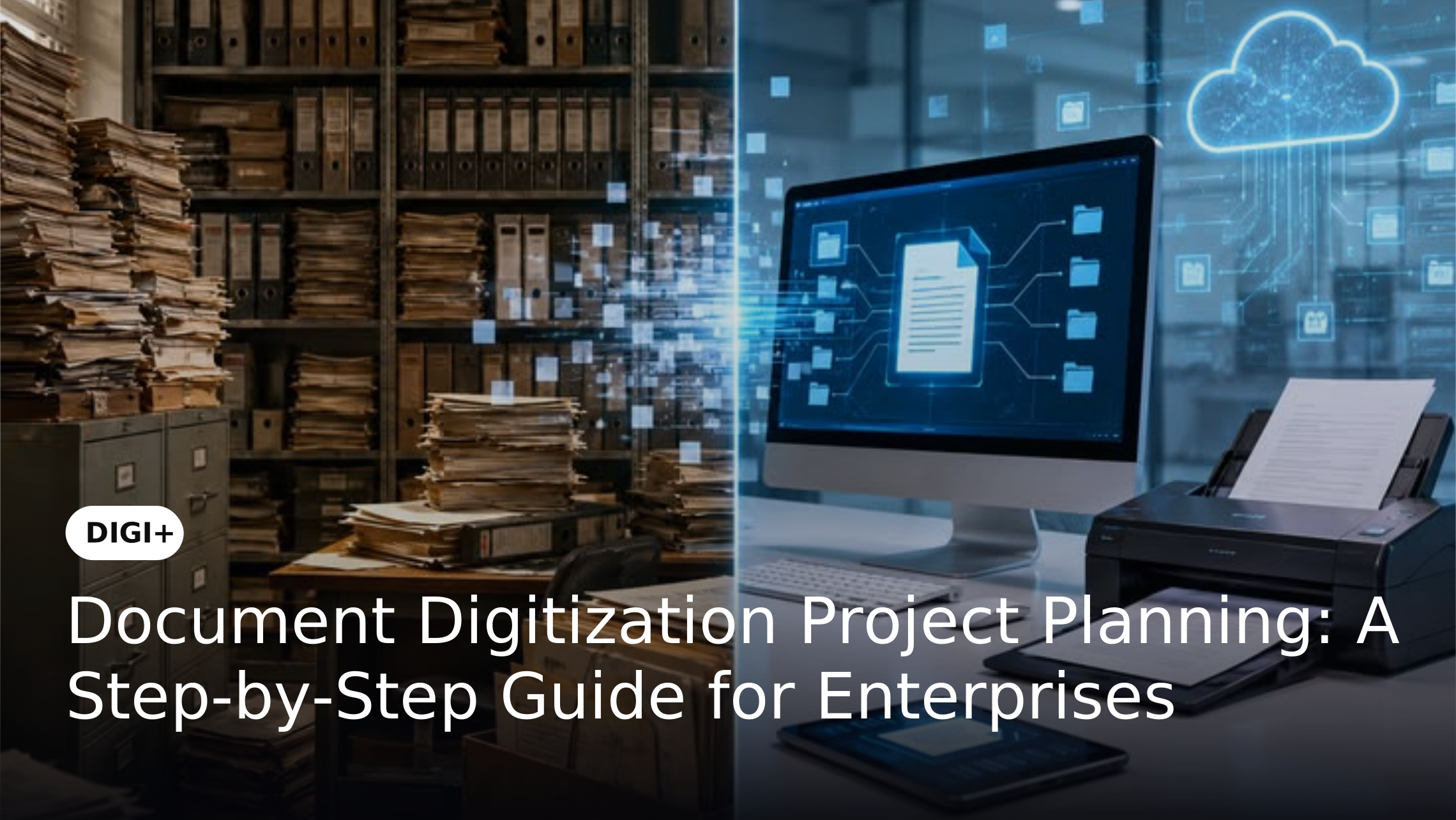
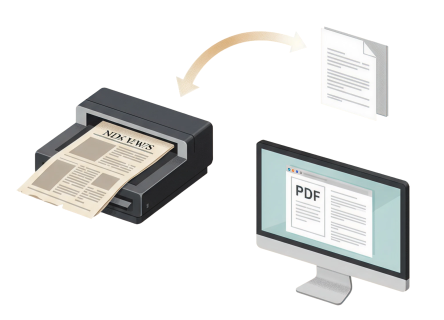
Document digitization is the process of converting physical or analog documents into digital files. It typically involves scanning paper records, capturing images and applying technologies such as Optical Character Recognition (OCR) when searchable text is required. A digitized document can preserve much of the original document's visual structure while making it easier to store, retrieve and share electronically.
Common examples include converting paper contracts into PDFs, scanning historical records, digitizing employee files or converting paper invoices into searchable digital documents. OCR can go beyond creating a simple image of a document. It can extract printed or handwritten text from documents and images, making that content searchable and available for indexing.
What Is Data Digitization?
Data digitization involves converting information from physical, analog or unstructured sources into structured digital data that can be processed by applications, databases and analytical systems. For example, consider a paper customer application containing a name, address, phone number, account number and date of birth. Scanning the application creates a digital document.
Data digitization goes further by extracting those individual values and organizing them into defined fields that can be stored and processed electronically. Structured data follows a defined format that makes it easier for business applications and analytical tools to query and process information.
Document Digitization vs Data Digitization
The simplest way to understand the difference is to consider what the process produces. Document digitization primarily produces a digital representation of a document. Data digitization produces structured information derived from that document or another physical or unstructured source.
For example:
This distinction becomes particularly important when organizations want to move beyond digital storage toward automation, analytics or system integration.
Key Differences Between Document and Data Digitization
Purpose
The primary purpose of document digitization is to convert physical documents into accessible digital formats.
Data digitization focuses on converting information into structured and machine-readable data that can support business processes, reporting, analysis and system integration.
Output
Document digitization generally produces digital files such as PDFs, TIFFs, JPEGs or other electronic document formats.
Data digitization produces structured outputs such as database records, spreadsheets, JSON, XML or defined data fields depending on the target system.
Processing
Document digitization may involve document preparation, scanning, image enhancement, OCR, quality inspection and file creation.
Data digitization adds another layer of processing. Information may need to be classified, extracted, validated, mapped to predefined fields and transformed into a format that downstream systems can consume. Modern document-processing technologies can identify key-value pairs, tables and other document structures rather than simply extracting plain text.
Technology Requirements
Document digitization commonly relies on:
Data digitization can use these technologies as inputs but often requires additional capabilities such as:
For structured or semi-structured documents such as invoices and forms, document-processing models can identify field and table values. For unstructured documents such as contracts and correspondence, more advanced extraction approaches can identify relevant information within free-form content.
How Document Digitization Supports Data Digitization
Document digitization and data digitization should not necessarily be viewed as competing approaches. In many enterprise projects, they form part of the same information-conversion process. A physical document can first be scanned into a digital format. OCR can then convert the visible text into machine-readable content. Classification can determine what type of document it is while extraction identifies the specific information the business needs. Validation and structuring can then prepare that information for storage, analytics or downstream applications.
For example, an enterprise could digitize thousands of paper invoices. The first stage creates digital copies of those invoices. The next stage can extract supplier names, invoice numbers, dates, purchase order numbers, line items and amounts into structured fields. Technologies such as document processing and AI-based extraction can support this transition from unstructured documents to structured information.
When Should Businesses Use Document Digitization?
Document digitization is appropriate when the primary requirement is to convert physical records into digital documents.
Typical use cases include:
The focus is generally on making documents digitally accessible while retaining their original content and context.
When Should Businesses Use Data Digitization?
Data digitization becomes more relevant when an organization needs to extract information from documents and use that information independently of the original file.
Common use cases include:
The objective is not simply to store the document but to make the information within it usable by digital systems.
Can Document and Data Digitization Be Used Together?
Yes. For many enterprise projects, using both approaches creates a more complete digitization workflow. Consider a financial institution digitizing a large archive of loan documents. Document digitization can create secure digital copies of the original applications, agreements and supporting records. Data digitization can then extract important information such as customer identifiers, loan amounts, dates, account information and document classifications.
This creates two useful outputs: the original digital document for reference and evidence and the structured data required for search, analysis, reporting or downstream processing. The combination can therefore be particularly useful when organizations need both document preservation and information extraction.
How to Choose Between Document Digitization and Data Digitization
The decision should start with the intended business outcome rather than the technology. If the primary objective is to convert paper records into accessible electronic files, document digitization may be sufficient. If the organization needs to extract individual fields, populate databases, support analytics or feed information into business applications, data digitization becomes more important.
For large-scale projects, the two approaches can also be combined. An organization may preserve the complete digital document while extracting selected information into structured fields. This approach provides both the original source record and usable data for downstream applications.
The Role of OCR, Extraction and AI in Digitization
OCR is an important technology in both document and data digitization, but its role can differ. In document digitization, OCR can make scanned documents searchable by converting text contained in images into machine-readable text.
In data digitization, OCR can form the first stage of a broader extraction process. Additional document-processing capabilities can identify fields, tables, entities and relationships and convert them into structured outputs. Modern document intelligence platforms use OCR alongside AI and machine learning to extract information from forms, invoices, contracts and other document types.
This distinction matters because OCR alone does not automatically mean that an organization has structured data. Extracting text is different from identifying what that text represents and mapping it to the appropriate business fields.
How DIGI+ Fits Into Document and Data Digitization
Enterprise digitization projects often require more than simply scanning paper documents. The required approach depends on the condition and format of the source records, the information that needs to be captured and how the resulting digital assets will be used.
DIGI+ can support document digitization initiatives involving document scanning, OCR, classification, extraction and indexing. This allows organizations to move from physical records toward digital documents and, where required, structured information that can support broader enterprise processes.
Conclusion
Document digitization and data digitization are closely connected but serve different purposes. Document digitization converts physical or analog records into digital documents, while data digitization focuses on extracting and structuring information so it can be processed, analyzed and integrated with digital systems.
For enterprises planning a digitization project, the key question is therefore not simply whether documents need to become digital. It is what the organization needs to do with the information after it becomes digital. If the goal is digital preservation and accessibility, document digitization may meet the requirement. If the goal is structured information for analytics, automation or system integration, data digitization may be the necessary next step. In many large-scale initiatives, combining both provides the most complete path from physical records to usable digital information.