Introduction
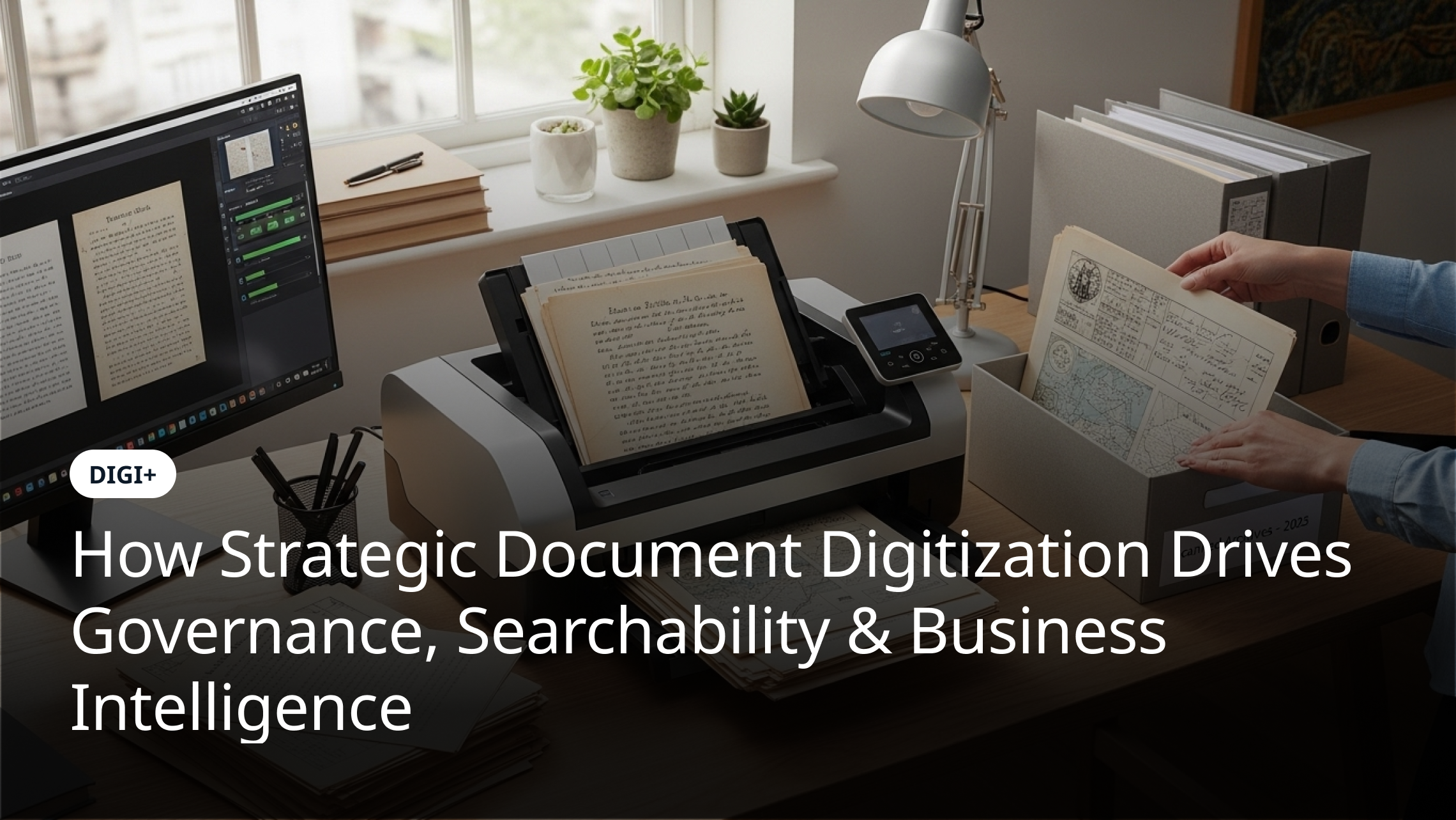
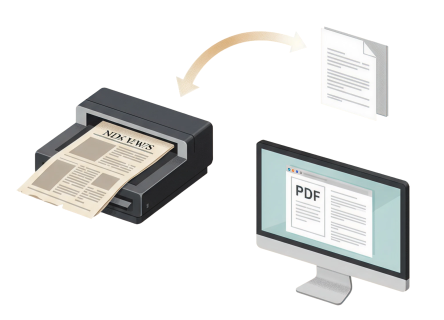
For many enterprises, digitization begins with scanning. Boxes of files are converted into PDFs. Cabinets become folders. Paper becomes image files. And leadership believes transformation has happened. But scanning is not strategy.
Strategic document digitization goes beyond conversion. It structures, indexes, validates and connects documents to business processes. It transforms static records into searchable, governed and intelligence-ready assets. That is where real enterprise value begins.
The Problem with Surface-Level Digitization
When organizations digitize without structure, they simply move the chaos from physical storage to digital drives.
Common issues include:
- Poor file naming conventions
- Duplicate document versions
- Unsearchable scanned images
- No validation or indexing standards
- Disconnected document repositories
The result?
Digital clutter replaces physical clutter. Without structured digitization, governance gaps remain. Retrieval delays continue. Compliance risks persist. And analytics becomes impossible. Digitization without architecture does not create intelligence. It creates volume.
Governance Begins at the Point of Capture
True governance does not start during audits. It starts when a document is first captured. Strategic digitization ensures that every document:
- Is indexed with standardized metadata
- Is classified correctly at the source
- Has defined access controls
- Is validated for completeness
- Is linked to relevant business records
This structured approach creates a foundation for:
Without governance at the capture stage, document control becomes reactive. With structured digitization, governance becomes embedded.
Searchability Is a Business Multiplier
Enterprises generate thousands, sometimes millions of documents annually. If documents cannot be found within seconds, productivity suffers.
Strategic digitization enhances searchability through:
- Intelligent OCR (Optical Character Recognition)
- Structured folder architecture
Instead of searching by file name, users can search by:
This reduces retrieval time dramatically and eliminates operational friction. Searchability is not convenience. It is operational acceleration.
Turning Documents Into Business Intelligence
The true value of structured digitization emerges when documents become data assets. When documents are indexed, classified and standardized, organizations can:
- Identify process bottlenecks
- Analyze contract patterns
- Track compliance documentation
- Monitor document lifecycle trends
- Measure departmental performance
Unstructured PDFs cannot provide insights. Structured digital records can. This shift transforms document management from storage to intelligence.
How DIGI+ Enables Strategic Digitization
DIGI+ is designed not as a scanning service, but as a structured digitization framework that prepares documents for governance and analytics.
It ensures that digitization is:
Key capabilities include:
- Intelligent OCR & Data Extraction: Convert paper documents into searchable, text-readable assets.
- Metadata Structuring: Apply standardized classification and indexing rules to every document.
- Data Validation & Quality Control: Ensure captured information meets enterprise standards before upload.
- Integration with DMS+ & Enterprise Systems: Digitized documents flow directly into governed repositories for lifecycle control.
- Secure Handling & Compliance Alignment: Maintain chain-of-custody standards and regulatory compliance throughout digitization.
DIGI+ does not just scan files. It prepares enterprise information for long-term control and value extraction.
Real-World Impact
Organizations that implement structured digitization strategies experience:
- 70–90% faster document retrieval
- Reduced audit preparation time
- Improved compliance posture
- Elimination of duplicate records
- Better cross-department collaboration
- Enhanced reporting accuracy
Most importantly, they shift from reactive record retrieval to proactive information governance. Digitization becomes a strategic enabler, not a storage project.
The Competitive Advantage of Structured Information
In today’s enterprise environment, competitive advantage increasingly depends on information accessibility and accuracy.
Companies that structure their document ecosystems can:
- Improve regulatory confidence
- Support digital transformation initiatives
- Enable AI and analytics adoption
AI systems require clean, structured data. Strategic digitization is the first step toward intelligent automation.
Digitization Is Not the End Goal
Scanning documents is easy. Building a searchable, governed, intelligence-ready document architecture requires planning, process alignment and technological integration.
DIGI+ ensures that digitization is:
Because the real objective of digitization is not to reduce paper. It is to unlock information.
Conclusion
Enterprises that treat digitization as a one-time scanning exercise limit its value. Enterprises that approach digitization strategically unlock governance, operational efficiency and business intelligence.
DIGI+ transforms legacy paper archives into structured digital ecosystems that support compliance, searchability and data-driven decision-making. In the modern enterprise, documents are not just records. They are strategic assets. And how you digitize them determines how much value they create.