Introduction
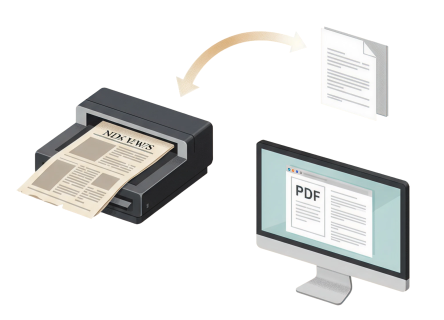
Organizations across Healthcare Manufacturing BFSI and Government sectors manage vast volumes of physical documents every day. From patient records and engineering drawings to financial statements and citizen records these documents support critical business operations compliance and decision-making. However paper-based records often lead to slow retrieval high storage costs limited collaboration and increased security risks. Document digitization services help organizations overcome these challenges by transforming physical records into secure searchable digital assets.
Although the objective of digitization is consistent every industry has unique document types compliance requirements and operational workflows. An effective digitization strategy should address these specific needs while ensuring long-term accessibility and security. Digi+ helps organizations digitize physical records that can be centrally managed through DMS+ and seamlessly integrated with Flow+ to streamline document-driven business processes.
Why Industry-Specific Document Digitization Matters
Every industry manages information differently. Healthcare organizations prioritize patient confidentiality while manufacturers focus on engineering documentation. Financial institutions emphasize regulatory compliance and government agencies preserve public records for long-term access.
Applying a one-size-fits-all digitization approach often leads to inefficient processes incomplete metadata and compliance challenges. Industry-specific document digitization services help organizations:
By understanding each industry's operational requirements organizations can develop digitization strategies that deliver measurable business value beyond simply converting paper into digital files.
Best Practices for Industry-Wise Document Digitization Services
Although each sector has unique requirements certain best practices apply across every successful digitization project.
Define Business Objectives Before Digitization
Organizations should begin by identifying the primary purpose of their digitization initiative.
Common objectives include:
Establishing clear goals ensures the digitization project delivers measurable outcomes and aligns with broader business objectives.
Prioritize High-Value Documents
Not every document requires immediate digitization.
Organizations should prioritize records that are:
This phased approach allows organizations to achieve faster returns while minimizing implementation complexity.
Standardize Metadata and Indexing
Digitized documents only become valuable when employees can locate them quickly.
A standardized metadata framework should include information such as:
Once digitized these records can be securely organized within DMS+ enabling employees to retrieve information in seconds instead of searching through physical archives.
Implement Strong Security Controls
Many enterprise documents contain confidential or regulated information.
Organizations should implement:
When integrated with DMS+ organizations gain centralized access control document versioning and complete audit visibility to strengthen information governance.
Best Practices for Healthcare Document Digitization
Healthcare organizations manage highly sensitive information including patient records diagnostic reports insurance documents consent forms and medical histories. These records must remain accurate secure and readily available to healthcare professionals while complying with strict regulatory requirements.
Healthcare organizations should adopt the following best practices:
1. Digitize Active and Historical Patient Records
Converting both current and archived patient files into searchable digital records improves access to clinical information while preserving historical data for future reference.
2. Capture Accurate Metadata
Patient ID department physician name admission date and document type should be indexed consistently to enable quick retrieval.
3. Strengthen Data Security
Healthcare records should be protected through role-based access encryption and detailed audit logs to ensure patient privacy.
4. Integrate with Digital Document Management
After digitization healthcare organizations can use DMS+ to securely organize medical records while Flow+ automates document approvals referrals and internal review processes reducing administrative effort.
Best Practices for Manufacturing Document Digitization
Manufacturing organizations generate thousands of technical documents including engineering drawings quality inspection reports machine manuals standard operating procedures production records and maintenance documentation. Efficient access to these records supports production continuity product quality and regulatory compliance.
1. Digitize Technical Documentation
Engineering drawings quality manuals and maintenance records should be converted into high-resolution searchable digital files without compromising image quality.
2. Organize Documents by Asset or Production Line
Metadata should classify documents by equipment production facility project or product line making technical information easier to locate.
3. Maintain Revision History
Manufacturing documents frequently change as products evolve. Version control ensures employees always access the latest approved specifications and procedures.
4. Automate Engineering and Quality Workflows
By combining Digi+ with Flow+ manufacturers can automate engineering approvals document reviews and quality management workflows while DMS+ serves as a centralized repository for all production documentation.
Best Practices for BFSI Document Digitization
Banks financial institutions and insurance providers manage enormous volumes of customer information including loan applications KYC documents account opening forms policy records investment documents and compliance reports. Manual document handling increases processing time creates operational inefficiencies and makes regulatory compliance more challenging.
1. Digitize Customer and Financial Records
Converting customer records into searchable digital files enables employees to retrieve information quickly while reducing dependence on physical archives.
2. Ensure Regulatory Compliance
Financial institutions should implement document retention policies secure access controls audit trails and encryption to meet regulatory and internal governance requirements.
3. Improve Document Accuracy
High-quality scanning and standardized indexing reduce errors during document retrieval while improving customer service and operational efficiency.
4. Streamline Financial Processes
When combined with AccountsPayable+ organizations can automate invoice approvals payment workflows and financial document processing. Flow+ further simplifies internal approvals while DMS+ securely stores customer and financial records throughout their lifecycle.
Best Practices for Government Document Digitization
Government departments manage large collections of citizen records land records permits licenses legal documents tax records and historical archives. These documents must remain accessible for many years while supporting transparency compliance and public service delivery.
1. Preserve Historical Records
Older records should be digitized using high-resolution scanning techniques to protect valuable information from deterioration and accidental loss.
2. Create Searchable Digital Archives
Metadata-driven indexing enables government employees to retrieve records quickly improving citizen services and reducing administrative delays.
3. Strengthen Information Security
Access permissions audit logs and secure storage help protect confidential government information while ensuring accountability.
4. Support Digital Governance
Digitized records integrated with DMS+ improve document management while Flow+ automates approval workflows for permits licenses and administrative processes enabling faster service delivery.
5. Common Challenges Across Industries
Although every industry has unique document requirements several digitization challenges are common across enterprise organizations.
6. Managing Large Volumes of Documents
Organizations often accumulate decades of physical records making large-scale digitization projects difficult without a structured implementation plan.
A phased digitization approach based on business priority helps organizations achieve faster results while minimizing disruption.
7. Maintaining Data Quality
Poor scan quality inconsistent indexing and incomplete metadata reduce the value of digitized documents.
Organizations should establish quality assurance processes throughout the digitization lifecycle to ensure accuracy and consistency.
8. Integrating with Existing Systems
Digitized documents should not exist as isolated files.
Integrating Digi+ with DMS+ creates a centralized repository while Flow+ automates document-driven business processes across departments. Organizations using Forms+ can also digitize future data collection by replacing paper forms with digital forms reducing manual data entry and improving information accuracy.
Benefits of Industry-Wise Document Digitization Services
Organizations that implement industry-specific document digitization strategies gain long-term operational and business advantages.
Faster Access to Business Information
Employees can retrieve documents in seconds using metadata keywords or document categories improving productivity and decision-making.
Improved Regulatory Compliance
Secure storage document retention policies audit trails and controlled access simplify compliance with industry regulations.
Better Collaboration
Digital documents can be securely shared across departments branch offices and remote teams eliminating delays associated with physical records.
Reduced Operational Costs
Digitization reduces paper storage printing courier services and manual document handling resulting in lower operating expenses.
Increased Business Agility
Organizations can respond more quickly to customer requests audits inspections and operational changes because information is available instantly.
Foundation for Enterprise Digital Transformation
Digitization creates the foundation for connected business processes. When integrated with DMS+, Flow+, Forms+ and AccountsPayable+ organizations can move beyond document storage and automate information-driven operations across the enterprise.
Real-World Examples
Healthcare
A multi-specialty hospital digitizes patient records consent forms and diagnostic reports using Digi+. Medical staff retrieve records instantly through DMS+ while Flow+ automates internal approval processes for patient documentation reducing administrative delays and improving patient care.
Manufacturing
A manufacturing company converts engineering drawings quality inspection reports and machine maintenance records into searchable digital documents. Technical teams quickly locate the latest approved documents through DMS+ while automated review workflows in Flow+ improve engineering change management.
BFSI
A financial institution digitizes loan applications KYC documents and customer records to accelerate onboarding and improve compliance. Financial documents are securely managed in DMS+ while AccountsPayable+ streamlines invoice processing and vendor payment approvals.
Government
A government agency digitizes land records permits and historical archives creating a centralized digital repository for citizen services. Employees retrieve documents faster through DMS+ while Flow+ automates administrative approvals resulting in improved operational efficiency and faster public service delivery.
Conclusion
Every industry has unique document management requirements but the objective remains the same: transforming physical records into secure searchable and easily accessible digital assets. Industry-specific document digitization services help Healthcare Manufacturing BFSI and Government organizations improve operational efficiency strengthen compliance reduce storage costs and provide employees with instant access to critical business information.
Digi+ enables organizations to build a strong digital foundation by converting paper records into high-quality digital documents. When integrated with DMS+ for centralized document management Flow+ for workflow automation Forms+ for digital data capture and AccountsPayable+ for finance automation organizations can create connected business processes that drive productivity improve governance and support long-term digital transformation.