Introduction
As organizations grow, managing branded document templates becomes more complex. Different departments, offices and business units may require different letterheads while still following common corporate standards. Without defined ownership and controls, employees may use outdated templates, create unauthorized variations or continue using files that are no longer approved.
A structured governance approach can help organizations establish who owns letterhead templates, who can modify them, how changes are approved and when older versions should be retired. This makes letterhead management part of a controlled document process rather than an informal file-sharing activity.
Why Digital Letterhead Governance Matters at Scale
Digital document processes continue to become more important for organizations. Quocirca's 2024 research found that 75% of surveyed organizations were accelerating plans to digitize paper-based processes, while 52% had already digitized most of their business processes. Quocirca – Document Capture Trends 2024
As more business documents and templates move into digital environments, organizations need to consider how approved files are governed. Managing a small number of templates may be straightforward, but the challenge increases when an organization operates across multiple departments, locations, brands or legal entities.
A growing organization may need to manage corporate, regional, departmental and entity-specific letterheads simultaneously. Without centralized controls, these variations can become difficult to monitor and employees may not know which template is currently approved. Effective governance establishes clear rules for creating, approving, publishing, using, updating and retiring letterhead templates.
Common Digital Letterhead Governance Problems
Organizations can encounter several problems when letterhead templates are managed informally:
These issues become more significant when hundreds or thousands of employees need access to branded documents. They also reflect broader document-control challenges that organizations face when files are stored and managed across disconnected locations.
Establish Clear Ownership for Letterhead Templates
Every organization should define who is responsible for maintaining approved letterhead templates. Depending on the organization, ownership may sit with corporate communications, marketing, administration, legal or another designated function. IT or document administrators may manage the technical repository without necessarily owning the branding decisions.
A clear governance model should distinguish between:
Defining these responsibilities reduces uncertainty when a template needs to be created, changed or withdrawn.
Create a Centralized Source for Approved Templates
Organizations should maintain a controlled source for approved letterhead templates rather than distributing files through email or allowing employees to maintain personal copies.
A centralized repository can organize templates by:
Employees can then access templates according to their responsibilities while administrators maintain greater control over approved versions. This follows the broader principle of centralized document storage, where organizations reduce dependence on disconnected repositories and establish a more reliable source of business information. Prevent Missing Documents with DMS+ Central Storage
The objective is to create a trusted source from which employees can obtain the appropriate template rather than relying on files stored across disconnected locations.
Define Access and Modification Permissions
Access to a letterhead does not necessarily mean that a user should be able to modify the underlying template. Organizations can separate permissions according to responsibility. For example, employees may be allowed to access approved templates while only designated administrators or template owners can modify them.
Permission structures can help control:
This reduces the risk of uncontrolled modifications while keeping approved templates available to employees who need them.
Manage Letterhead Versions and Template Status
Letterhead templates should have clearly defined version and status controls.
A useful governance structure can distinguish between:
Draft → Under Review → Approved → Published → Superseded → Archived
This allows administrators to differentiate a template that is being reviewed from one that employees are authorized to use.
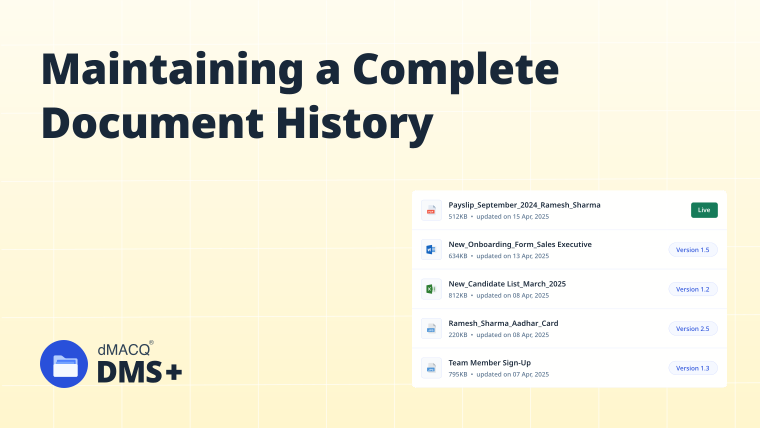
Version management can also preserve previous versions where retention is required while preventing obsolete templates from being presented as current documents. Organizations that need stronger traceability can apply the same principles discussed in Maintaining a Complete Document History, including clear visibility into changes and previous versions. When corporate information changes, the organization should create a new controlled version rather than allowing employees to modify existing templates independently.
Establish a Letterhead Approval and Publishing Workflow
Changes to an official letterhead should pass through a defined approval process before becoming available for organization-wide use.
A typical workflow could include:
Change Request → Template Update → Review → Approval → Publication → Controlled Distribution
The appropriate stakeholders may vary depending on the change. A branding update may require marketing or corporate communications approval while changes to legal information may require legal or administrative review. Separating creation from approval helps prevent a draft or unauthorized modification from becoming the organization's active template.
Control Template Changes and Prevent Unauthorized Modifications
Not every change to a letterhead should be treated equally. Organizations can define which elements are controlled and which, if any, can be customized by users. Elements such as logos, registered names, addresses, legal information and approved brand elements may require restricted editing.
Where customization is necessary, organizations can provide controlled templates or approved variations rather than giving users unrestricted access to the master design. This approach allows business teams to meet legitimate document requirements without compromising centrally approved branding.
Manage Regional, Departmental and Legal-Entity Variations
Large organizations may need multiple letterhead variations because of different offices, countries, subsidiaries, legal entities or business requirements. The challenge is to support legitimate variations without creating uncontrolled duplication.
A structured hierarchy can help:
Corporate Master → Regional Version → Legal-Entity Version → Departmental Use
Each variation should have a defined owner, approval authority and intended audience.
Access controls can then help ensure that employees receive the version relevant to their location or business function instead of selecting templates based only on file names or personal storage.
Retire and Archive Outdated Letterhead Templates
Replacing a template is only part of the management process. Organizations also need to control what happens to the previous version.
When a new template is approved, the older version should be:
This is particularly important after rebranding, office relocation, legal-entity changes or updates to corporate information. The process also fits within a broader Document Lifecycle Management Strategy, where documents move through defined stages from creation and approval to revision, retention and archival.
A defined retirement process helps prevent obsolete templates from continuing to circulate after a replacement has been approved.
Monitor Letterhead Changes and Maintain Audit Trails
Organizations may need visibility into significant activities involving controlled templates.
An audit trail can provide records of events such as:
This information can help administrators understand how a template moved through the governance process and investigate problems when an incorrect version is discovered. Auditability becomes particularly valuable for organizations that need stronger accountability around controlled business documents.
How a DMS Enables Digital Letterhead Governance
A document management system can provide the infrastructure for implementing governance controls within a centralized environment. Bitkom Research's Digital Office Index 2024 found that 84% of surveyed companies with 20 or more employees used at least one Enterprise Content Management application for digitally managing business documents. Bitkom Research – Digital Office Index 2024
Instead of treating letterheads as ordinary files, a DMS can associate templates with permissions, version histories, workflows, metadata and audit records.
This allows organizations to establish a controlled process covering:
Create → Review → Approve → Publish → Use → Revise → Retire
The value is not simply that the letterhead is stored digitally. A DMS can help determine which version is approved, who can change it, who can use it and what happened to previous versions.
For businesses building or improving this type of environment, the broader process of How to Plan a Document Management System Migration Without Disrupting Operations can also provide useful context when moving controlled documents from scattered repositories into a centralized system.
How DMS+ Can Support Digital Letterhead Governance
DMS+ can support organizations that need a centralized environment for managing approved letterhead templates and related document controls.
Relevant capabilities can help organizations:
This can help organizations move from informal template distribution toward a more structured approach to document governance.
For readers who need foundational context on the template itself before considering governance, see What Is a Digital Letterhead? Benefits, Uses and Best Practices.
Digital Letterhead Governance Best Practices
Organizations can strengthen governance by following several practical practices:
The objective should be to make the correct template easy to use while making uncontrolled alternatives difficult to introduce.
When Should Businesses Centralize Digital Letterheads?
Centralized governance becomes increasingly valuable when an organization has multiple departments, offices, brands or legal entities. It may also be appropriate when employees frequently ask which template is current, maintain local copies or request updated letterheads from administrators.
These situations can indicate that template ownership and distribution are being handled informally. A centralized approach can establish clearer responsibility and provide employees with a more reliable source for approved templates.
Real-World Examples of Digital Letterhead Governance
Multi-Location Enterprise
An organization operates across several cities and maintains different approved letterheads for each legal entity. A centralized repository allows employees to access the appropriate version while template owners control updates and approvals.
Corporate Rebranding
A company changes its logo and corporate identity. The branding team submits updated templates for review and approval. Once the new versions are published, previous templates are moved out of active use and retained only where required.
Regulated Business
A regulated organization requires greater accountability for formal business communications. Template ownership, approval workflows, restricted editing and audit records create a documented process for managing controlled letterheads.
What to Look for in a Digital Letterhead Management System
Organizations evaluating a system should look beyond basic file storage.
Important capabilities may include:
The objective should be to establish a controlled governance environment rather than simply creating another shared folder for letterhead files.
FAQs
1. How should businesses control digital letterhead templates?
Businesses can control templates through centralized storage, defined ownership, access permissions, version management, approval workflows and controlled retirement of outdated versions.
2. Who should approve digital letterhead changes?
Approval responsibility can sit with marketing, corporate communications, legal, administration or another designated stakeholder depending on the type of change and the organization's governance structure.
3. How can businesses prevent employees from using outdated letterheads?
Organizations can maintain a single active source for approved templates, restrict access to obsolete versions and clearly identify current versions through status and version controls.
4. How should organizations manage different letterheads for different locations?
Organizations can maintain approved regional, departmental or legal-entity variations within a centralized repository and control access based on employee roles or organizational requirements.
5. Can a DMS support digital letterhead governance?
Yes. A DMS can support centralized storage, permissions, version management, approval workflows, metadata and audit trails that help organizations govern controlled document templates.
Conclusion
Digital letterhead management becomes more complex as organizations add departments, locations, brands and legal entities. The challenge is not simply keeping templates in a digital location but ensuring that employees use approved versions and that changes are properly controlled.
A structured governance approach can establish clear ownership, permissions, approval processes, version controls and retirement procedures for branded document templates. A document management system can bring these controls together within a centralized environment, helping organizations manage letterheads more consistently and accountably as they scale.