Introduction
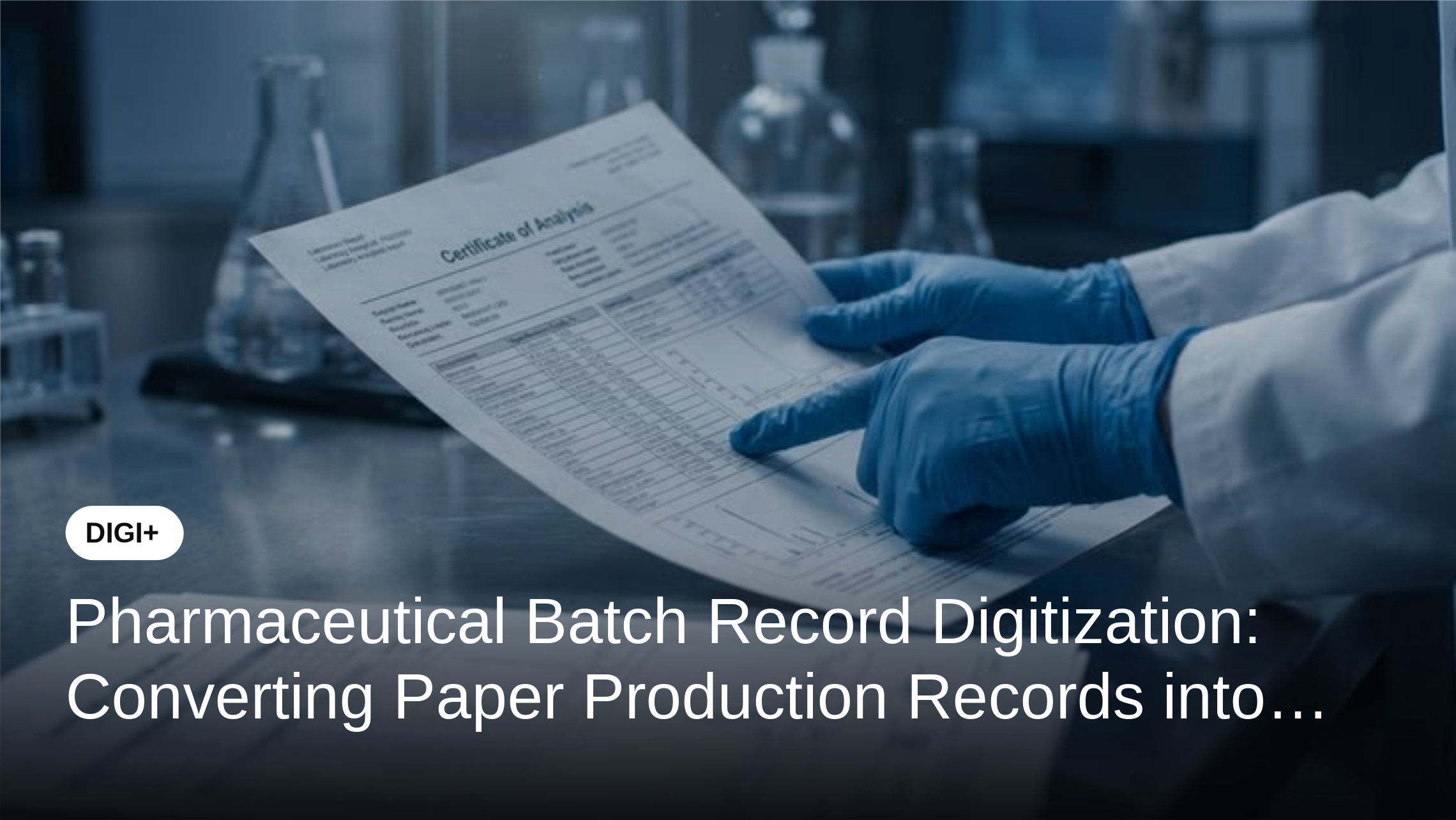
Pharmaceutical manufacturers generate extensive documentation throughout production, quality control, packaging and equipment operations. Batch Manufacturing Records (BMRs), Batch Packaging Records (BPRs), laboratory reports and equipment logs provide evidence of how products were manufactured and the activities performed during each batch. However, many organizations continue to retain years of these records in physical archives, making them difficult to locate, review and retrieve when required.
Pharmaceutical batch record digitization converts these historical paper documents into searchable digital files. The process involves more than scanning individual pages. It requires a structured approach to document preparation, image capture, indexing, quality checks and record preservation. When planned carefully, digitization helps manufacturers improve access to historical production information without confusing scanned records with validated electronic batch records.
Why Pharmaceutical Manufacturers Still Depend on Paper-Based Production Records
Paper-based documentation remains part of many pharmaceutical manufacturing environments. Some organizations have accumulated years of production records before introducing digital documentation systems, while others continue to use approved paper-based processes for specific manufacturing activities.
Over time, these records become difficult to manage. Physical files may be distributed across departments, manufacturing locations or off-site storage facilities. Finding a particular batch record can require manual searches through registers, storage boxes and filing systems.
Historical Records Contain Important Production Information
Older batch records can provide useful context when investigating manufacturing discrepancies, reviewing previous production activities or examining historical quality information. They may contain handwritten observations, equipment references, material details and quality control results that are not available in other systems.
When these records remain accessible only through physical archives, employees may spend considerable time locating the required information. Digitization makes the documents easier to retrieve while retaining the original record as the reference point.
Physical Archives Become More Difficult to Maintain
As document collections grow, organizations need to manage storage space, physical handling, environmental conditions and access to archived files. Damaged pages, faded ink, misplaced folders and inconsistent filing practices can make retrieval increasingly difficult.
A searchable digital collection can reduce dependence on manual archive searches. It also provides a practical way to access historical documents without repeatedly handling fragile physical records.
What Information Do Pharmaceutical Batch Records Contain?
Pharmaceutical production records document activities performed during manufacturing and related quality operations. The exact documents maintained by an organization depend on its products, manufacturing processes and documentation procedures.
Understanding the types of records involved is important before starting a digitization project. Different document categories may require different indexing fields and quality checks.
Batch Manufacturing and Packaging Records
Batch Manufacturing Records document the manufacturing activities associated with a specific batch. They may include material details, dispensing information, processing steps, equipment references, in-process observations and operator entries.
Batch Packaging Records document relevant packaging activities. These may include packaging material details, line information, reconciliation records, inspection entries and other batch-specific information.
Quality Control and Laboratory Records
Quality control records may contain sampling details, test observations, analytical results, review information and references to supporting laboratory documentation. These records can be associated with a particular batch, material or testing activity.
When digitizing laboratory documents, organizations should consider whether the paper document is the complete record or whether associated electronic raw data and system records must also be retained. A printed report should not automatically be treated as a complete replacement for underlying electronic data.
Equipment, Material and Supporting Production Records
Other records may support the reconstruction of manufacturing activities. Examples include equipment cleaning and usage logs, raw material issue records, environmental monitoring documents, maintenance records and production-related checklists.
These supporting documents may be stored separately from the main batch file. Their relationship to the relevant batch, equipment or production activity should therefore be considered when designing the digital filing structure.
Challenges of Managing Historical Paper-Based Batch Records
Historical pharmaceutical records often present different challenges from newly generated documents. They may have been created using older templates, handwritten entries or filing conventions that are no longer followed.
Digitization projects need to account for these differences rather than treating every document as an identical scanning task.
Inconsistent Document Formats and Page Structures
A historical batch file may contain printed forms, handwritten annotations, attached reports, loose sheets and supporting documents from different departments. Page sizes, layouts and document quality can also vary within the same collection.
If these differences are not identified before scanning, pages may be captured incorrectly or separated from the records to which they belong. A document assessment helps determine the appropriate capture and organization approach.
Missing Pages and Damaged Documents
Older records may contain torn pages, faded text, stains, folded sections or missing attachments. Some documents may also have been stored in a way that makes their original sequence difficult to establish.
These issues should be identified during preparation and quality review. Digitization teams should record exceptions rather than silently reconstructing missing information or altering the original content.
Difficulty Retrieving Specific Batch Information
A scanned document that is saved using a generic filename may still be difficult to locate. For example, searching for a particular batch number becomes challenging when the number is not captured in the filename, metadata or searchable document text.
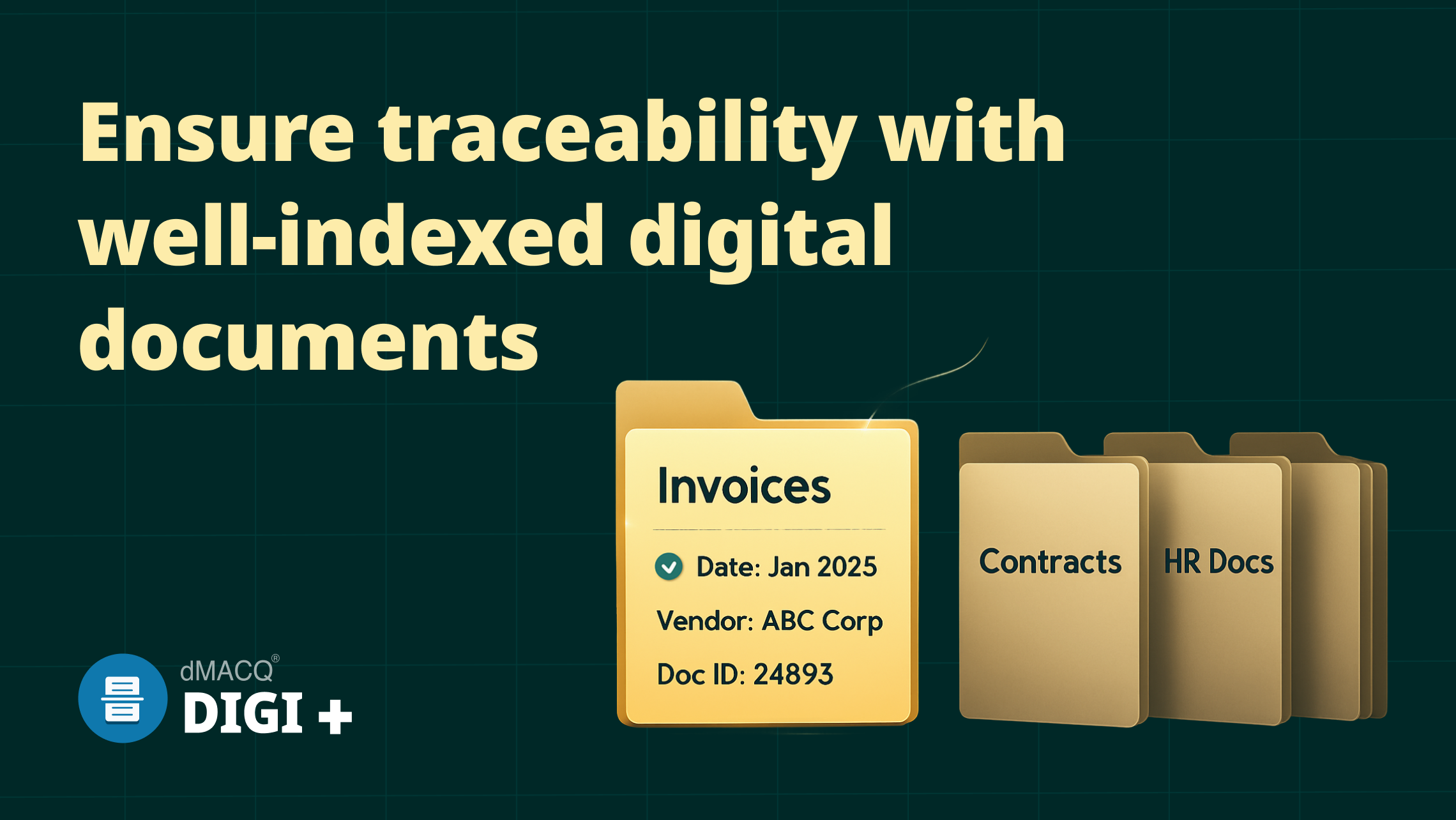
A consistent indexing structure helps users locate records through relevant identifiers such as batch number, product name, manufacturing date and document category.
Preparing Pharmaceutical Records for Digitization
Preparation determines how reliably historical records can be converted into digital files. Before scanning begins, manufacturers should understand the size, condition and organization of the archive.
The preparation process should be documented and coordinated with the relevant quality and records-management teams. This helps ensure that the digitization project follows established organizational procedures.
Step 1: Identify and Classify the Records
Start by identifying the records included in the digitization scope. Separate BMRs, BPRs, laboratory reports, equipment logs and other supporting documents into appropriate categories.
Where possible, record available details such as product name, batch number, manufacturing date, department and storage location. This initial inventory helps establish the volume of work and identifies collections that may need special handling.
Step 2: Assess Physical Document Condition
Review documents for faded text, damaged pages, staples, bindings, folded sheets and other physical conditions that may affect scanning. Identify oversized documents, fragile originals and pages that require special capture arrangements.
Any missing, illegible or damaged sections should be documented according to the organization's procedures. The digitization process should preserve the available information rather than attempting to recreate details that cannot be verified.
Step 3: Establish Document Sequence and Grouping
Determine how individual pages and supporting documents should be grouped. A batch record may contain several sections, attachments and references that need to remain associated with the same batch.
The original sequence should be preserved wherever it can be established. If documents are reorganized for digital filing, the relationship between the original physical record and the resulting digital files should remain clear.
Step 4: Define the Digitization and Review Requirements
Before processing, establish scanning specifications, file formats, naming conventions, indexing fields and quality review criteria. These requirements should account for document size, handwriting, print quality and the intended retrieval method.
The organization should also define how exceptions will be recorded and reviewed. Quality personnel should determine which records require additional checks and what procedures apply to retaining the original paper documents.
Converting Paper Batch Records into Searchable Digital Files
Once the records have been assessed and prepared, they can move through the scanning and digital conversion process. The objective is to create readable digital representations while retaining the relationship between each file and its original paper record.
Scanning, OCR and quality review serve different purposes. They should be treated as connected stages rather than interchangeable activities.
Document Scanning and Image Capture
The first stage involves capturing paper records as digital images. Scanning quality should be sufficient to preserve printed text, handwritten entries, signatures, tables, stamps and other relevant document details.
Page orientation, cropping, resolution and completeness should be checked during capture. Where a page contains faint handwriting or small printed information, the scanning approach should be assessed to ensure that the resulting image remains readable.
Optical Character Recognition for Searchability
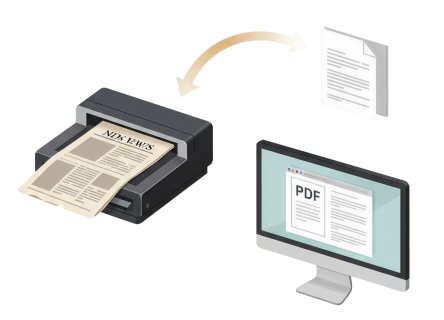
Optical Character Recognition (OCR) converts text within scanned images into machine-readable text. This allows users to search for recognized words and identifiers rather than opening every file individually.
For pharmaceutical batch records, OCR may support searches for printed batch numbers, product names, dates and document references. However, handwritten entries, unusual layouts, stamps and low-quality scans may not be recognized accurately. Important information should therefore be checked against the source document.
File Organization and Naming
After scanning, documents need consistent filenames and folder structures. A naming convention may include the product identifier, batch number, document category and manufacturing date, depending on the organization's requirements.
For example, a file could be organized using a structure such as:
Consistent naming reduces ambiguity and makes it easier to identify the correct digital file. The convention should be agreed upon before large-scale processing begins.
Quality Review of Digitized Files
Quality review checks whether the digital files accurately represent the source documents. Review criteria may include page completeness, readability, orientation, sequence, image clarity and the presence of expected attachments.
OCR output should also be checked where recognized text will be used for retrieval. Any missing pages, unclear content or scanning exceptions should be recorded and handled according to approved procedures.
Preserving Record Context Through Metadata and Indexing
A searchable archive requires more than storing scanned files in folders. Metadata provides information about what each document represents and helps users retrieve records using relevant business identifiers.
For pharmaceutical batch records, indexing should reflect how production and quality teams identify and search for documents.
Define Batch-Specific Metadata Fields
Metadata fields should be selected according to the record category and retrieval requirements.
Common examples include:
Not every field will be available on every document. The indexing process should distinguish between information captured from the source and information assigned for archive organization.
Maintain Relationships Between Related Documents
A batch record may refer to supporting laboratory reports, material records, equipment logs or packaging documents. If these documents are digitized separately, their relationship should remain identifiable through shared batch references or other appropriate indexing fields.
This helps users locate supporting documentation without assuming that every related record must be combined into one file. The original document boundaries and sequence should remain clear.
Establish Consistent Indexing Rules
Different teams may use variations of product names, batch identifiers or document descriptions. Without consistent indexing rules, the same record may be stored under different terms, making retrieval less reliable.
Organizations should define standard formats for metadata fields and document categories. Where historical records contain inconsistent identifiers, the original information should be preserved and any additional standardized indexing should be distinguishable from the source content.
Maintaining Data Integrity During Pharmaceutical Record Digitization
Pharmaceutical documentation must remain reliable throughout its lifecycle. Digitization introduces another stage in that lifecycle, so organizations should consider how the original information is captured, reviewed, stored and retrieved.
The process should align with the organization's approved procedures and applicable regulatory requirements. Scanning alone does not establish that a digital copy is an approved replacement for the original record.
Apply ALCOA+ Principles to Record Handling
ALCOA+ is commonly used to describe important data integrity attributes:
These principles apply to the management of paper and electronic records. The Indian Pharmacopoeia Commission's Good Documentation Practices guidance and the PIC/S Guidance on Data Integrity provide relevant guidance for pharmaceutical documentation and data management.
Preserve the Original Information
Digitization should not involve silently changing handwritten entries, correcting historical mistakes or filling gaps in the source document. The digital representation should retain the information as it appears in the original record.
If an issue is identified during scanning or review, it should be documented and handled through the organization's approved procedures. Any annotations or additional information introduced during processing should be distinguishable from the original record.
Define Retention and Record Access Procedures
Organizations should determine how long original paper records and digital copies must be retained. These decisions depend on applicable regulations, record categories and internal retention policies.
Access arrangements should also be defined so that authorized personnel can retrieve the records required for operational or regulatory purposes. The FDA's guidance on CGMP records and reports explains important expectations concerning record retention and accessibility under applicable US requirements.
Digitized Batch Records vs Electronic Batch Records
Digitized batch records and Electronic Batch Records (EBRs) are related to pharmaceutical documentation but serve different purposes. Understanding this distinction is essential when planning a paper-to-digital initiative.
A scanned batch record is a digital representation of an existing paper document. An EBR, in contrast, is generated and maintained through an electronic system that supports the recording and management of manufacturing activities.
What Digitized Batch Records Provide
Digitized records make historical paper documents available as digital files. With suitable OCR and indexing, users can search for recognized text and retrieve records using metadata such as batch number, product name or manufacturing date.
This approach is particularly relevant when an organization needs to improve access to older production documentation. It does not, by itself, recreate the controls or functionality of an electronic manufacturing record system.
What Electronic Batch Records Provide
EBR systems are designed to manage manufacturing records electronically as production activities take place. Depending on the system and its validated configuration, they may support structured data capture, workflow controls, electronic signatures, review processes and audit trails.
These functions are different from converting completed paper records into searchable files. A scanned BMR should not automatically be described as an EBR or treated as proof that the underlying production activity was electronically controlled.
Choosing the Appropriate Approach
Manufacturers should identify whether their immediate requirement is to make historical paper records easier to retrieve or to introduce electronic documentation for ongoing manufacturing activities.
A digitization project addresses the first requirement. Moving to an EBR environment involves a separate system implementation and validation approach based on the organization's intended use and applicable regulatory obligations.
How DIGI+ Supports Pharmaceutical Document Digitization
DIGI+ supports the conversion of physical documents into organized digital files through bulk scanning, OCR and indexing. For pharmaceutical manufacturers, these capabilities can help convert historical paper-based production records into searchable digital files, making batch documentation easier to locate and retrieve.
For a batch record digitization initiative, document preparation, batch-specific metadata and quality review criteria should be defined according to the manufacturer's requirements. DIGI+ supports the document conversion process, while manufacturers remain responsible for applicable record-retention, validation, data-integrity and regulatory obligations.
Frequently Asked Questions
Can pharmaceutical batch manufacturing records be converted into searchable PDFs?
Yes. Paper-based batch manufacturing records can be scanned into digital files and processed using OCR to make recognized text searchable. Searchability depends on the quality of the original document, scanning conditions and OCR recognition accuracy.
Does digitizing a BMR make it a compliant Electronic Batch Record?
No. Scanning a paper BMR creates a digital representation of the original document. It does not automatically provide the functionality, controls or validation associated with an EBR system.
Should original paper batch records be retained after digitization?
Retention requirements depend on applicable regulations, record categories and the organization's approved procedures. Manufacturers should establish whether the digital copy qualifies as an acceptable replacement or whether the original paper record must continue to be retained.
What metadata is useful when indexing pharmaceutical batch records?
Common metadata fields include product name, batch number, manufacturing date, document category, production location and equipment reference. The exact fields should be selected according to the organization's document structure and retrieval requirements.
Conclusion
Pharmaceutical batch record digitization helps manufacturers make historical production documentation easier to access without losing sight of the information contained in the original paper records. A structured process covering document assessment, scanning, OCR, file organization, metadata indexing and quality review can make large archives more searchable and manageable.
However, successful digitization is not measured only by the number of pages scanned. Manufacturers must also consider document completeness, record context, data integrity, retention requirements and the distinction between digitized paper records and electronic batch records. With an appropriately planned approach, DIGI+ can support the conversion of historical pharmaceutical documents into searchable digital files while organizations retain responsibility for their applicable quality and regulatory controls.