Introduction
Many organizations continue to rely on decades of paper records that contain valuable business information. From customer files and engineering drawings to financial documents and operational records these physical archives often slow decision-making increase storage costs and make information difficult to retrieve. As businesses modernize their operations legacy data modernization has become a strategic initiative that transforms historical records into accessible digital assets.
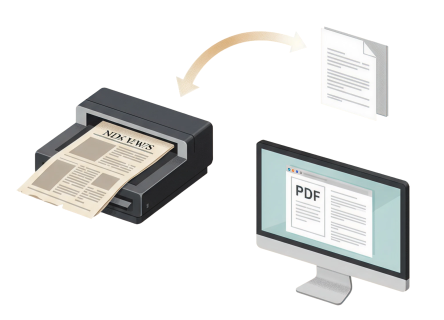
Legacy data modernization is more than simply scanning paper documents. It involves digitizing organizing indexing and integrating information into enterprise systems so it can support business processes analytics and long-term digital transformation. Digi+ enables organizations to convert paper records into searchable digital documents that can be securely managed through DMS+ and integrated with Flow+ to automate document-driven workflows across the enterprise.
What Is Legacy Data Modernization
Legacy data modernization is the process of converting historical paper records and outdated document repositories into structured digital information that is easy to access manage and use.
Unlike basic document scanning legacy data modernization focuses on improving the usability of information by:
The objective is to unlock the business value hidden within years of archived information while reducing the operational challenges associated with paper-based records.
Why Legacy Paper Records Hold Businesses Back
Although paper documents have served organizations for decades they often create significant operational and strategic challenges.
Slow Information Retrieval
Employees spend valuable time searching through filing cabinets storage rooms or off-site archives to locate documents. This delays decision-making and reduces overall productivity.
Rising Storage and Maintenance Costs
Maintaining physical archives requires storage space document handling resources and long-term preservation measures. As records continue to grow these costs increase significantly.
Limited Collaboration
Paper records can only be accessed from specific locations making collaboration between departments branch offices and remote teams more difficult.
Increased Compliance Risks
Industries with strict regulatory requirements must retain records for extended periods while ensuring they remain secure and accessible. Paper-based archives make compliance management more complex.
Information Silos
Departments often maintain separate collections of historical documents resulting in duplicated information inconsistent records and limited visibility across the organization.
Why Legacy Data Modernization Matters Today
Modern enterprises depend on timely access to accurate information. Historical documents often contain valuable operational knowledge customer history technical documentation and compliance records that remain relevant for ongoing business activities.
Modernizing legacy data helps organizations:
Rather than viewing archived records as inactive information organizations can transform them into valuable digital assets that support future growth.
Key Components of a Successful Legacy Data Modernization Strategy
A structured modernization initiative requires more than converting paper into digital files. Organizations should follow a phased approach that ensures long-term value.
Assess Existing Paper Records
The first step is understanding the scope of the organization's physical archives.
Key questions include:
This assessment helps prioritize digitization efforts based on business impact.
Prioritize High-Value Information
Not every document requires immediate digitization.
Organizations should begin with records that are:
This phased approach delivers faster business value while simplifying project execution.
Digitize Documents with High Accuracy
Image quality directly affects the usefulness of digitized records.
Organizations should ensure:
Digi+ helps organizations convert historical paper records into high-quality searchable digital documents while preserving the integrity of original information.
Apply Metadata and Intelligent Indexing
Digitized documents become significantly more valuable when they can be located quickly.
Organizations should standardize metadata using attributes such as:
Once indexed documents can be securely organized within DMS+ allowing employees to retrieve information within seconds.
Establish Governance and Security
Historical business records frequently contain confidential information.
Organizations should implement:
Combining Digi+ with DMS+ helps establish a secure and governed environment for managing legacy information throughout its lifecycle.
Preparing Legacy Data for Modern Enterprise Systems
Digitized information delivers the greatest value when it integrates seamlessly with enterprise applications rather than remaining isolated in shared folders or standalone storage locations.
Organizations should plan for integration with systems such as:
This connected approach ensures employees can access historical information directly within the systems they use every day reducing duplicate work and improving operational efficiency.
Common Challenges During Legacy Data Modernization
Modernizing decades of paper records presents several challenges that organizations should address early in the project.
Large Volumes of Historical Records
Many enterprises have accumulated records over several decades making modernization projects complex and time-consuming.
A phased implementation strategy helps organizations prioritize business-critical records while maintaining day-to-day operations.
Inconsistent Document Quality
Older documents may contain faded text damaged pages handwritten notes or oversized formats that require specialized digitization techniques.
High-quality scanning combined with quality assurance processes ensures information remains accurate and usable after digitization.
Inconsistent Classification
Legacy records are often stored using different naming conventions and filing structures.
Developing standardized metadata and document classification improves searchability and establishes consistency across the organization.
Integrating Legacy Data with Business Workflows
Modernizing historical records should not end with document storage. The real business value comes from using digitized information to improve day-to-day operations.
Organizations can integrate digitized records into document-driven workflows such as:
By integrating Digi+ with Flow+ organizations can automate approvals notifications and document routing while reducing manual intervention. Forms+ further supports digital transformation by replacing paper-based forms with structured digital forms ensuring future information is captured electronically from the beginning.
Benefits of Legacy Data Modernization
Organizations that modernize decades of paper records gain significant operational and strategic advantages.
Faster Access to Business Information
Employees can locate historical records within seconds using keywords metadata or document categories instead of manually searching through physical archives.
Faster information retrieval improves productivity and supports quicker business decisions.
Improved Collaboration Across Departments
Digital records enable employees across multiple departments offices and remote locations to access the same information simultaneously.
This improves communication reduces duplicate work and ensures teams work with consistent information.
Stronger Compliance and Governance
Centralized document management simplifies compliance by providing secure access document retention policies version control and complete audit trails.
Organizations can respond more efficiently to audits legal requests and regulatory inspections.
Reduced Storage and Administrative Costs
Digitizing paper archives minimizes the need for physical storage document transportation printing and manual filing.
Over time organizations can significantly reduce operational expenses while making better use of office space.
Better Business Continuity
Paper documents remain vulnerable to fire floods deterioration and accidental loss.
Digital archives protected through secure backups and disaster recovery strategies ensure critical business information remains available whenever needed.
Foundation for Intelligent Automation
Modernized data becomes significantly more valuable when integrated with enterprise systems.
By connecting Digi+ with DMS+, Flow+, Forms+ and AccountsPayable+ organizations can automate document-intensive processes improve operational visibility and accelerate enterprise-wide digital transformation.
Best Practices for Legacy Data Modernization
Organizations planning large-scale modernization initiatives should adopt proven best practices to maximize long-term value.
1. Establish a Phased Implementation Plan
Rather than digitizing every document at once organizations should prioritize departments and document categories based on business importance compliance requirements and usage frequency.
A phased approach reduces project complexity while delivering measurable results earlier.
2. Standardize Document Classification
Develop consistent naming conventions metadata standards and indexing rules before digitization begins.
Standardization improves searchability supports governance and ensures long-term consistency across departments.
3. Maintain Data Quality Throughout the Project
Quality assurance should include document preparation scan verification metadata validation and periodic reviews to ensure digital records accurately represent the original documents.
4. Plan for Future Digital Processes
Organizations should view digitization as the starting point of a broader modernization strategy.
New documents should be captured digitally whenever possible using Forms+ while document approvals reviews and business processes can be automated through Flow+ reducing future dependence on paper records.
Real-World Examples
1. Healthcare
A healthcare provider digitizes decades of patient records medical histories and consent forms using Digi+. Historical information becomes searchable through DMS+ while Flow+ automates internal document reviews and approval workflows improving administrative efficiency and patient service.
2. Manufacturing
A manufacturing company modernizes engineering drawings maintenance records quality inspection reports and equipment documentation. Digitized technical records are centrally managed in DMS+ allowing engineering teams to access the latest information quickly while Flow+ supports engineering change approvals and maintenance workflows.
3. BFSI
A financial institution converts archived loan files KYC documents customer agreements and compliance records into digital assets. Employees retrieve customer information faster while AccountsPayable+ streamlines invoice-related processes and DMS+ provides secure long-term document governance.
4. Government
A government department digitizes historical land records permits legal documents and citizen archives. Employees access records through a centralized repository while Flow+ automates administrative approvals reducing processing times and improving citizen services.
Why Legacy Data Modernization Is a Strategic Business Initiative
Legacy records contain years of organizational knowledge that often remains underutilized because it exists only in paper form.
Modernizing this information enables organizations to:
Instead of treating archived documents as inactive records organizations can transform them into valuable business assets that contribute to innovation and long-term growth.
Conclusion
Legacy paper records contain valuable business information but they also create operational challenges when stored in physical archives. Legacy data modernization enables organizations to transform decades of historical records into searchable secure and accessible digital assets that improve collaboration strengthen compliance reduce operational costs and support better decision-making across the enterprise.
Digi+ provides the foundation for this transformation by converting paper records into high-quality digital documents. When integrated with DMS+ for centralized document management Flow+ for workflow automation Forms+ for digital data capture and AccountsPayable+ for finance document processing organizations can unlock the full value of their historical information while building a connected and future-ready digital workplace.