Introduction
Intellectual property (IP) is a valuable business asset. Patent applications, granted patents, invention disclosures, licensing agreements and related correspondence provide evidence of ownership, development, usage rights and commercial arrangements. As these records accumulate across departments, legal teams, research and development (R&D) units and external partners, maintaining consistent document control becomes increasingly important.
Intellectual property document management provides a structured way to store, classify, retrieve and protect these records throughout their lifecycle. With a document management system (DMS), organizations can establish controlled access, maintain document histories and make important IP records easier to locate when required for legal reviews, licensing discussions or internal audits.
Why Intellectual Property Documents Require Structured Management
IP documentation is often distributed across legal departments, R&D teams, business units, external law firms and licensing partners. When files are maintained in separate folders, email accounts and individual storage locations, organizations may struggle to identify the latest approved document or retrieve the supporting records behind an agreement.
These challenges can create practical risks, including unauthorized access to confidential invention details, confusion between draft and executed agreements, missing patent correspondence and incomplete documentation during ownership or licensing reviews.
Types of Intellectual Property Documents Organizations Need to Manage
An IP document repository may contain several categories of records. Each category serves a different purpose and may require specific classification and access rules.
-
Patent applications: Application forms, technical descriptions, claims, drawings and supporting submissions.
A consistent classification structure helps organizations distinguish these records and retrieve them according to their purpose, ownership, status or associated project.
Common Challenges in Managing Patent Files and Licensing Records
Disconnected document storage
Patent files and licensing agreements may be maintained across legal folders, R&D repositories, shared drives and email attachments. This fragmentation makes it difficult to establish a reliable location for authoritative records.
A centralized document repository can help bring related files together while allowing organizations to organize them by patent reference, agreement type, department or business unit.
Unclear document versions
Patent applications, technical descriptions and licensing agreements may undergo several revisions before they are finalized. Without a consistent version-management approach, employees may refer to outdated drafts or circulate documents that no longer reflect the approved terms.
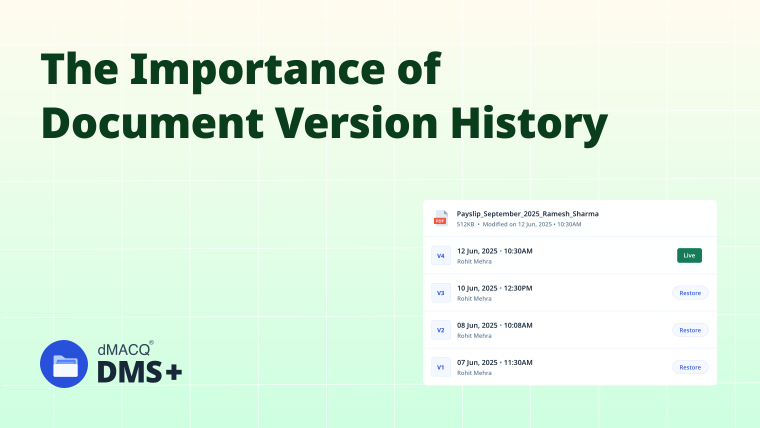
Maintaining document history helps users distinguish earlier versions from current records and understand how a document has changed. This is particularly relevant to organizations that need traceability across legal and technical documentation. See The Importance of Document Version History.
Unauthorized access to confidential IP records
Patent-related documents may contain unpublished inventions, technical information, commercial terms and sensitive ownership details. Broad access to these records can expose information to employees or external parties who do not require it.
Organizations should establish permissions based on document sensitivity, user responsibilities and business requirements. Access controls should also be reviewed when employees change roles or external engagements end.
How to Organize Patent Files and Licensing Records
A structured repository requires more than uploading documents into folders. Organizations should establish consistent classification, ownership and retrieval practices.
Establish a consistent classification structure
Create document categories based on IP type, business unit, project, jurisdiction or agreement type. For example, patent applications can be separated from granted patents, while licensing agreements can be classified by licensor, licensee or agreement status.
Useful metadata fields may include patent reference number, application date, jurisdiction, invention title, document category, agreement reference, responsible department and confidentiality level. The exact fields should reflect the organization's IP processes.
Define document ownership and access permissions
Assign responsibility for maintaining each document category. Legal teams may manage executed licensing agreements, while R&D teams may contribute technical disclosures and supporting invention records.
Access permissions should reflect these responsibilities. Confidential invention disclosures may require more restrictive access than general patent publications, while executed licensing agreements may be limited to authorized legal, finance and business stakeholders.
Maintain document history and supporting records
Preserve relevant versions of patent applications, licensing agreements and amendments. Keep supporting correspondence and approval records associated with the relevant document or IP reference.
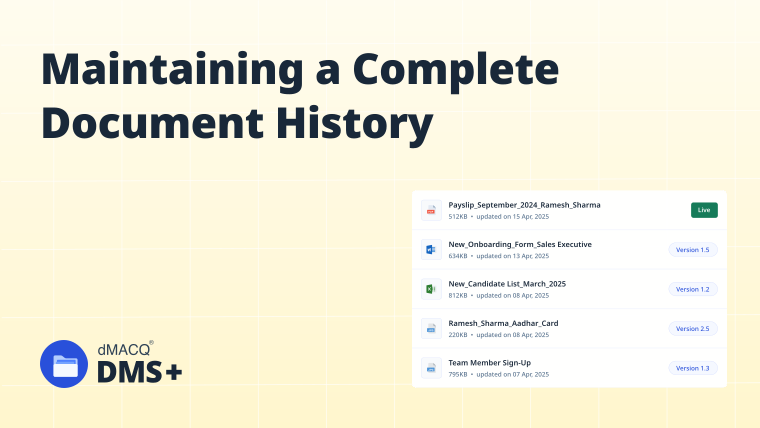
This creates a clearer record of document changes and helps authorized users understand which version is current. Organizations can also refer to Maintaining a Complete Document History for broader guidance on document traceability.
How a Document Management System Supports IP Document Control
A DMS provides a structured environment for managing the documents associated with intellectual property. Its value lies in helping organizations control how records are stored, classified, accessed and retrieved.
-
Metadata-based organization: Helps classify documents using patent references, agreement types, departments, dates and other relevant attributes.
These capabilities can help organizations improve document consistency and reduce dependence on disconnected storage locations. For broader guidance on governance practices, see Ensure Data Governance with DMS+: Build Control, Compliance and Confidence.
Practical Example: Managing Patent and Licensing Records Across Departments
Consider a technology company managing patent applications for several products alongside licensing agreements with external partners. Its legal team maintains application records and executed agreements, while R&D teams manage invention disclosures, technical descriptions and supporting documents. Without centralized storage, employees may struggle to locate the latest patent files or identify the agreement associated with a particular product.
By organizing these records using patent references, project details, document categories and access permissions, the company can create a consistent repository for authorized employees to retrieve files and review document histories. However, patent deadlines, renewal dates, legal-status monitoring and licensing obligations still require appropriate specialist processes or systems.
What to Evaluate in a DMS for Intellectual Property Documents
Organizations evaluating a DMS for IP documentation should consider whether the platform supports their document types, confidentiality requirements and existing legal processes.
A DMS should be selected according to the organization's document-management requirements. If the business needs patent docketing, portfolio analytics or automated renewal management, it should evaluate a dedicated IP management solution alongside its DMS.
How DMS+ Supports Intellectual Property Document Management
DMS+ provides document-management capabilities for organizing patent files, licensing agreements and related business records. Metadata management and advanced search help classify and retrieve documents, while access controls help restrict confidential IP records to authorized users.
Document history and version management support traceability when patent files, technical documents or licensing agreements are revised. Configurable workflows may also support document review and approval requirements, depending on the organization's configuration. DMS+ can therefore support the storage, classification, access and retrieval of IP documentation while complementing specialist systems responsible for patent prosecution, docketing, legal-status tracking and licensing administration.
FAQs
What is intellectual property document management?
Intellectual property document management is the structured process of storing, classifying, protecting and retrieving documents associated with patents, trademarks, copyrights, licensing agreements and other IP assets.
What documents should be stored in an IP document repository?
An IP repository may include patent applications, granted patent records, invention disclosures, licensing agreements, ownership and assignment records, legal correspondence, amendments and supporting technical documentation.
How does a DMS help protect confidential patent documents?
A DMS can support controlled access through user permissions and document-level security settings. These controls help organizations limit access to confidential patent files according to assigned responsibilities.
Can a DMS manage patent deadlines and renewal dates?
A DMS can store and organize documents containing relevant dates and supporting records. However, automated patent deadline calculations, renewal reminders and legal-status tracking are specialist IP management functions that should be separately verified.
Is a DMS the same as an Intellectual Property Management System?
No. A DMS focuses on document storage, classification, access, retrieval and lifecycle management. An IP management system may provide specialist capabilities such as patent docketing, portfolio tracking, deadline management and licensing administration.
Conclusion
Patent files and licensing records require consistent document organization, controlled access and reliable revision management. A structured document repository helps organizations maintain these records, retrieve supporting information and reduce confusion caused by disconnected storage locations or outdated versions.
DMS+ can support the document-management side of intellectual property administration through centralized storage, metadata management, search, access controls and document history. Organizations can use these capabilities alongside specialist IP systems and legal processes to maintain better control over their intellectual property documentation.