Introduction
Organizations generate and maintain different types of official records that guide operations, establish internal policies and document important business decisions. Corporate policies define organizational rules, Standard Operating Procedures (SOPs) establish approved ways of working and board documents preserve formal governance decisions. When these records are stored across disconnected folders, email accounts and departmental systems, maintaining consistency and control becomes difficult.
Corporate records management provides a structured approach to organizing, protecting and maintaining these documents throughout their lifecycle. By establishing clear ownership, classification, approval procedures, access permissions and retention rules, organizations can ensure employees access authoritative information while preserving important corporate records for future reference, audits and governance requirements.
What Is Corporate Records Management?
Corporate records management refers to the processes and controls used to create, classify, maintain, retrieve, protect and retain an organization's official records. It covers documents that establish business policies, guide operational activities, record management decisions and demonstrate organizational accountability.
Unlike general document storage, corporate records management focuses on maintaining the reliability and authority of business records. It helps organizations determine which document is current, who is responsible for it, who can access it and how long it must be retained.
Why Corporate Records Require Structured Management
Policies and procedures become difficult to maintain
Organizations regularly update internal policies and SOPs to reflect operational changes, regulatory requirements and management decisions. When employees maintain separate copies, outdated versions can remain in circulation even after a revised document has been approved.
Without clear ownership and revision controls, departments may follow different instructions or refer to superseded policies. A structured records-management approach helps identify authoritative documents and makes approved versions easier to retrieve.
Sensitive corporate records need controlled access
Not every corporate document should be accessible to every employee. General workplace policies may need broad internal distribution, while confidential board minutes, strategic decisions and sensitive governance records require restricted access.
Applying consistent access rules helps organizations protect confidential information without making legitimate business records difficult for authorized employees to retrieve.
Historical decisions and approvals can be difficult to trace
Corporate records often provide evidence of how an organization established a policy, approved a procedure or reached a formal decision. If supporting documents and approval records are disconnected, reconstructing the history can require significant manual effort.
Maintaining organized records and relevant document history makes it easier to understand changes, verify approved information and retrieve historical decisions when required.
Three Important Categories of Corporate Records
1. Corporate policies
Corporate policies establish the principles, rules and expectations that guide organizational activities. They communicate management decisions and provide employees with a consistent reference for workplace conduct and business operations.
Common examples include:
These records require clear ownership, approval status, effective dates and scheduled review procedures. Employees should be able to identify the current approved policy rather than relying on documents saved locally or circulated through older email communications.
2. Standard Operating Procedures (SOPs)
SOPs document the approved steps for performing recurring business activities. They help departments maintain consistency, communicate responsibilities and reduce variations in how operational tasks are completed.
Examples include:
SOP management requires particular attention to revisions. When a procedure changes, the organization should identify the revised version, document its approval and ensure employees can distinguish it from superseded instructions.
3. Board and corporate governance documents
Board documents record formal governance activities and decisions made by a company's board of directors and relevant committees. These records may contain confidential business information and therefore require appropriate classification, access restrictions and retention controls.
Common records include:
These documents should be maintained with appropriate context, including meeting or decision references, approval status and relevant dates. Their management should also follow applicable statutory and organizational requirements.
How to Control Corporate Records Effectively
1. Establish document ownership
Every important corporate record should have an accountable owner. Ownership helps establish who is responsible for maintaining the document, coordinating reviews and ensuring that updates are handled appropriately.
For example, the HR department may own employee policies, the quality department may maintain production SOPs and the company secretary or authorized governance function may manage board records. Clearly assigned responsibilities reduce uncertainty when a document requires review or revision.
2. Create a consistent classification structure
Corporate records should be organized according to their business purpose, department, document category and confidentiality level. A standardized classification structure makes it easier to identify records and apply appropriate controls.
Useful classification fields may include:
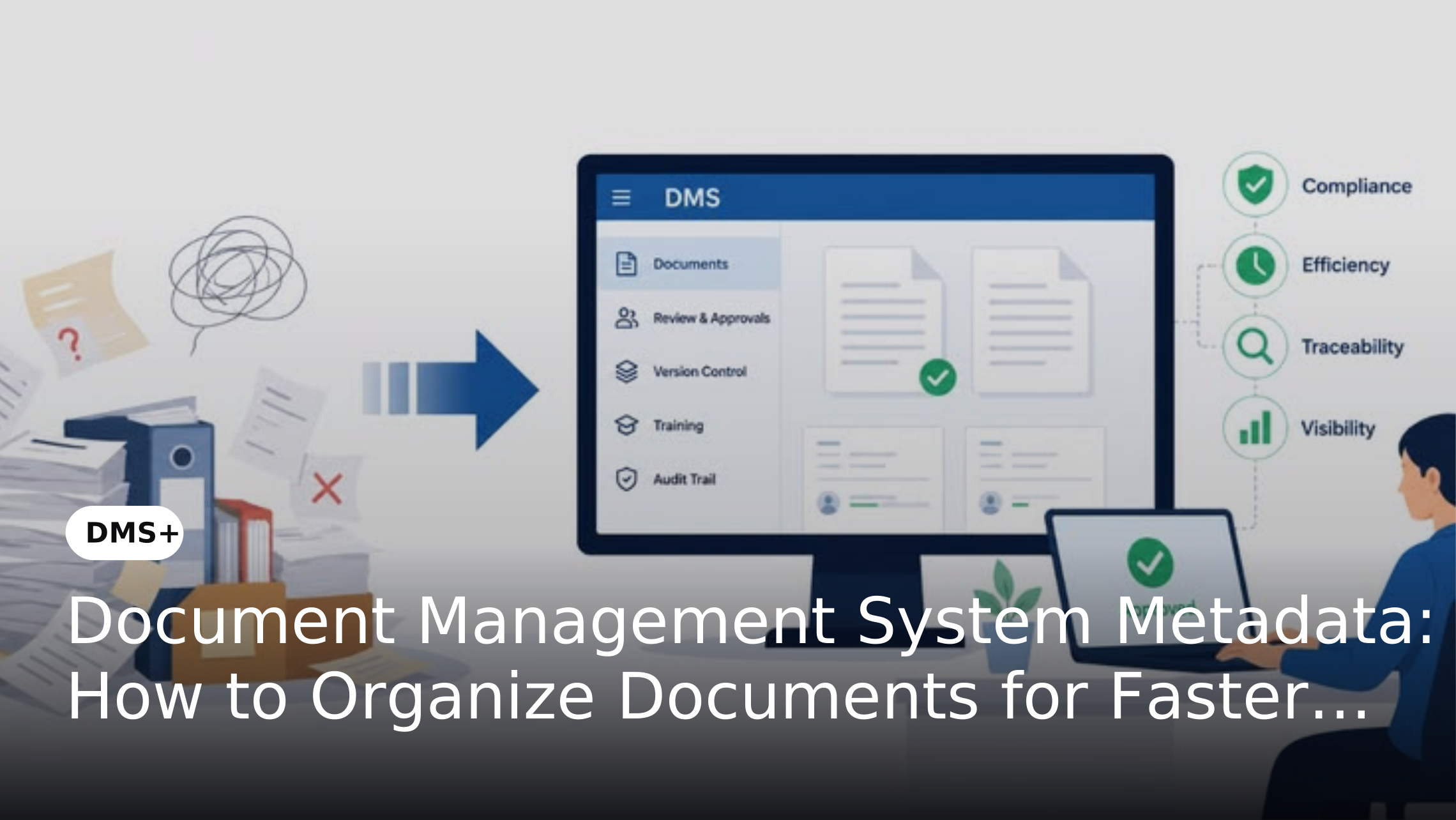
A consistent metadata structure also supports more accurate document retrieval. For more information, see Document Management System Metadata: How to Organize Documents for Faster Search and Retrieval.
3. Define review and approval responsibilities
Corporate policies and SOPs should follow a defined review and approval process before being released as authoritative documents. The process should identify who prepares the document, who reviews it and who has the authority to approve it.
Board records require a separate governance approach. Meeting minutes and resolutions should be maintained according to the organization's applicable approval and confirmation procedures. A document repository can preserve approved records and supporting evidence, but it should not be confused with the formal authority to make or approve corporate decisions.
4. Maintain approved versions and revision history
When a policy or SOP changes, the previous version should not be confused with the current approved document. Organizations should retain relevant historical versions while making the latest approved version identifiable to authorized users.
Revision records should capture relevant information such as the version number, change date, reason for revision and approval status. This helps employees understand which instructions currently apply and supports the review of earlier decisions or procedures.
5. Apply role-based access controls
Access permissions should reflect the sensitivity and business purpose of each corporate record. For example, general workplace policies may be accessible to most employees, while confidential board minutes should be restricted to authorized individuals.
Organizations should define access based on job responsibilities and review permissions periodically. Access controls should also consider whether users need permission to view, download, edit or manage particular records.
6. Define retention and archival requirements
Corporate records should be retained according to their legal, regulatory, contractual and operational requirements. Retention periods should not be applied uniformly because different records may have different obligations.
For example, board minutes, statutory records, internal policies and operational SOPs may be subject to different retention rules. Organizations should establish retention schedules, identify records eligible for archival and ensure that disposal takes place only when permitted under applicable requirements.
Common Challenges in Corporate Records Management
Even when organizations have established documentation practices, certain challenges can weaken their control over official records.
Addressing these challenges requires more than creating a central storage location. Organizations need defined responsibilities, consistent document controls and governance practices that apply across departments.
How DMS+ Supports Corporate Records Management
Centralized storage for corporate records
DMS+ provides a centralized document management environment where organizations can store and retrieve corporate records. Policies, SOPs, board documents and supporting records can be organized using a structured classification approach, reducing dependence on disconnected storage locations.
This gives authorized employees a more consistent way to access business documents while supporting organizational control over important records.
Metadata-based classification and retrieval
Metadata helps organizations classify corporate records using information such as document category, department, owner, approval status and review date. This makes it easier to retrieve specific records without relying entirely on filenames or folder structures.
For example, an employee can search for an approved HR policy or an authorized user can locate a board resolution using relevant document information, subject to the configured access permissions.
Version management and document history
DMS+ can support document version management and help organizations maintain a history of document changes, subject to the deployed configuration. This is useful when policies and SOPs are revised because earlier versions can be distinguished from the current approved documents.
Maintaining document history also helps organizations understand how records have changed over time. For additional guidance, see Maintaining a Complete Document History.
Access control and document security
Corporate records may contain confidential employee information, internal procedures and sensitive governance decisions. DMS+ can support controlled document access through configured permissions, helping organizations restrict records according to user responsibilities.
This is particularly relevant for board documents and other restricted corporate records, where access should be limited to authorized users.
Document retention and governance
A structured document repository can support corporate records governance by helping organizations organize records, maintain relevant document information and apply defined retention practices. Retention rules and archival responsibilities should be configured according to organizational policies and applicable legal requirements.
For broader guidance on establishing document governance controls, see Ensure Data Governance with DMS+: Build Control, Compliance and Confidence.
Best Practices for Maintaining Corporate Records
Organizations can strengthen their corporate records-management practices by following a consistent set of principles:
These practices help create a consistent approach to managing corporate information while reducing the risk of outdated, inaccessible or poorly controlled records.
Conclusion
Corporate records management helps organizations maintain control over the official documents that guide operations and preserve governance decisions. Policies, SOPs and board documents serve different purposes, but all require clear ownership, appropriate classification, controlled access, reliable revision practices and defined retention requirements. Without these controls, organizations risk using outdated information, losing important records or exposing confidential documents.
A structured document management approach can make corporate records easier to organize, retrieve and govern. DMS+ supports this through centralized storage, metadata-based retrieval, version management and access controls, subject to the deployed configuration. By combining these capabilities with defined organizational policies, businesses can strengthen document governance and maintain more reliable corporate records.