Introduction
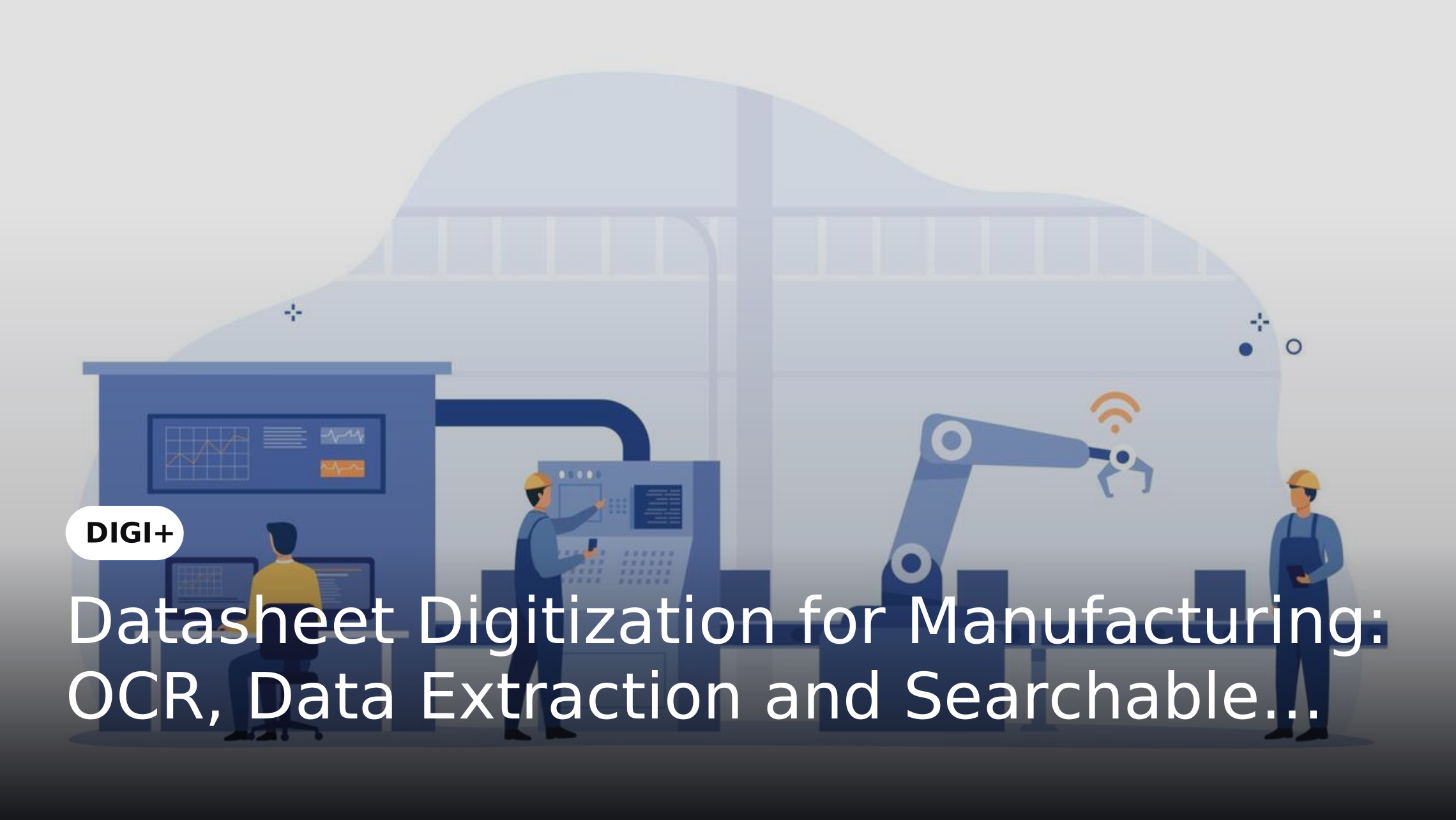
Manufacturers rely on technical datasheets to access product specifications, operating parameters, material details and equipment information. These records support engineering, procurement, maintenance and quality-related activities. However, when datasheets exist as paper documents, image-only PDFs or files scattered across legacy archives, locating specific information can require considerable manual effort.
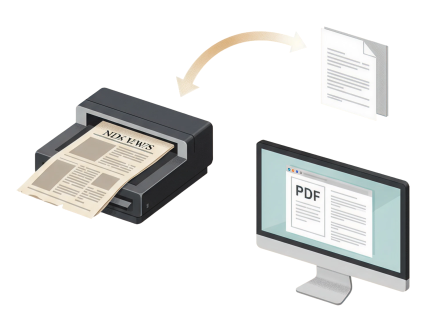
Datasheet digitization converts these records into searchable digital documents and can help extract important specification fields into structured formats. Using Optical Character Recognition (OCR), data extraction, indexing and validation, manufacturers can make existing technical information easier to retrieve and compare. With a structured approach, DIGI+ can support the digitization of legacy technical records while preserving the connection between extracted information and its source document.
Why Manufacturers Need Datasheet Digitization
Technical Information Is Difficult to Retrieve
A manufacturing organization may maintain datasheets from multiple equipment suppliers, component manufacturers and engineering teams. These documents can differ in layout, terminology, units of measurement and file format. When records are stored in physical folders or scanned without consistent indexing, employees may need to open files individually to locate a particular specification.
This becomes more challenging when product names, model numbers or part numbers are recorded inconsistently. Datasheet digitization can make document contents searchable and support retrieval using relevant identifiers, reducing dependence on manual file-by-file inspection.
Manual Specification Extraction Takes Time
Engineering and procurement teams often need to compare parameters across products or verify whether a component meets a technical requirement. Manually reading multiple datasheets and transferring values into spreadsheets introduces repetitive work and creates opportunities for transcription errors.
OCR and structured data extraction can help reduce this effort by capturing text and identifying relevant fields. However, recognizing text is not the same as interpreting technical meaning. Values, units, parameter names and table relationships must be preserved and checked before extracted information is used for decisions.
Legacy Records Can Limit Information Reuse
Older datasheets may be available only as paper copies, scanned images or poorly indexed files. Even when the documents remain readable, their information may not be readily available for digital searches or structured analysis.
Converting these records into searchable digital formats helps organizations reuse existing technical information without relying exclusively on physical archives. For manufacturers managing large collections of engineering documents, this can complement broader initiatives such as digitizing legacy engineering drawings and batch records.
How OCR and Data Extraction Work for Technical Datasheets
1. Document Scanning and Digital Capture
The first step is to capture paper datasheets as digital files. Existing scanned documents and image-based PDFs can also be assessed for processing. Capture quality matters because faded text, skewed pages, low resolution, stains and damaged paper can make information harder to recognize.
Before processing, documents should be checked for missing pages, duplicate copies and unreadable sections. Files should also be grouped or identified using available details such as supplier, product family, model number or document type. This creates a more consistent starting point for extraction and indexing.
2. Optical Character Recognition
OCR converts text visible in scanned documents or images into machine-readable text. For technical datasheets, this may include product identifiers, specification labels, numerical values, measurement units, notes and table contents.
The accuracy of OCR depends on factors such as document quality, font size, layout and the presence of technical symbols. A value such as "0.8" can be materially different from "8.0", while a symbol or decimal point may be difficult to recognize in a degraded scan. OCR output should therefore be reviewed where uncertainty could affect technical interpretation.
3. Structured Specification Data Extraction
After text recognition, the next step is to identify and organize the information that matters to the business. Depending on the document, relevant fields may include:
Not every datasheet contains every field. The extraction structure should reflect the document types and information requirements of the organization.
For example, a pump datasheet may contain flow rate, head, motor power and operating temperature. A different datasheet for an electrical component may emphasize voltage, current, frequency and insulation ratings. The extraction process should retain the relationship between each parameter, its value and its unit instead of collecting isolated text fragments.
Research published in the Journal of Intelligent Manufacturing in 2026 highlights the challenges of extracting structured data from technical datasheets because their layouts and content vary. This reinforces the importance of evaluating both the extracted values and their structure, rather than checking text recognition alone. Read the research on automated technical datasheet processing.
4. Validation and Quality Control
Extracted information should be compared with the original document before it is treated as reliable technical data. This is particularly important when values influence equipment selection, procurement specifications, maintenance planning or engineering assessments.
A practical validation process should check:
Low-confidence or ambiguous results should be flagged for human review. Automated extraction can assist with processing, but it should not be treated as a guarantee of error-free technical data.
How Searchable Specifications Improve Manufacturing Operations
Faster Retrieval of Product Information
When digitized datasheets are indexed using meaningful identifiers, employees can locate records through terms such as product model, supplier, part number or specification name. Searchable text can also help users find documents when they do not know the original filename or physical storage location.
This approach is especially useful for organizations managing large document collections across engineering, procurement and maintenance teams. It complements structured indexing practices described in Why Most Digitization Projects Fail Without Structured Indexing, Metadata and Governance.
Easier Specification Comparison
Structured extraction can help teams bring selected fields from multiple datasheets into a consistent format for comparison. For example, a procurement team may need to compare the operating range, dimensions or power ratings of several components before shortlisting suitable options.
The usefulness of such comparisons depends on consistent field definitions, units and validation rules. Two values should not be compared directly if they refer to different conditions or measurement bases. Technical teams should confirm that the underlying specifications are comparable before using extracted data to support a decision.
Better Access to Historical Technical Records
Manufacturing facilities may retain older datasheets for equipment that remains in service, spare parts that are still required or products with long maintenance lifecycles. Digitizing these records can make historical information easier to retrieve when original files are difficult to locate.
Where document control is important, the digital record should retain useful context such as the source file, document revision and relevant dates. Digitization improves accessibility, but it does not by itself establish that a document is current or approved for operational use.
A Practical Workflow for Datasheet Digitization
A structured workflow helps manufacturers move from scattered documents to searchable technical records without losing control over source information.
Step 1: Identify and Classify Datasheets
Start by identifying the datasheets that need to be digitized. Group them by product family, equipment category, supplier, plant or business function where appropriate. Record available identifiers and separate datasheets from related document types such as engineering drawings, inspection reports and maintenance logs.
Prioritize collections according to retrieval frequency, operational importance, document condition and the effort required to process them. This makes it easier to define a manageable scope for the initial digitization phase.
Step 2: Define the Required Data Fields
Agree on which fields need to be captured for each datasheet category. A general specification template may include the manufacturer, model, part number, parameter, value, unit, revision and source-document reference. Additional fields should be included only where they are relevant to the document type and business requirement.
Consistent field definitions make extracted records easier to search, validate and compare. They also help reviewers distinguish between a missing value, a value that is not applicable and a value that could not be read reliably.
Step 3: Capture Documents and Extract Information
Scan paper records or prepare existing digital files for OCR and extraction. Apply the appropriate processing method to recognize text, capture table contents and identify the required specification fields.
Processing rules should account for variations in layout, page orientation, table structure and technical notation. A single extraction approach may not perform equally well across every supplier or document family, so representative samples should be tested before processing a large collection.
Step 4: Validate Results Against Source Documents
Review extracted records using predefined quality checks. Compare important values with the original datasheets, verify units and confirm that the relationships between headings and values remain intact.
Where practical, use confidence indicators or exception rules to identify records requiring manual review. A record should not be considered ready for operational use solely because the text has been extracted successfully.
Step 5: Index and Make Records Searchable
Assign consistent metadata and identifiers so users can find datasheets through relevant search terms. Depending on business requirements, indexing may include product family, manufacturer, model, part number, revision, equipment category or document date.
The original digital document should remain accessible alongside the extracted information. This allows users to verify a value, inspect footnotes and check the context in which a specification was published.
Step 6: Monitor Quality and Maintain the Collection
After processing, review exceptions and recurring errors to identify where scanning, extraction rules or field definitions need improvement. Track practical measures such as the proportion of records with all required fields, the number of records needing manual correction and the time taken to retrieve a requested datasheet.
Establish a process for handling new revisions and superseded documents. Searchable records are most useful when employees can distinguish historical information from the version approved for their current task.
Common Challenges in Datasheet Digitization
Complex Tables and Technical Notation
Technical datasheets frequently use compact tables, merged cells, abbreviations, symbols and footnotes. OCR may recognize individual words or numbers while failing to preserve their relationship to a particular parameter. For instance, a temperature value may be associated with a specific operating condition that appears in a separate column or note.
To address this challenge, extraction should be evaluated against the structure of the original document. Table boundaries, column headings, units and contextual notes need to be considered together. Where the layout is ambiguous, manual verification is preferable to assuming that the extracted sequence is correct.
Inconsistent Supplier Formats
Different suppliers may use different labels for similar specifications or place the same information in different sections. A field called “rated power” in one document may appear as “nominal power” in another, while abbreviations may vary by industry.
Manufacturers should establish a controlled set of field definitions and map source terminology carefully. Standardization should preserve the original value and meaning rather than forcing unlike specifications into the same category without verification.
Accuracy and Document Version Control
Digitization does not correct errors already present in a source document. Nor does it automatically identify whether an older datasheet has been replaced by a newer revision. These issues require separate validation and document-control procedures.
Maintain a link to the source record and capture revision details wherever available. When multiple versions exist, apply clear rules for identifying current, historical and superseded documents. This reduces the risk of employees relying on a technically accurate extraction from an outdated source.
How DIGI+ Supports Datasheet Digitization
DIGI+ is positioned for digitizing existing paper records and converting them into searchable digital documents through scanning, OCR and indexing. For manufacturing organizations, this provides a relevant foundation for making legacy technical records more accessible.
A datasheet digitization initiative can use this foundation to organize scanned technical documents, improve retrieval and establish a more consistent starting point for data extraction and validation. The exact extraction fields, quality checks and downstream data requirements should be defined against the organization's document samples and intended use cases. Specialized structured extraction should be verified against the required fields before it is assumed to be available as a standard capability.
Organizations evaluating a digitization initiative can also review the broader document digitization services checklist to assess scanning quality, OCR, indexing, quality assurance and handling requirements.
Conclusion
Datasheet digitization helps manufacturers make technical information easier to retrieve and reuse by converting paper records and scanned files into searchable digital documents. OCR provides machine-readable text, while structured data extraction can organize relevant specifications into fields that support review and comparison. Accuracy depends on document quality, layout handling, consistent field definitions and validation against the original source.
A successful initiative should combine appropriate capture methods, datasheet-specific extraction rules, quality checks and meaningful indexing. DIGI+ can support the digitization and searchability of existing technical records, while manufacturers should validate any structured extraction requirements against their actual documents and intended applications. This approach creates a more reliable foundation for accessing historical specifications and managing technical information across manufacturing operations.