Introduction
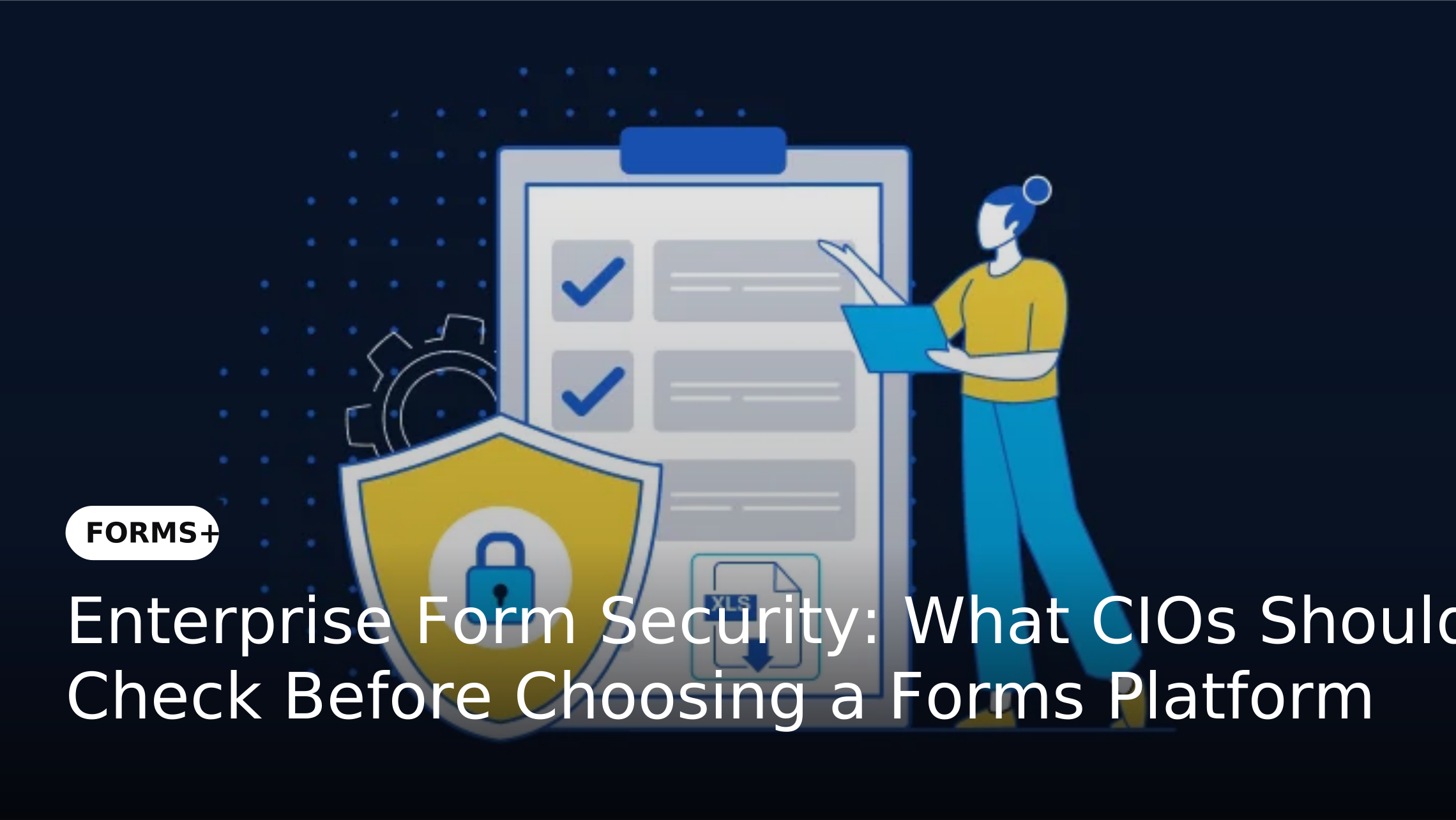
Enterprise forms often capture information that feeds critical business processes. Employee records, customer details, financial requests, vendor information and compliance data may all originate through digital forms. As organizations expand their use of forms, security must be considered at the platform level rather than addressed separately for each form.
For CIOs, selecting an enterprise forms platform therefore involves evaluating how securely information is collected, accessed, transferred, stored and monitored. The right platform should provide security controls that support organizational policies while allowing business teams to create and manage forms efficiently.
Why Enterprise Form Security Matters
A form may appear to be a simple data collection interface but it can become an entry point into important business systems. Poorly protected forms can expose sensitive information, create unauthorized access risks or introduce unreliable data into downstream processes.
Security should therefore be evaluated across the complete form lifecycle. This includes form creation, user access, data submission, storage, integration, monitoring and retention.
What CIOs Should Evaluate in an Enterprise Forms Platform
Access Control and User Permissions
Enterprise platforms should provide granular controls over who can create, edit, publish, access and manage forms. Role-based permissions can help organizations separate administrative responsibilities from regular business users.
CIOs should also evaluate whether access can be managed consistently across departments and whether permissions can be adjusted as employee roles change.
Data Encryption and Protection
Sensitive information should be protected while it is being transmitted and stored. CIOs should understand how the platform protects submitted information and whether security controls can be configured according to organizational requirements.
It is also important to understand how sensitive fields are handled throughout the form lifecycle rather than evaluating encryption in isolation.
Authentication and Identity Management
Enterprise forms may need to be restricted to employees, customers, vendors or specific business groups. Authentication capabilities help organizations control who can access particular forms and submit information.
When evaluating a platform CIOs should consider support for enterprise identity systems, authentication policies and secure user access.
Audit Trails and Activity Monitoring
A secure forms platform should provide visibility into important activities such as form creation, changes, submissions and administrative actions. Audit trails can help organizations investigate incidents and demonstrate accountability.
CIOs should check whether activity records are searchable, retained appropriately and available to authorized administrators.
Compliance and Data Governance
Forms may collect information subject to organizational policies or regulatory requirements. A platform should therefore support the organization's broader data governance framework.
Evaluation should include data handling practices, retention requirements, access policies and compliance capabilities relevant to the organization's industry and operating regions.
Secure Integration With Enterprise Applications
Enterprise forms rarely operate independently. Information may move into ERP, CRM, HRMS, procurement or document management systems after submission.
CIOs should evaluate how securely the forms platform connects with these applications. Integration controls, authentication mechanisms and data-transfer practices should be reviewed to ensure that security is maintained beyond the form itself.
Form Governance at Enterprise Scale
Security becomes harder to manage when hundreds of forms are created across different departments. Organizations need visibility into who owns forms, who can modify them and where collected information is being used.
A strong enterprise forms platform should support centralized governance while allowing authorized teams to manage their own business forms. This helps reduce uncontrolled form creation and inconsistent security practices.
Security Should Not Come at the Cost of Usability
Highly restrictive forms can create poor user experiences and encourage employees to find informal alternatives such as spreadsheets or email. Enterprise security therefore needs to work alongside usability.
CIOs should look for platforms that provide strong security controls without making legitimate users navigate unnecessarily complex processes. The objective is to make the secure approach the easiest approach.
Enterprise Forms Security Checklist
Before selecting a platform CIOs should evaluate:
Questions CIOs Should Ask Forms Platform Vendors
Before making a purchase decision ask:
- How is submitted data protected?
(Understand how information is secured during transmission and storage.)
- Who can access submitted information?
(Review roles, permissions and administrative access.)
- Can the platform integrate with enterprise identity systems?
(Check whether existing authentication and access policies can be supported.)
- How are form activities monitored?
(Understand the availability and scope of audit trails.)
- How does the platform support compliance requirements?
(Evaluate capabilities against the organization's specific regulatory and governance needs.)
- How is security maintained across integrations?
(Review how information moves between Forms+ and connected business applications.)
Why Forms+ Can Support Enterprise Form Security
Forms+ provides organizations with structured digital forms designed for enterprise data collection and process automation. Its security capabilities can help organizations control access to forms and protect information while supporting validation, workflow and integration requirements.
For CIOs the broader consideration is how form security fits into enterprise operations. Forms+ can be evaluated not simply as a form builder but as part of a controlled environment for collecting and moving business information across organizational processes.
Conclusion
Enterprise form security should be evaluated as part of the complete data lifecycle rather than as a single product feature. Access control, authentication, data protection, auditability, compliance and secure integrations all contribute to a stronger enterprise forms environment.
For CIOs, the right platform should balance security with scalability and usability. A forms solution that combines these capabilities can help organizations expand digital data collection without creating unnecessary security and governance risks.
Frequently Asked Questions
What is enterprise form security?
Enterprise form security refers to the controls used to protect information collected through digital forms. It includes access management, authentication, data protection, monitoring, compliance and governance.
What security features should an enterprise forms platform have?
Organizations should evaluate access controls, authentication, encryption, audit trails, compliance capabilities, data governance and secure integrations with business applications.
Why are audit trails important for digital forms?
Audit trails provide visibility into activities such as form changes, submissions and administrative actions. This can support accountability, investigation and compliance requirements.
How can CIOs evaluate a forms platform for compliance?
CIOs should assess how the platform handles data access, storage, retention, protection and monitoring against the organization's specific regulatory and governance requirements.
Should enterprise forms integrate with existing security systems?
Yes. Integration with existing identity, authentication and business systems can help organizations apply established security policies across digital form processes.