Introduction
Enterprise forms are used across HR, procurement, finance, compliance, operations and customer-facing processes. As organizations digitize more workflows, the number of forms can grow across departments and business units. Without consistent ownership and controls, organizations can end up with duplicate forms, outdated versions, inconsistent access rules and limited visibility into how information is collected.
This is where enterprise form governance becomes important. It provides a structured approach to managing who creates forms, who can modify them, what information they collect, how they are used and when they should be reviewed or retired. Effective governance helps organizations maintain consistency while allowing business teams to continue creating forms for legitimate operational needs.
What Is Enterprise Form Governance?
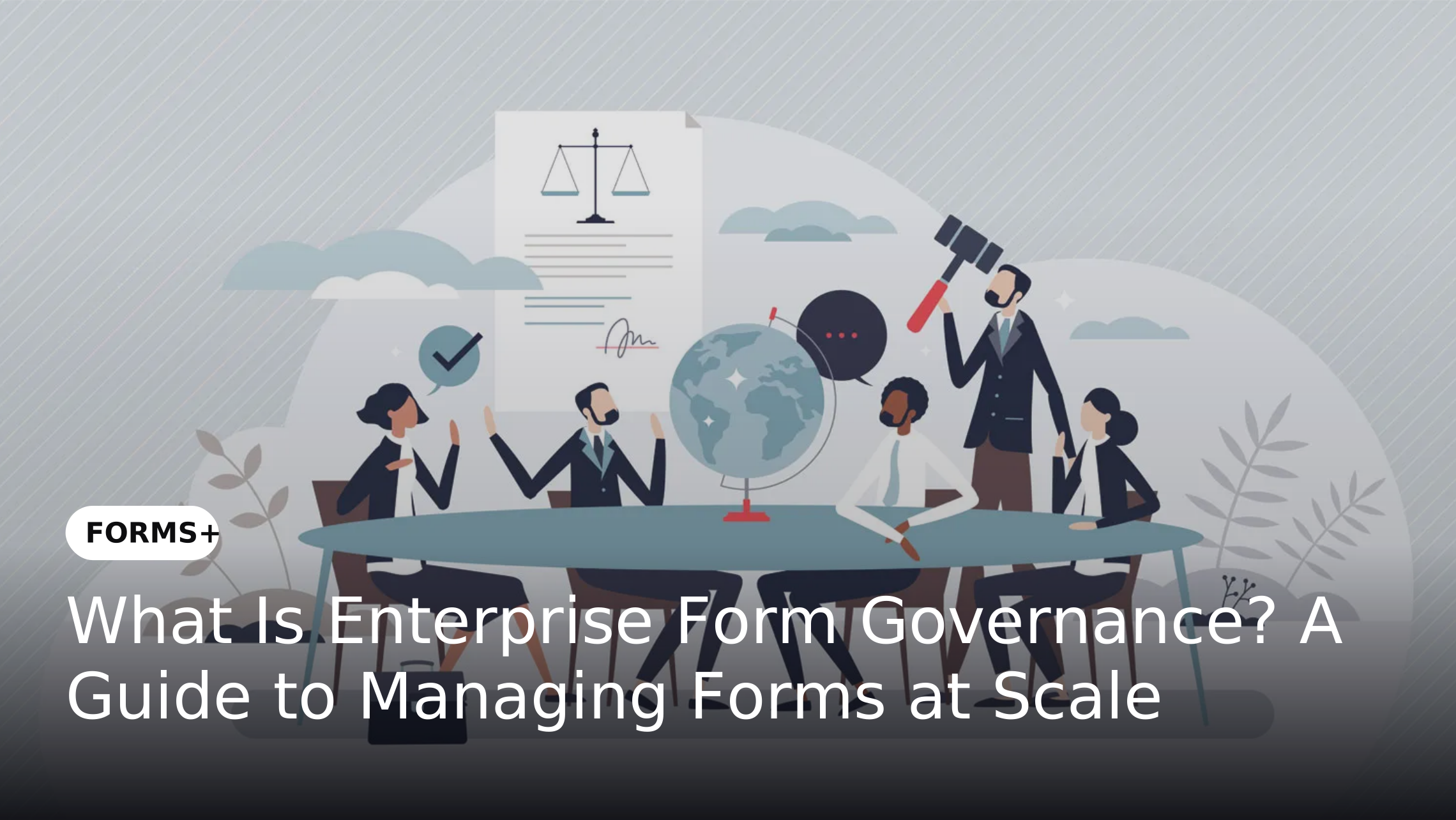
Enterprise form governance is the framework used to control the creation, ownership, security, use, review and retirement of digital forms across an organization. Instead of allowing every department to manage forms independently, governance establishes common standards for form design, permissions, data collection, workflows, integrations and lifecycle management. The goal is not to restrict form creation. It is to make sure every form has a clear purpose, accountable owner and appropriate controls.
Why Do Enterprises Need Form Governance?
As form usage expands, managing individual forms manually becomes increasingly difficult. Different teams may create forms for similar processes or continue using outdated versions after business requirements change. This can create unnecessary duplication and inconsistent processes.
It can also make it harder for IT and compliance teams to determine where sensitive information is being collected and who has access to it. A related challenge exists across broader enterprise data environments. Deloitte notes that data sprawl increases complexity, risk and operating costs as organizations accumulate data across platforms and environments. Form governance addresses a similar issue at the data-entry and intake layer.
What Happens Without Enterprise Form Governance?
1. Form Sprawl
Different departments may create multiple forms for similar requests. Over time, employees may struggle to identify which version should be used.
2. Unclear Ownership
A form may remain active even after its original creator changes roles or leaves the organization. Without defined ownership, updates and reviews can be missed.
3. Inconsistent Data Collection
Different forms may collect the same information using different formats or requirements. This makes downstream processing and reporting more difficult.
4. Outdated Forms
Business processes change. Forms that are not periodically reviewed can continue collecting obsolete information or using outdated approval requirements.
5. Limited Governance Visibility
When forms are managed across disconnected tools, IT teams may have difficulty understanding how many forms exist, who manages them and where their information goes.
Key Components of an Enterprise Form Governance Framework
Form Ownership
Every form should have a clearly assigned business owner responsible for its purpose, content and ongoing relevance. Ownership creates accountability and makes it easier to determine who should approve changes or review the form periodically.
Standardized Form Design
Organizations can establish common standards for naming, field definitions, required information, instructions and user experience. Standardization makes forms easier to manage while creating more consistent information capture across departments.
Access and Permissions
Not every employee should have the ability to create, publish or modify enterprise forms. Role-based permissions can help separate form creators, administrators, reviewers and users while reducing unnecessary access.
Review and Approval Controls
Changes to important forms should follow an appropriate review process. This can help prevent unauthorized changes from reaching employees, customers or other external users.
Form Lifecycle Management
Governance should cover the entire form lifecycle:
Create → Review → Approve → Publish → Monitor → Update → Archive
This ensures forms do not remain active indefinitely without review.
How Automation Makes Form Governance Easier
Manual governance becomes difficult when an organization manages hundreds or thousands of forms. Automated workflows can support recurring reviews, approval processes, ownership changes and lifecycle actions.
The 2025 State of Enterprise Data Governance report found that 54% of surveyed data leaders identified embedding governance into workflows or increasing automation as modernization priorities.
For form governance, the same principle can be applied by embedding governance rules directly into the form management process rather than relying entirely on manual oversight.
Form Governance and Data Quality
Governance does not replace data validation but it creates the structure around how forms should collect information consistently. For example, an organization can establish standards for required fields, approved terminology, field formats and business rules. These standards can then be applied across relevant forms.
This becomes particularly important because poor data quality can have significant operational consequences. IBM reports that 43% of chief operations officers identify data quality issues as their most significant data priority, while more than a quarter of organizations surveyed estimated annual losses above $5 million from poor data quality.
For a deeper discussion of data quality at the point of collection, link to Bad Data Enters at the Form Level And It Costs More Than You Think.
How Enterprise Form Governance Supports Security and Compliance
Forms may collect employee information, financial details, customer data, vendor information and other sensitive business information. Governance helps organizations define who can access forms, who can modify them and how information should be handled throughout the form lifecycle.
Security should therefore be considered as part of governance rather than treated as an isolated form feature. For the detailed security capabilities of FORMS+ link to Secure Digital Forms with Encryption, Masking and Validation in FORMS+.
How to Build an Enterprise Form Governance Strategy
1. Create a Form Inventory
Start by identifying the forms currently used across departments, locations and business processes. Record basic information such as purpose, owner, department, users, data collected and connected systems.
2. Assign Ownership
Every active form should have an accountable owner who can approve changes and confirm that the form remains relevant.
3. Define Enterprise Standards
Create common standards covering naming, design, required fields, permissions, approval and review requirements.
4. Establish a Review Cycle
Forms should be reviewed periodically based on their business importance and risk level.
5. Automate Governance Workflows
Use automated notifications, approvals and review workflows to reduce dependence on manual tracking.
6. Retire Unused Forms
Archived or obsolete forms should be removed from active use to reduce confusion and unnecessary governance exposure.
How FORMS+ Supports Enterprise Form Governance
FORMS+ can provide a structured environment for organizations managing digital forms across business processes. Instead of treating every form as an isolated data collection tool, organizations can connect form creation with validation, workflows and enterprise processes.
This supports a more controlled approach to form management while allowing departments to digitize their own business requests and processes. Organizations can also connect form-driven processes with other enterprise solutions where required. For example, DMS+ can support document-centric processes while Flow+ can support broader workflow automation.
Enterprise Form Governance Checklist
Before implementing a governance framework, organizations should be able to answer:
If several of these questions cannot be answered clearly, the organization may have a form governance gap.
Conclusion
Enterprise form governance provides the structure organizations need to manage digital forms as their use expands across departments, locations and business processes. By establishing ownership, standards, access controls, review processes and lifecycle management, organizations can reduce form sprawl and create greater consistency across business operations.
The objective is not to centralize every form under IT. It is to create a governance framework that gives business teams the flexibility to build forms while maintaining appropriate enterprise standards. With FORMS+ organizations can move toward a more structured approach to managing digital forms while connecting data capture with the workflows and systems that support business operations.