Introduction
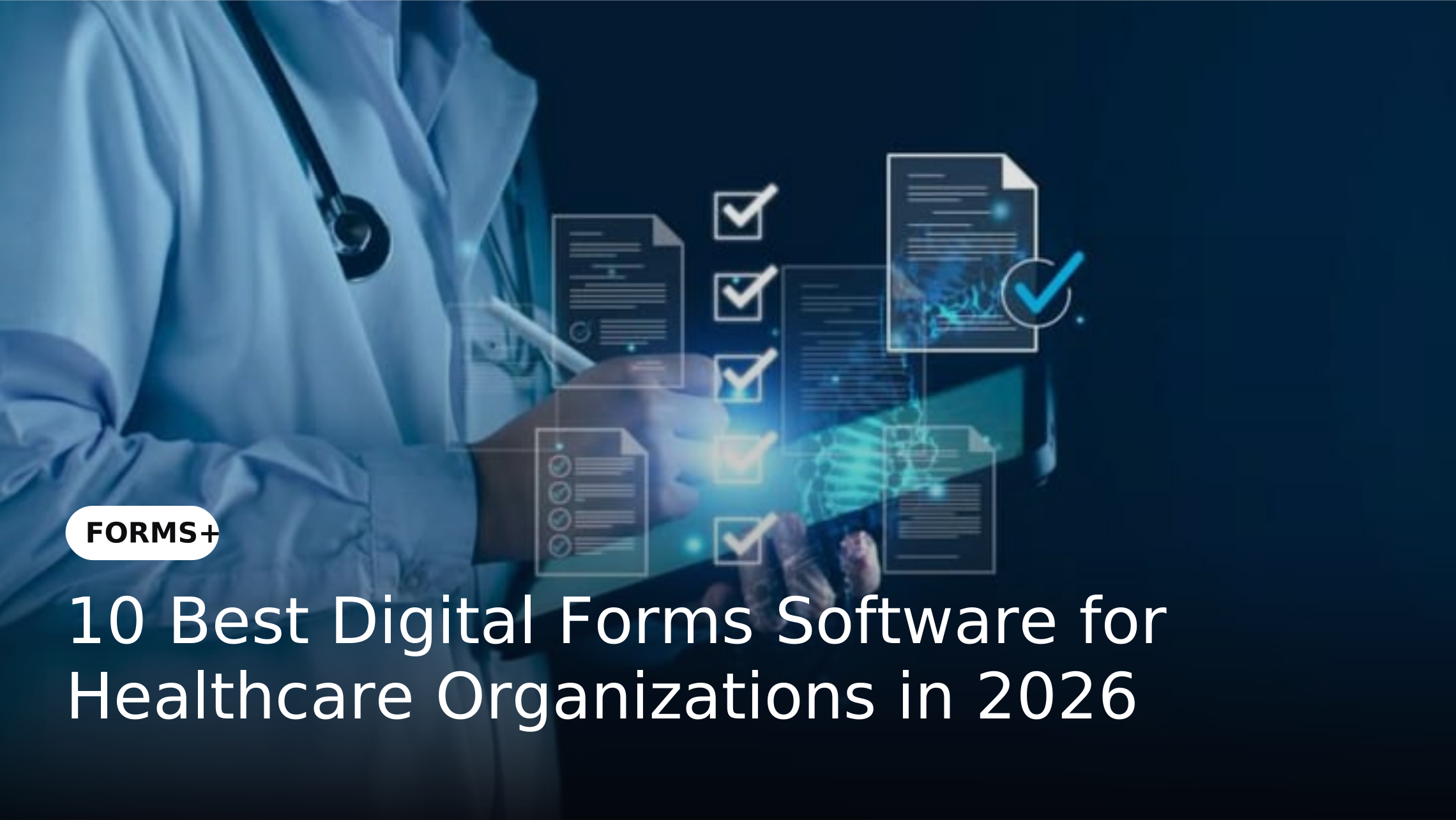
Healthcare organizations manage thousands of forms every day, from patient registration and consent forms to employee onboarding, vendor documentation and compliance records. Paper-based processes and disconnected digital forms often lead to manual errors, delayed approvals and fragmented data that impact operational efficiency and patient care.
Choosing the right digital forms software helps healthcare providers standardize data collection, automate workflows and integrate information with existing business applications. The platforms listed below offer different capabilities to meet the needs of hospitals, clinics, diagnostic centers and healthcare enterprises looking to modernize their operations.
Why Digital Forms Software Matters in Healthcare
Healthcare organizations depend on accurate and timely information to deliver quality care and maintain compliance. Digital forms simplify data collection, reduce paperwork and improve collaboration across departments. By replacing manual processes with intelligent forms organizations can accelerate approvals, enhance patient experiences and ensure information reaches the right systems without unnecessary delays.
What to Look for Before Choosing Digital Forms Software
The right platform should offer secure data collection, workflow automation, conditional logic, electronic signatures, mobile accessibility and integration with healthcare systems. Organizations should also evaluate scalability, ease of use, reporting capabilities and compliance support to ensure the software can adapt to evolving operational and regulatory requirements.
10 Best Digital Forms Software for Healthcare Organizations
1. Forms+
Best for: Medium to large healthcare organizations seeking enterprise-grade forms automation.
Forms+ helps healthcare providers digitize patient registrations, employee onboarding, procurement requests and compliance processes through intelligent digital forms. It combines workflow automation with enterprise integrations, making it suitable for organizations managing complex business operations across multiple departments.
Key Strengths:
Pricing: Contact sales team for a customized quotation.
2. Formstack
Best for: Healthcare providers requiring secure patient data collection.
Formstack enables organizations to create digital healthcare forms, automate workflows and collect electronic signatures. Its healthcare-focused capabilities make it suitable for patient intake, consent forms and operational processes while reducing manual paperwork.
Key Strengths:
Pricing: Subscription-based plans with custom enterprise options.
3. Google Forms
Best for: Basic internal forms and surveys.
Google Forms offers a simple way to create online forms for internal feedback, training and administrative requests. Its seamless integration with Google Workspace makes it suitable for small teams, although advanced automation and enterprise features are limited.
Key Strengths:
Pricing: Free. Advanced collaboration features require Google Workspace.
4. Jotform
Best for: Small to mid-sized clinics and medical practices.
Jotform provides a drag-and-drop form builder with healthcare templates, electronic signatures and payment integrations. It enables organizations to digitize patient registration, appointment requests and feedback collection without extensive technical expertise.
Key Strengths:
Pricing: Free plan available. Paid plans unlock advanced features.
5. Microsoft Forms
Best for: Organizations using Microsoft 365.
Microsoft Forms allows healthcare teams to build surveys, quizzes and internal request forms while integrating with Excel, SharePoint and Power Automate. It is well suited for employee feedback and simple administrative processes.
Key Strengths:
Pricing: Included with Microsoft 365 subscriptions.
6. Truecontext
Best for: Mobile healthcare teams and field operations.
Truecontext specializes in mobile-first data collection, enabling healthcare professionals to complete forms offline and synchronize information later. It supports organizations managing home healthcare, inspections and field-based clinical activities.
Key Strengths:
Pricing: Subscription-based enterprise pricing.
7. SurveyMonkey
Best for: Patient and employee feedback surveys.
SurveyMonkey helps healthcare organizations collect structured feedback through customizable surveys and reporting tools. It is widely used for patient satisfaction, employee engagement and service quality assessments.
Key Strengths:
Pricing: Free plan available with premium subscription options.
8. Typeform
Best for: Interactive patient engagement.
Typeform creates conversational forms that improve response rates through an engaging user experience. Healthcare providers commonly use it for patient feedback, event registrations and appointment requests.
Key Strengths:
Pricing: Free plan available. Paid plans offer advanced functionality.
9. Wufoo
Best for: Small healthcare practices.
Wufoo enables organizations to quickly digitize routine forms through an easy-to-use online form builder. It supports file uploads, payment collection and basic workflows for everyday administrative tasks.
Key Strengths:
Pricing: Free plan available with paid business plans.
10. Zoho Forms
Best for: Organizations using the Zoho ecosystem.
Zoho Forms offers digital forms with workflow automation, conditional logic and mobile accessibility. Its integration with other Zoho applications makes it suitable for healthcare organizations looking to streamline administrative and operational processes.
Key Strengths:
Pricing: Free plan available. Paid plans for advanced automation and integrations.
Which Digital Forms Software Should You Choose?
The right digital forms software depends on your organization's size, operational requirements and digital transformation goals. Smaller clinics may prioritize ease of use, while large hospitals and healthcare enterprises often require workflow automation, enterprise integrations, compliance support and scalability. Selecting a platform that aligns with your long-term processes will deliver greater operational value than focusing only on basic form creation.
What Makes Forms+ Different for Enterprise Healthcare?
While many digital forms platforms focus primarily on collecting information, Forms+ is designed to automate complete business processes. It combines intelligent forms with workflow automation, approval routing and enterprise integrations, enabling healthcare organizations to digitize everything from patient registrations and employee onboarding to procurement requests and compliance processes. This makes Forms+ suitable for organizations seeking a scalable enterprise solution rather than a standalone form builder.
Conclusion
Digital forms software has become an essential part of modern healthcare operations, helping organizations improve data accuracy, reduce paperwork and streamline administrative processes. Choosing the right platform depends on factors such as workflow requirements, integration capabilities, compliance needs and the scale of healthcare services being delivered.
For healthcare organizations seeking an enterprise-ready solution, Forms+ offers intelligent data capture, automated workflows and seamless integration with existing business applications. By replacing manual processes with connected digital forms, healthcare providers can improve operational efficiency, strengthen compliance and deliver a better experience for both patients and staff.