Introduction
In many enterprises, approvals still begin with a simple email.
“Please approve.”
“Kindly review.”
“Following up.”
At first glance, it feels efficient. Email is familiar, accessible and universal. But as organizations grow across departments, geographies and regulatory environments email-based approvals quietly become one of the biggest barriers to scale.
Because email is communication. It is not workflow. And when business-critical decisions depend on inbox threads, enterprises lose visibility, accountability and control.
The Illusion of Simplicity
Email-based approvals often start as a temporary solution. A manager forwards a request. Someone replies “Approved.” A PDF is attached. The process feels complete.
But over time, the cracks appear:
- No visibility into bottlenecks
- No centralized audit trail
- No standardized version control
Approvals get buried under other emails. Threads split. Attachments change. Decision history becomes fragmented. What seemed convenient becomes operational risk.
Why Email-Based Approvals Don’t Scale
No Process Visibility
In email-driven workflows, there is no real-time dashboard showing:
- How long it has been pending
- Whether SLAs are breached
- Where bottlenecks are forming
Leaders rely on manual follow-ups to get status updates. This wastes time and creates unnecessary pressure on teams. Scaling organizations require transparency and not inbox detective work.
No Accountability Framework
When multiple stakeholders are CC’d in approval emails, responsibility becomes diluted. If a request stalls, it is unclear who owns the delay.
Without defined roles and structured routing:
- Approvals remain ambiguous
- Decision timelines become unpredictable
This lack of ownership weakens governance and compliance posture.
Audit Risks Multiply
Email approvals create compliance exposure because:
- There is no centralized audit trail
- Version history is scattered
- Attachments can be modified without control
- Decisions are difficult to trace months later
During audits, organizations scramble to reconstruct approval histories from inboxes which is a time-consuming and unreliable process. Workflow systems should create automatic, tamper-proof audit logs — not require retrospective reconstruction.
Manual Follow-Ups Drain Productivity
“Gentle reminder.”
“Following up.”
“Resending for approval.”
These phrases represent operational inefficiency.
Teams spend hours tracking pending approvals instead of focusing on higher-value work. The larger the organization grows, the heavier this invisible coordination cost becomes. Automation without visibility simply accelerates chaos.
The Strategic Difference: Communication vs Workflow
Email is designed for messaging.
Workflow systems are designed for:
- Audit-ready documentation
Scaling enterprises need systems that enforce structure and not rely on memory and manual discipline.
What Structured Approval Automation Looks Like
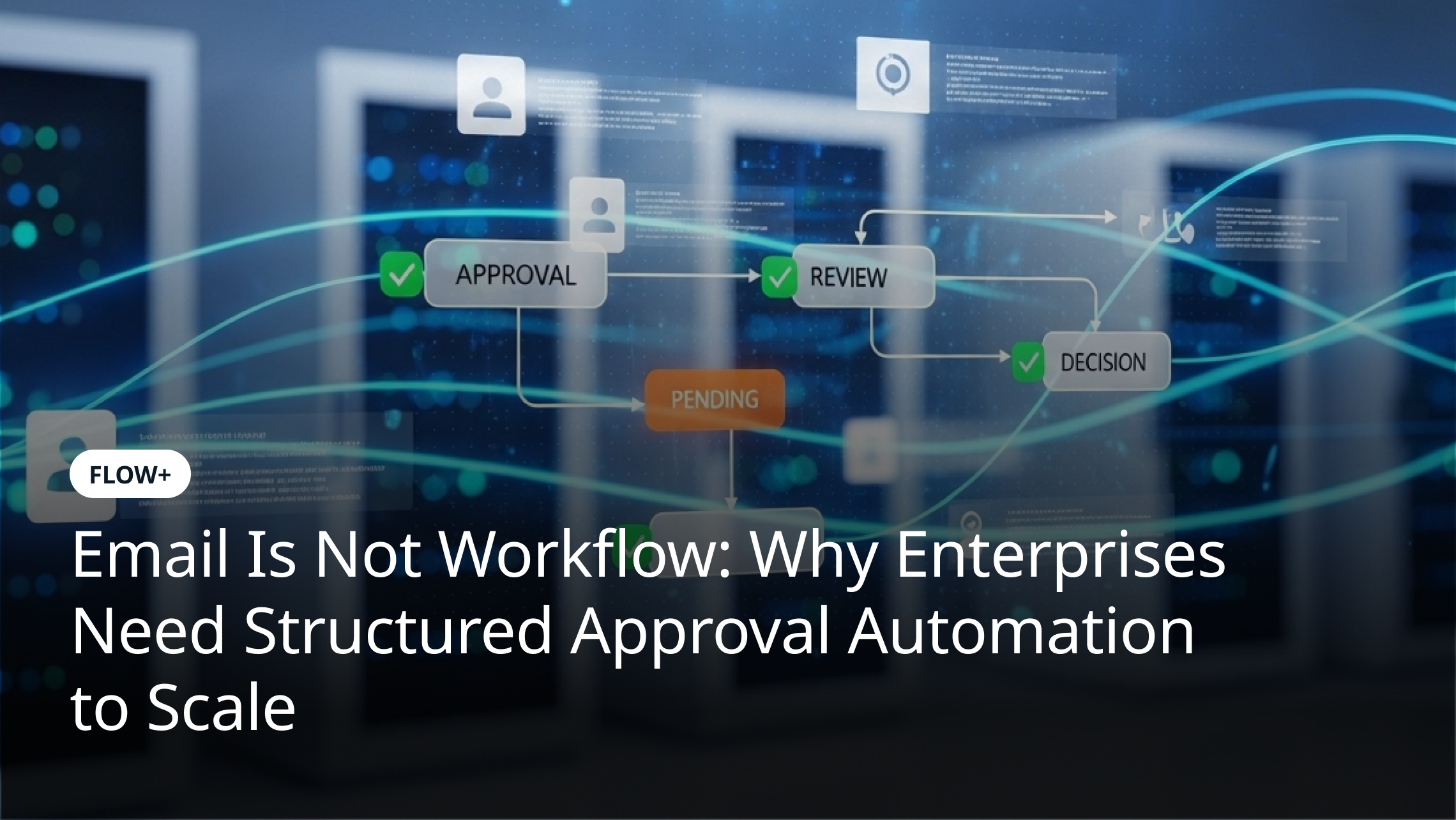
With a platform like FLOW+, approval processes become governed systems instead of scattered threads.
- Centralized Workflow Dashboards: Decision-makers get real-time insights into approval status, pending tasks, bottlenecks and turnaround times.
- Defined Ownership: Each stage of the workflow is assigned to a specific role, eliminating ambiguity.
- Automated Escalations: If an SLA is breached, the system triggers escalation automatically — no manual reminders required.
- Conditional Routing: Approvals can dynamically adjust based on value thresholds, risk levels, department rules, or regulatory requirements.
- Full Audit Trails: Every action be it submission, review, approval, rejection, escalation is timestamped and traceable.
- Integration With Core Systems: Workflow automation integrates with ERP, CRM, DMS+ and HRMS systems, ensuring seamless process continuity.
This is not just faster approvals. It is accountable decision orchestration.
Real-World Impact
Organizations that replace email-based approvals with structured workflow automation report:
- Reduced approval cycle times
- Improved compliance documentation
- Higher transparency across departments
- Reduced internal friction
- Stronger governance alignment
More importantly, leadership gains operational visibility. Instead of asking, “Where is this stuck?”, they can see exactly where and why.
Scaling Requires Process Discipline
Startups can survive with email-based approvals. Enterprises cannot. As transaction volumes increase, regulatory scrutiny intensifies and cross-functional collaboration becomes complex, informal systems collapse under pressure.
Growth without structured workflows leads to:
Structured workflow automation transforms approvals from reactive coordination to proactive governance.
Conclusion
Email is an excellent communication tool. But it was never designed to manage enterprise decision-making. If your critical processes depend on follow-up emails, reminders and manual tracking, you don’t have a workflow — you have an inbox dependency.
Scaling organizations require:
FLOW+ replaces inbox chaos with structured, transparent and audit-ready approval systems enabling enterprises to scale confidently without losing control.
Because true workflow automation is not about moving faster. It’s about moving with clarity and control.