Introduction
Enterprise workflow automation has traditionally focused on executing predefined business rules, routing approvals and eliminating repetitive manual tasks. While this approach has significantly improved operational efficiency, modern organizations are now looking beyond rule-based automation to create workflows that can understand context, make informed decisions and adapt to changing business conditions.
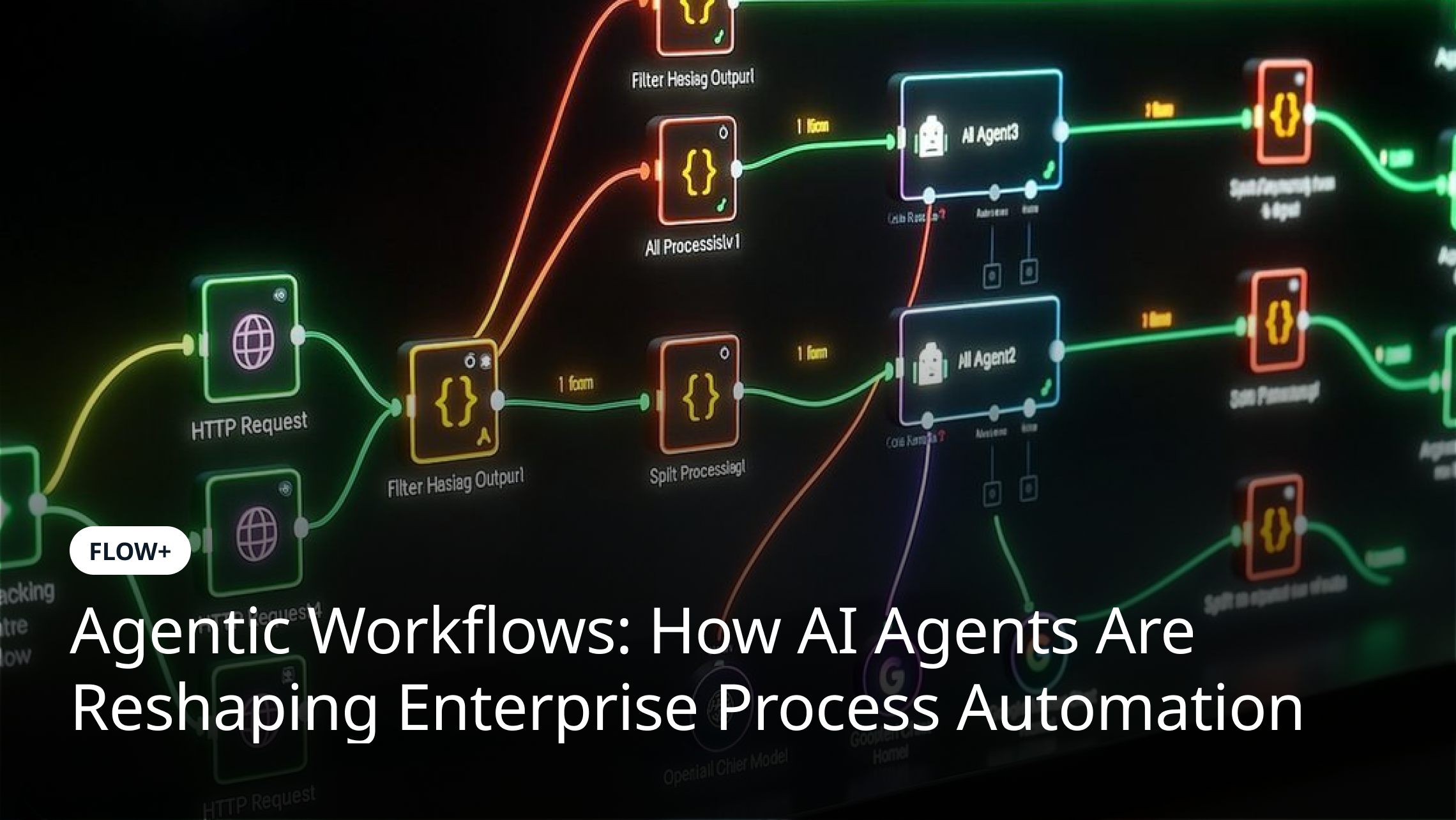
This shift has given rise to Agentic Workflows, where AI agents work alongside employees and enterprise systems to automate increasingly complex business processes. Instead of simply moving tasks from one stage to another, AI agents can analyze information, recommend actions, trigger workflows and assist employees throughout the decision-making process. For CIOs and business leaders, agentic workflows represent the next evolution of enterprise process automation.
What Are Agentic Workflows
Agentic workflows are business processes powered by AI agents that can perceive information, reason through business scenarios, make decisions based on defined objectives and execute actions across enterprise applications. Unlike traditional workflows that rely solely on predefined rules, agentic workflows combine workflow automation with artificial intelligence to create more intelligent and adaptive business operations.
Rather than replacing workflow automation, AI agents enhance it by handling tasks that require contextual understanding and dynamic decision-making. Human approvals remain essential for strategic, financial and compliance-related decisions, while AI agents support employees by reducing manual effort and accelerating routine business activities.
Traditional Workflow Automation vs Agentic Workflows
Traditional workflow automation excels at executing structured and repetitive processes. For example, a purchase request exceeding a predefined amount may automatically be routed to a department manager before moving to finance for final approval. These workflows follow fixed business rules and produce consistent outcomes.
Agentic workflows build on this foundation by introducing intelligence into the process. An AI agent can review historical purchasing patterns, identify unusual spending, verify vendor information, summarize supporting documents and recommend the most appropriate approval path before the workflow continues. Flow+ orchestrates the overall business process while AI agents enhance decision-making at key stages, creating workflows that are both efficient and intelligent.
Why Enterprises Are Moving Toward Agentic Workflows
Modern enterprises generate vast amounts of structured and unstructured information every day. Employees often spend valuable time reviewing documents, searching for information, validating requests and coordinating activities across multiple departments before decisions can be made.
Agentic workflows reduce this complexity by allowing AI agents to perform many of these supporting activities automatically. They can gather relevant business information, identify missing data, prioritize requests based on urgency and provide contextual recommendations to decision-makers. This enables employees to focus on higher-value work while improving both the speed and quality of business processes.
Key Capabilities of AI Agents in Enterprise Workflows
AI agents extend workflow automation by introducing capabilities that were previously difficult to automate through traditional business rules alone.
1. Intelligent Information Analysis
AI agents can analyze emails, contracts, invoices, reports and business documents to extract relevant information before initiating or progressing a workflow. When organizations receive paper-based or scanned documents, solutions such as Digi+ can first digitize and convert them into searchable digital content, enabling AI agents to work with accurate and structured business information.
2. Context-Aware Decision Support
Instead of relying solely on predefined rules, AI agents evaluate contextual business information before recommending the next action. This helps organizations make more informed decisions while reducing unnecessary delays in approval processes.
3. Automated Task Prioritization
AI agents can assess deadlines, workload, business impact and service-level agreements (SLAs) to prioritize workflow tasks dynamically, ensuring critical activities receive immediate attention.
4. Continuous Learning
Unlike traditional workflows that require manual rule updates, AI agents continuously improve their recommendations by learning from historical business data, user interactions and organizational policies while remaining aligned with governance requirements.
How Agentic Workflows Transform Enterprise Operations
Agentic workflows are changing how organizations manage end-to-end business processes by combining intelligent decision support with structured workflow automation. Rather than operating as isolated technologies, AI agents collaborate with enterprise systems to create faster, more connected and more responsive operations.
For example, a procurement process may begin with a vendor registration form submitted through Forms+. An AI agent reviews the submitted information, validates supporting documents, identifies potential risks and recommends an approval path before Flow+ automatically routes the request to the appropriate stakeholders. Once approved, related vendor documents can be securely stored and governed in DMS+, creating a connected digital process with minimal manual intervention.
Business Functions That Benefit from Agentic Workflows
Although almost every department can benefit from intelligent workflow automation, several business functions are already seeing significant improvements through the adoption of AI-assisted workflows.
Procurement
AI agents can validate purchase requests, identify duplicate orders, assess supplier risks and recommend approval paths before procurement workflows continue.
Human Resources
Employee onboarding, leave approvals, document verification and policy acknowledgements can be accelerated through intelligent workflow automation while maintaining appropriate managerial oversight.
Finance
AI agents can review invoices, identify missing information, highlight unusual transactions and assist finance teams before workflows continue into payment approvals. Once financial approvals are completed, solutions such as AccountsPayable+ can further streamline invoice processing and payment management while maintaining financial compliance.
Legal and Compliance
AI-assisted workflows can summarize contracts, identify missing clauses, highlight compliance risks and accelerate legal review without replacing human expertise.
Challenges Enterprises Must Address Before Adopting Agentic Workflows
While agentic workflows offer significant advantages, successful adoption requires careful planning and governance. AI agents should operate within clearly defined business rules and organizational policies to ensure their recommendations remain accurate, transparent and aligned with business objectives.
Enterprises should also focus on data quality, system integration, security and user adoption. AI agents are only as effective as the information they receive. Integrating enterprise applications, digitizing legacy documents and maintaining reliable business data enables AI-driven workflows to deliver consistent and trustworthy outcomes.
Human Oversight Will Continue to Play a Critical Role
Despite the rapid advancement of AI, enterprise workflow automation will continue to rely on human expertise for strategic decisions, regulatory compliance and exception handling. Agentic workflows are designed to augment employees rather than replace them by reducing repetitive work and providing intelligent recommendations throughout the workflow.
For example, an AI agent can review a supplier contract, summarize key clauses and identify potential risks before sending it for approval. Business leaders remain responsible for making the final decision while benefiting from faster access to relevant information and actionable insights.
Real-World Examples of Agentic Workflows
1. Intelligent Vendor Onboarding
A global manufacturing company receives hundreds of vendor registration requests every month. Instead of manually reviewing every application, suppliers submit their details through Forms+, where AI agents validate the information, identify missing documents and perform initial compliance checks. Once verified, Flow+ automatically routes the request to procurement and finance teams for approval while approved vendor records and supporting documents are securely managed in DMS+.
Business Outcome
2. AI-Assisted Invoice Processing
A finance department receives invoices in multiple formats including scanned documents and email attachments. Digi+ converts paper invoices into searchable digital content while AI agents extract invoice details, identify discrepancies and recommend the appropriate approval path. Flow+ then automates invoice approvals and once approved the process seamlessly continues into AccountsPayable+ for payment processing and financial reconciliation.
Business Outcome
3. Employee Onboarding
A new employee completes digital onboarding forms using Forms+. AI agents verify submitted information, identify missing documents and recommend the appropriate onboarding tasks based on the employee's department and role. Flow+ automatically coordinates activities across HR, IT and Administration while employment records are securely stored in DMS+ for future reference.
Business Outcome
Best Practices for Implementing Agentic Workflows
Organizations should begin with well-defined business processes before introducing AI into workflow automation. Standardizing approvals, eliminating unnecessary manual steps and integrating enterprise applications create a strong foundation for intelligent automation.
It is equally important to establish governance frameworks that define where AI agents can make recommendations and where human approvals remain mandatory. Regular performance monitoring, continuous model improvement and employee training help organizations maximize the benefits of agentic workflows while maintaining compliance, transparency and operational control.
Building an Intelligent Enterprise with the dMACQ Ecosystem
Agentic workflows deliver the greatest value when every stage of a business process is digitally connected. Instead of operating as isolated solutions, enterprise applications should work together to create a seamless flow of information from data capture to final execution.
A typical intelligent workflow may begin when business information is submitted through Forms+. If supporting documents are paper-based Digi+ converts them into searchable digital records that AI agents can analyze. Flow+ then orchestrates approvals, notifications, escalations and business rules while integrating with enterprise applications across departments. Throughout the process DMS+ securely manages contracts, invoices, employee records and other business documents with version control and audit trails. For finance operations approved invoices can continue into AccountsPayable+ to automate payment workflows and strengthen financial governance. Together these solutions create a connected enterprise ecosystem that enables intelligent automation across the entire business lifecycle.
Why Flow+ Is Built for the Era of Agentic Workflows
As AI capabilities continue to evolve, organizations require a workflow platform that combines intelligent automation with enterprise governance. Flow+ provides this foundation by orchestrating business processes across departments while remaining flexible enough to support AI-assisted decision making and future innovations.
Its enterprise capabilities include:
By combining structured workflow automation with AI-driven insights, Flow+ enables organizations to build intelligent business processes without compromising governance, security or operational visibility.
Conclusion
Agentic workflows represent the next stage in the evolution of enterprise process automation. By combining AI agents with workflow automation, organizations can move beyond rule-based execution to create intelligent processes that understand context, support decision making and continuously improve operational performance. Rather than replacing employees, AI agents empower teams with faster insights, reduced manual effort and more informed business decisions.
The future of enterprise automation lies in connected digital ecosystems where information moves seamlessly across people, processes and systems. With Flow+ orchestrating enterprise workflows and complementary solutions such as Forms+, Digi+, DMS+ and AccountsPayable+ supporting different stages of the business lifecycle, organizations can build secure, scalable and future-ready operations that accelerate digital transformation while delivering measurable business value.