Introduction
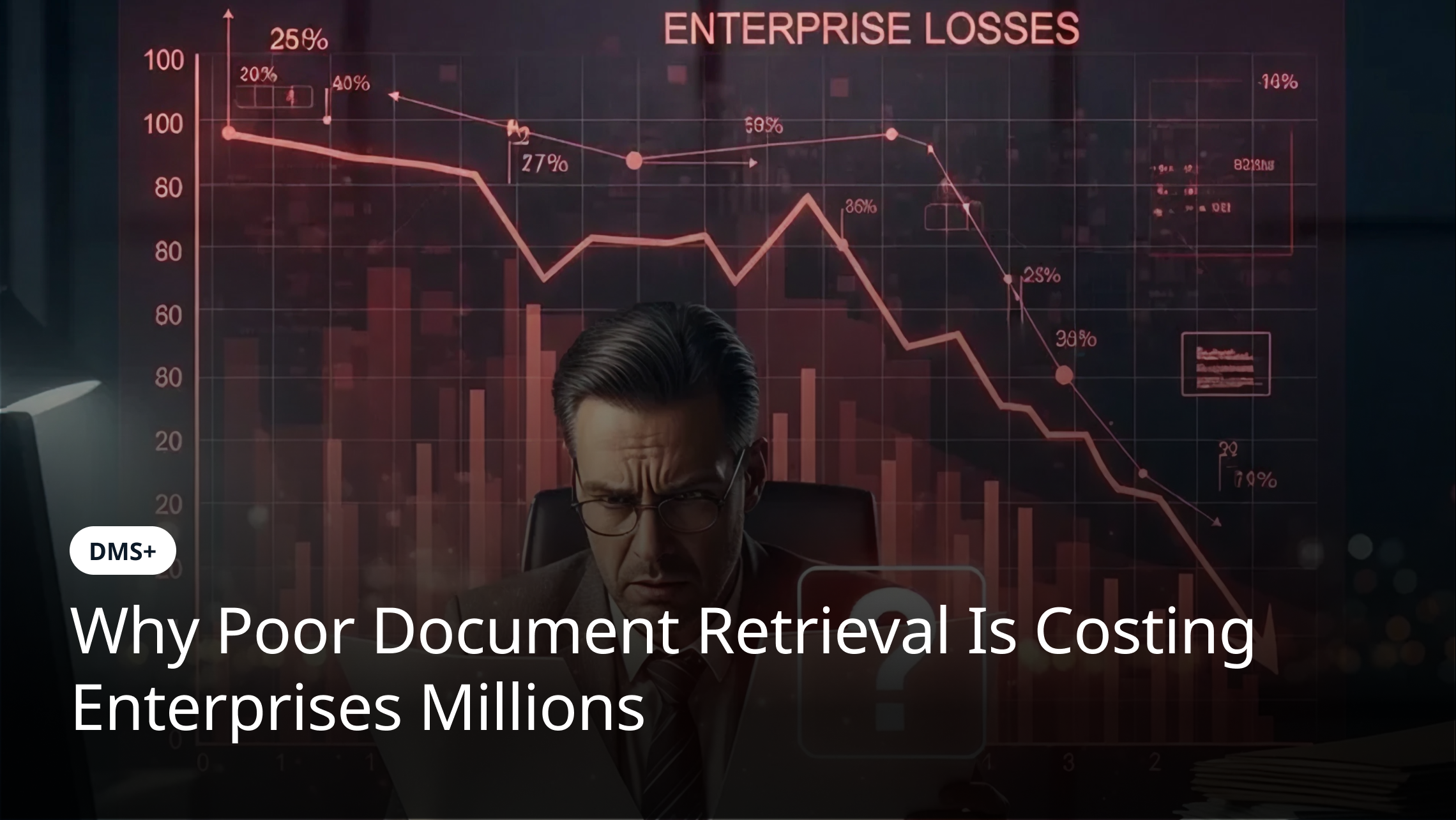
Most enterprises believe they have a document problem. In reality, they have a retrieval problem. Contracts, invoices, HR records, compliance documents, purchase orders, engineering drawings everything is stored somewhere. But when leadership, auditors, or teams need those documents immediately, retrieval becomes a slow and frustrating exercise. That gap between “stored” and “instantly accessible” is where enterprises quietly lose millions every year.
Let’s understand why.
The Silent Financial Drain of Poor Retrieval
When documents cannot be located instantly, the cost is not obvious but it compounds daily. Employees waste time searching across shared drives, email threads, department folders and personal desktops. What should take seconds stretches into minutes. Minutes turn into hours. Across hundreds of employees, this translates into thousands of lost productive hours annually.
The financial impact includes:
- Productivity loss across departments
- Delayed deal closures and billing cycles
- Compliance penalties due to incomplete documentation
- Legal vulnerability in disputes
- Operational slowdowns caused by missing approvals or records
These losses rarely appear as a single line item on a balance sheet, but they erode profitability over time.
Why Traditional Storage Systems Fail Enterprises
Many organizations rely on shared folders, cloud storage platforms, or email archives. These systems are built for storage not governance or intelligent retrieval.
The common gaps include:
- No standardized metadata structure
- Inconsistent naming conventions
- Duplicate files across departments
- No version control clarity
- Limited search intelligence
- No approval history tracking
Without structured indexing and retrieval logic, enterprises depend on tribal knowledge — “Ask someone from Finance,” or “Check with Legal.”
That is not a scalable control framework.
The Real Business Impact
- Poor document retrieval does not just inconvenience employees.
- It directly impacts business performance.
- In audits, teams scramble to gather records.
- Missing approval trails create compliance observations.
- In revenue operations, delayed contract access slows negotiations and billing.
- In legal scenarios, inability to retrieve signed versions or amendment history weakens the enterprise’s position.
- In operations, workflows stall because supporting documentation cannot be accessed quickly.
- Over time, leadership confidence in document governance erodes.
How DMS+ Eliminates Retrieval Risk
DMS+ is designed around a retrieval-first philosophy. The objective is not just to store documents, but to make them instantly searchable, traceable and governed.
Here’s how it changes enterprise outcomes:
Structured Metadata & Intelligent Classification
Every document is indexed using structured metadata such as:
This eliminates dependency on folder paths and inconsistent file names.
Advanced Search & Filter Capabilities
Instead of manual browsing, users can perform contextual searches using:
Documents can be retrieved in seconds — even within millions of records.
Version Control & Audit Trails
DMS+ ensures:
- Single source of truth for each document
There is no ambiguity about which document is final or who approved it.
Role-Based Access & Governance
Speed without security creates risk.
DMS+ balances both through:
- Department-level restrictions
- Controlled external sharing
This ensures retrieval remains compliant and secure.
Continuous Audit Readiness Instead of Panic Retrieval
The strongest enterprises do not prepare for audits — they operate in a state of continuous audit readiness.
That means:
- Documents are structured from day one
- Approval workflows are traceable
- Evidence is always available
DMS+ embeds governance into daily document operations rather than treating compliance as a reactive activity.
Conclusion
Poor document retrieval is not an IT inconvenience, it is a financial and governance risk. When employees waste hours searching, when auditors question missing trails, when contracts delay revenue and when legal teams cannot access historical versions, the enterprise is already paying the price. The solution is not more storage. It is structured, intelligent and governed retrieval.
DMS+ transforms document management from passive storage into an active enterprise control system ensuring every document is searchable, secure, traceable and audit-ready. Because in modern enterprises, information is not valuable simply because it exists. It is valuable because it is instantly accessible.