Introduction
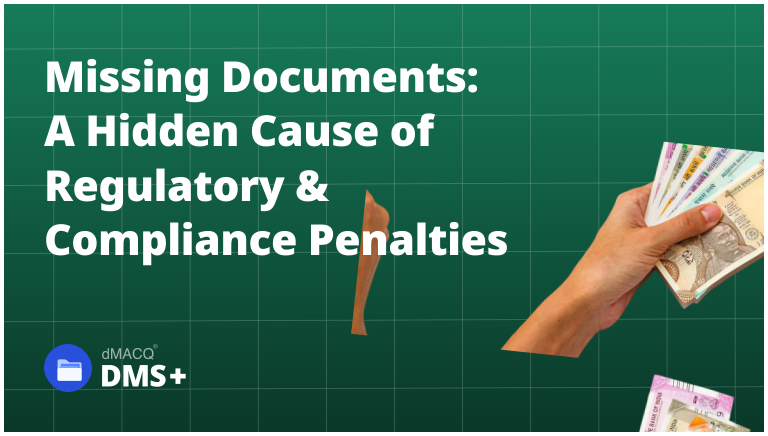
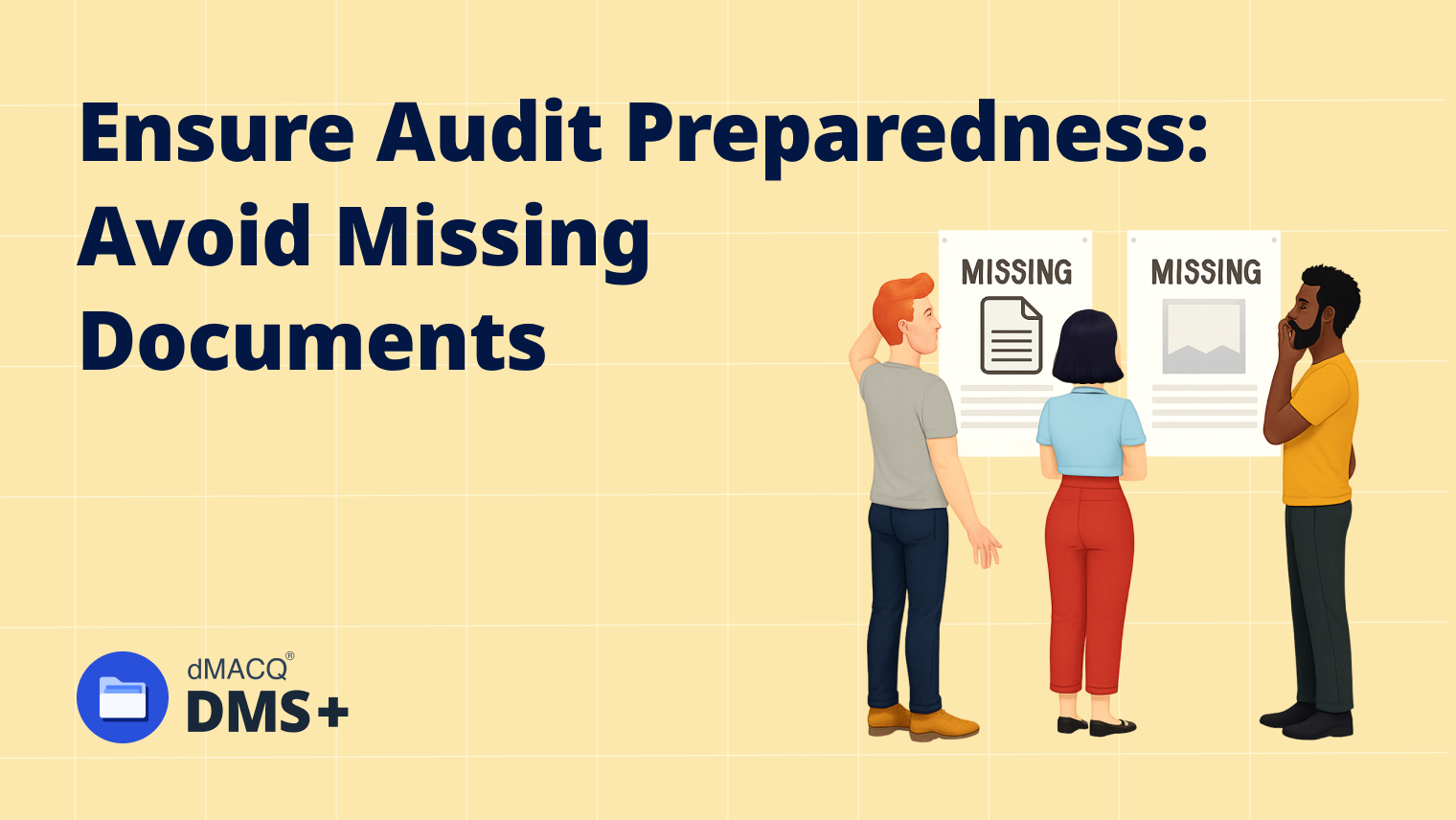
In today’s regulatory environment, organizations need accurate, accessible and traceable documentation to demonstrate compliance. Across industries such as finance, healthcare, pharmaceuticals and legal services, missing or incomplete records can make audits more difficult, weaken accountability and increase compliance risks.
A document management system can help organizations centralize records, control access, maintain audit trails and manage document retention. This article explores how structured document management can support compliance across different industries and help organizations maintain audit-ready documentation.
1. The High Stakes of Non-Compliance
Regulatory bodies across the globe enforce strict documentation standards. Missing or incomplete documentation can make it difficult for organizations to demonstrate compliance and may contribute to regulatory findings, audit delays or enforcement action depending on the applicable requirements.
Key Risks of Missing Documents:
DMS+ can help organizations reduce documentation-related compliance risks through capabilities such as Role-based access control, Audit trails, Document expiry alerts, Retention management, Secure document storage
2. Finance Industry: Penalties from Missing KYC, GST and AML Records
In the financial sector, regulatory compliance hinges on maintaining thorough documentation, especially under KYC (Know Your Customer) and AML (Anti-Money Laundering) norms. Missing or outdated customer documentation can expose financial institutions to severe penalties.
India-Specific Risk: Missing Documents in GST Audits
In India, under the Goods and Services Tax (GST) regime, companies are required to maintain meticulous records of invoices, input tax credit (ITC) claims, vendor contracts, purchase orders and payment records.
Missing or misfiled GST-related documents during audits can lead to:
For instance, GST authorities have routinely issued notices for mismatched ITC claims or non-availability of supporting documents. In a 2023 audit sweep, multiple SMEs and large enterprises in Maharashtra and Gujarat faced ITC reversals worth ₹300–500 crores due to missing purchase documentation and unfiled returns.
Real-World Case: HSBC and AML Violations
In 2012, HSBC was fined a staggering $1.9 billion by U.S. regulators for failing to maintain adequate AML documentation and allowing drug cartels to launder money through its accounts
Source: U.S. Department of Justice
The lack of documentation, poor audit trails and disorganized record-keeping were all cited as reasons for the penalty.
How dMACQ DMS+ Helps:
3. Healthcare Industry: HIPAA Violations from Missing Consent or Medical Records
The healthcare industry is governed by strict regulations like HIPAA (Health Insurance Portability and Accountability Act) in the U.S. or DPDP (Digital Personal Data Protection Act) in India. Missing patient consent forms, treatment records, or insurance paperwork can be a compliance nightmare.
Real-World Case: Advocate Health Care Fined $5.5 Million
In 2016, Advocate Health Care Network agreed to a $5.55 million settlement with the U.S. Department of Health and Human Services following investigations into potential HIPAA Privacy and Security Rule violations. The case involved issues including physical safeguards and unauthorized access to electronic protected health information.
dMACQ DMS+ Advantages in Healthcare:
4. Pharmaceutical and Life Sciences: GMP Violations
Pharmaceutical companies are required to follow Good Manufacturing Practices (GMP), which include rigorous documentation of product development, quality checks and batch production. Missing lab reports or incomplete batch records can result in regulatory sanctions from agencies like the FDA.
Case: Ranbaxy Laboratories
In 2013, Ranbaxy Laboratories USA agreed to pay $500 million to resolve criminal and civil allegations related to manufacturing practices, data integrity and the distribution of adulterated drugs. The case demonstrates the importance of maintaining reliable quality records and protecting the integrity of regulated documentation.
How dMACQ DMS+ Supports Compliance:
5. Telecom and Data Privacy: DPDP Act and Consent Management
With the rise of digital communication, telecom companies are now under increasing pressure to comply with data protection laws such as India’s Digital Personal Data Protection (DPDP) Act. Missing consent documents or failure to log opt-in/opt-out preferences can result in legal action and fines.
dMACQ DMS+ Key Capabilities:
6. Real Estate & Construction: RERA and Legal Documentation Gaps
Under India’s RERA (Real Estate Regulation and Development Act), builders and developers must maintain records of project approvals, legal clearances, agreements and buyer communications. Missing any of these can result in penalties and loss of trust.
Case Insight:
RERA-related compliance requires developers to maintain and provide various project, approval, agreement and transaction records. Centralized document management can help organizations organize these records and retrieve them when required for regulatory reviews or stakeholder requests.
With dMACQ DMS+:
7. Penalties Hurt More Than Just the Pocket
Regulatory fines not only deplete the company’s financial resources but also:
According to PwC, 55% of organizations report reputational damage as the most severe consequence of compliance failures even above monetary penalties.
Final Thoughts: Be Audit-Ready with dMACQ DMS+
Missing or poorly controlled documents can create significant compliance and operational risks, particularly in highly regulated industries. They don’t just delay audits but they derail businesses. Organizations must shift from reactive documentation to proactive document governance. With dMACQ DMS+, companies gain a centralized, intelligent and secure document repository that is tailor-made for regulatory excellence.
Core Compliance Features of dMACQ DMS+:
Stay compliant, protect your brand and avoid fines with dMACQ DMS+