Introduction
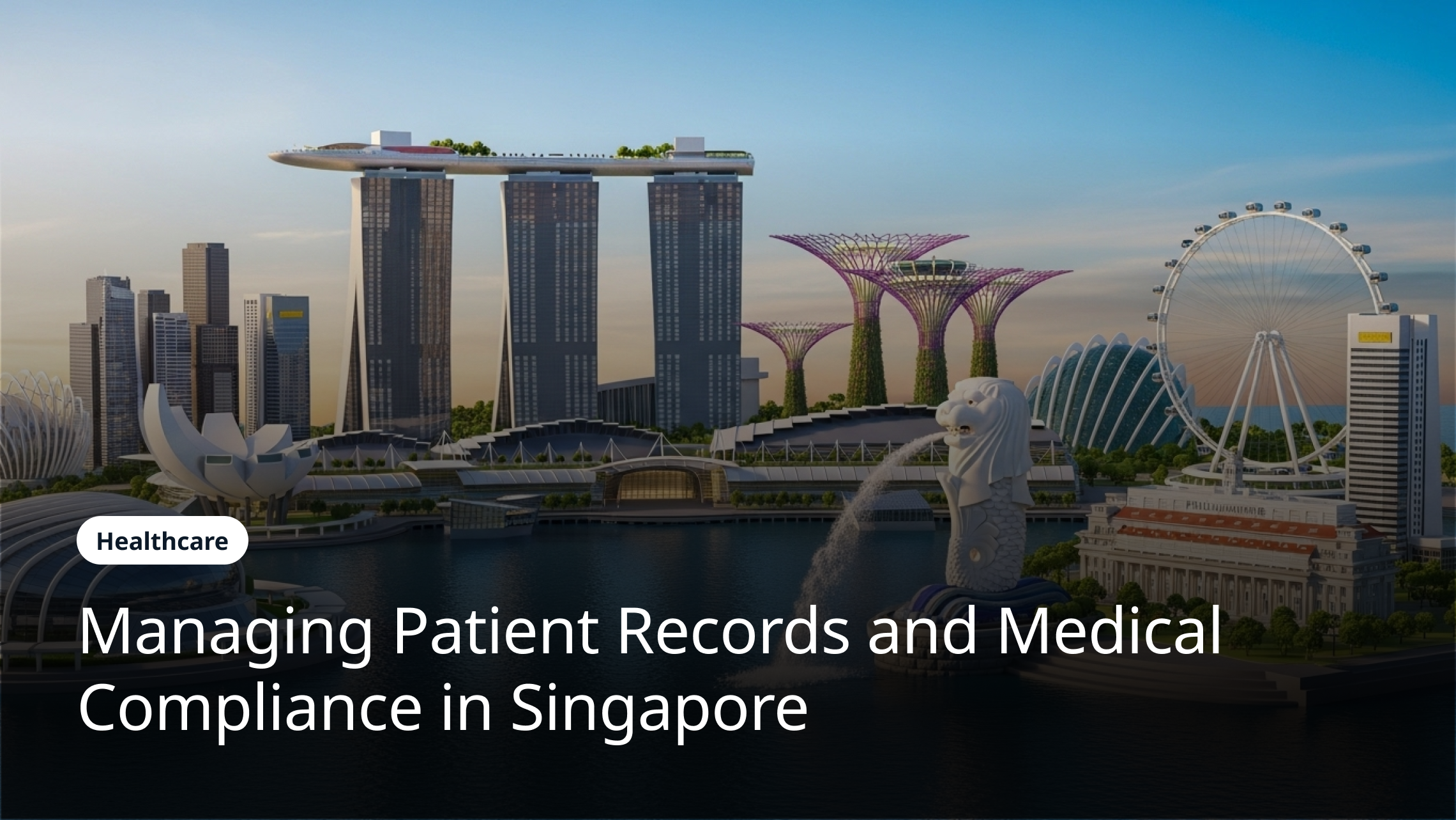
Singapore’s healthcare system is among the most advanced in Asia. With world-class hospitals, private specialist clinics, diagnostic labs and government healthcare institutions, the country operates under strict regulatory oversight especially when it comes to patient data protection and medical record management.
As healthcare organizations expand digitally, one challenge continues to grow: secure and compliant management of patient records under Singapore’s Personal Data Protection Act (PDPA).
From public hospitals to private medical groups, healthcare providers must ensure that patient records are:
- Protected from unauthorized access
- Compliant with PDPA and Ministry of Health (MOH) regulations
In this environment, traditional document storage methods are no longer sufficient. Modern healthcare institutions in Singapore require a secure document management system (DMS) built specifically for regulatory compliance and operational efficiency.
The Growing Importance of PDPA Compliance in Singapore Healthcare
The Personal Data Protection Act (PDPA) governs how organizations in Singapore collect, use, disclose and store personal data. For healthcare institutions, patient medical records are considered highly sensitive personal data.
Non-compliance can lead to:
- Regulatory investigations
Healthcare providers must demonstrate:
- Controlled access to patient records
- Breach response preparedness
This makes healthcare document management in Singapore not just an operational function but a compliance-critical responsibility.
Why Traditional Medical Record Systems Fall Short
Many clinics and healthcare providers still rely on:
- Paper-based patient files
- Department-level document silos
These systems create several risks:
- Delayed access to patient history
- Missing or misplaced medical records
- Inconsistent document version control
- Difficulty proving compliance during MOH inspections
As patient volumes increase and multi-branch healthcare groups expand across Singapore, these inefficiencies multiply.
What a Modern Healthcare Document Management System Must Deliver
A compliant healthcare document management system in Singapore must provide:
- Secure Medical Records Storage: Encrypted storage for patient files, lab reports, imaging documents, consent forms and prescriptions.
- Role-Based Access Control: Doctors, nurses, administrators and compliance officers should only access documents relevant to their role.
- Complete Audit Trails: Every access, edit, or download must be logged for compliance tracking and MOH audits.
- Digital Archiving & Retention Management: Automated retention policies aligned with healthcare regulations in Singapore.
- Cloud or On-Premise Deployment: Flexible deployment models to match institutional IT policies.
Without these capabilities, compliance becomes reactive instead of proactive.
How DMS+ Enables PDPA-Ready Healthcare Documentation in Singapore
DMS+ is designed to meet the document governance needs of regulated industries, including healthcare. For hospitals, medical groups and specialty clinics in Singapore, DMS+ provides:
- Centralized Patient Record Management: All medical documents from admission forms to discharge summaries are securely stored in a unified digital repository.
- Advanced Access Controls: Granular permissions ensure that only authorized healthcare personnel can view or edit patient records.
- End-to-End Audit Logging: Every document interaction is automatically recorded, making regulatory audits faster and more transparent.
- Secure Encryption Standards: Data encryption at rest and in transit ensures strong protection against breaches.
- Integration Capability: DMS+ can integrate with existing hospital management systems (HMS), ERP platforms and healthcare software used in Singapore.
By centralizing healthcare documentation, DMS+ helps institutions move from fragmented record-keeping to structured compliance management.
Real-World Scenario
Consider a private specialist clinic operating across Orchard, Novena and Tampines.
Without a centralized document management system:
- Patient records remain siloed by branch
- Compliance checks require manual consolidation
- Document retrieval delays affect care efficiency
With DMS+:
- All branches access the same secure document repository
- Compliance teams can generate audit reports instantly
- Doctors retrieve patient histories in seconds
- Data retention policies are automated
The result is improved operational efficiency and stronger regulatory confidence.
Why Healthcare Digitization is Accelerating in Singapore
Singapore’s Smart Nation initiative and continued healthcare IT investment are pushing institutions toward:
- Electronic medical records (EMR)
- Digital compliance systems
- Healthcare data analytics
As healthcare organizations modernize, secure document management in Singapore becomes a foundational technology layer.
Frequently Asked Questions
What is PDPA compliance in Singapore healthcare?
- PDPA compliance ensures that patient data is collected, stored, accessed and processed in accordance with Singapore’s data protection laws.
How do hospitals securely store patient records in Singapore?
- Through encrypted document management systems with access control, audit trails and retention management.
What is the best document management system for healthcare in Singapore?
- The ideal system provides PDPA compliance features, role-based access, audit logging and integration with hospital systems such as DMS+.
Conclusion
In Singapore’s regulated healthcare environment, managing patient records securely is not optional — it is essential.
Hospitals and clinics that invest in a PDPA-compliant document management system strengthen:
As healthcare digitization continues to accelerate in 2026 and beyond, platforms like DMS+ play a critical role in enabling secure, compliant and future-ready medical documentation.