Introduction
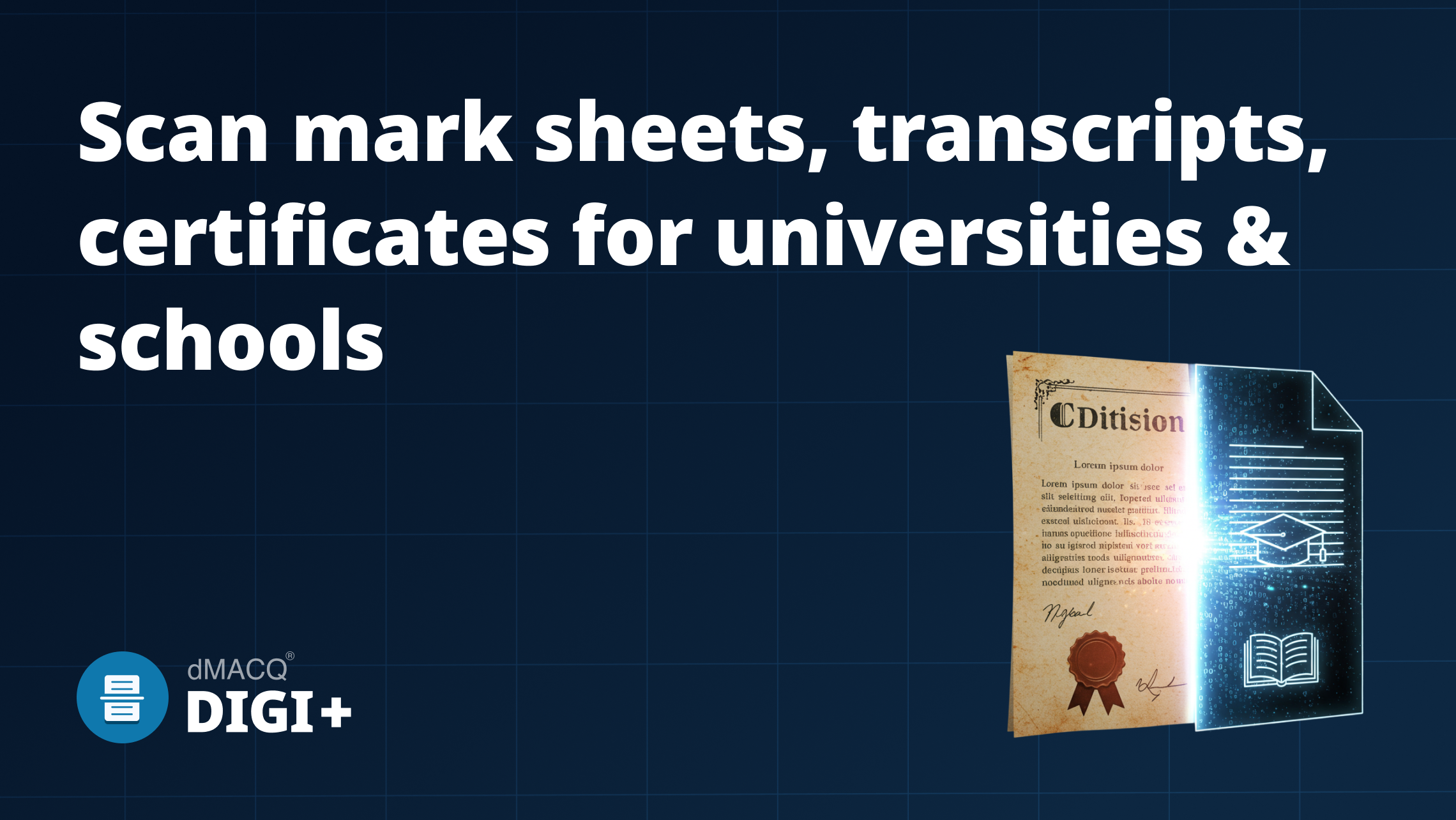
In the education sector, maintaining accurate and accessible student records is not just about compliance. It is about safeguarding academic history and building institutional trust. From mark sheets and transcripts to graduation certificates and award letters, these documents are critical for verification, alumni services and accreditation processes.
Unfortunately, many universities and schools still rely on physical files stored in cupboards, basements or off-site archives. Paper records are prone to damage, misplacement and slow retrieval, creating bottlenecks in student services, audits and official verifications. With DIGI+, educational institutions can digitize, index and secure academic records, making them searchable and easier to retrieve while creating a more structured digital archive for long-term use.
Why Digitizing Academic Records Matters
1. Faster Student & Alumni Services
When alumni request transcripts or companies seek academic verification, delays caused by manual record retrieval can affect the efficiency of student services. Digitized records can be located more quickly, helping institutions respond to verification requests and document requests without depending entirely on physical archives.
2. Protection Against Loss or Damage
Paper records face risks from fire, water damage, pests and everyday wear and tear over time. Digitizing these records creates an additional digital copy that can help preserve important academic information and reduce dependence on aging physical documents.
For institutions managing decades of records, long-term preservation also becomes important. Explore Long-Term Digital Preservation: Strategies to Keep Your Data Usable for Decades with DIGI+ to understand how organizations can maintain the usability of digital records over time.
3. Regulatory & Accreditation Compliance
Educational institutions may need to produce historical academic records during audits, accreditation exercises or verification requests. Maintaining organized digital records can make it easier for authorized personnel to locate the required information and respond to such requirements efficiently.
4. Operational Efficiency
Digitized records reduce the time spent manually filing, searching and photocopying physical documents. Administrative teams can spend less time locating paper files and more time handling student requests and other institutional responsibilities.
What Academic Records Can Be Digitized?
Educational institutions manage a wide range of records that may need to be preserved and retrieved over many years.
Mark Sheets and Examination Records
Historical mark sheets and examination records can be digitized and indexed to make academic information easier to locate during verification and student service requests.
Transcripts and Certificates
Transcripts, degree certificates, diplomas and award certificates can be converted into searchable digital records while retaining important information contained within the original documents.
Student and Admission Records
Student files can contain admission documents, academic histories and supporting records accumulated throughout an individual's time at an institution. Digitization can help organize these records for easier retrieval.
Accreditation and Institutional Records
Institutions can also digitize records required for accreditation, historical reference and institutional documentation, helping reduce dependence on dispersed physical archives.
How DIGI+ Streamlines Document Scanning & Archiving
Bulk Scanning & High-Resolution Capture
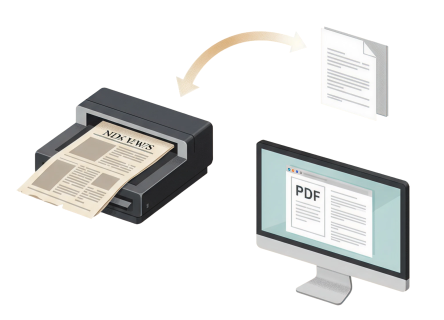
DIGI+ supports high-volume scanning with the clarity required for academic record digitization. Whether processing individual mark sheets or large collections of student files, documents can be captured digitally while preserving the information contained within the original records.
OCR & Intelligent Indexing
Using Optical Character Recognition (OCR), DIGI+ can extract information from scanned documents and make the content searchable.
Key information can include:
This allows authorized users to search records using relevant information rather than relying only on physical file locations or manually assigned filenames.
Metadata-Driven Categorization
Scanned documents can be tagged with metadata to create a structured digital collection. Relevant metadata can include:
Consistent metadata helps institutions organize large collections of academic records and locate specific documents more efficiently.
For a deeper look at why structured indexing and metadata matter, see Why Most Digitization Projects Fail Without Structured Indexing, Metadata and Governance.
Secure Storage & Access Control
Role-based permissions ensure that academic records can be accessed only by authorized personnel. This is particularly important when institutions handle sensitive student information across registrar offices, examination departments and administrative teams.
Integration with Student Information Systems (SIS)
DIGI+ integrates with existing SIS or ERP environments, allowing digitized documents to be associated with relevant student records. This can help institutions connect digitized academic documents with the systems they already use to manage student information.
Audit Trails for Compliance
Audit trails record activities associated with document access, edits or sharing. This provides institutions with greater visibility into how digitized records are handled and can support accountability during audits or document-related disputes.
Real-World Example
A leading state university had more than 30 years of academic records stored in paper form across multiple campuses. Retrieving old mark sheets for alumni verification took approximately 10–15 working days, creating delays for students, alumni and administrative teams.
After implementing DIGI+:
This demonstrates how large-scale academic record digitization can transform historical paper archives into searchable digital information while improving accessibility and administrative efficiency.
Benefits of Using DIGI+
Why Choose DIGI+ for Your Institution?
DIGI+ goes beyond basic scanning by helping educational institutions convert physical academic records into structured and searchable digital information. It supports high-volume digitization while combining scanning, OCR, indexing and metadata capabilities to make large collections of academic records easier to access and organize.
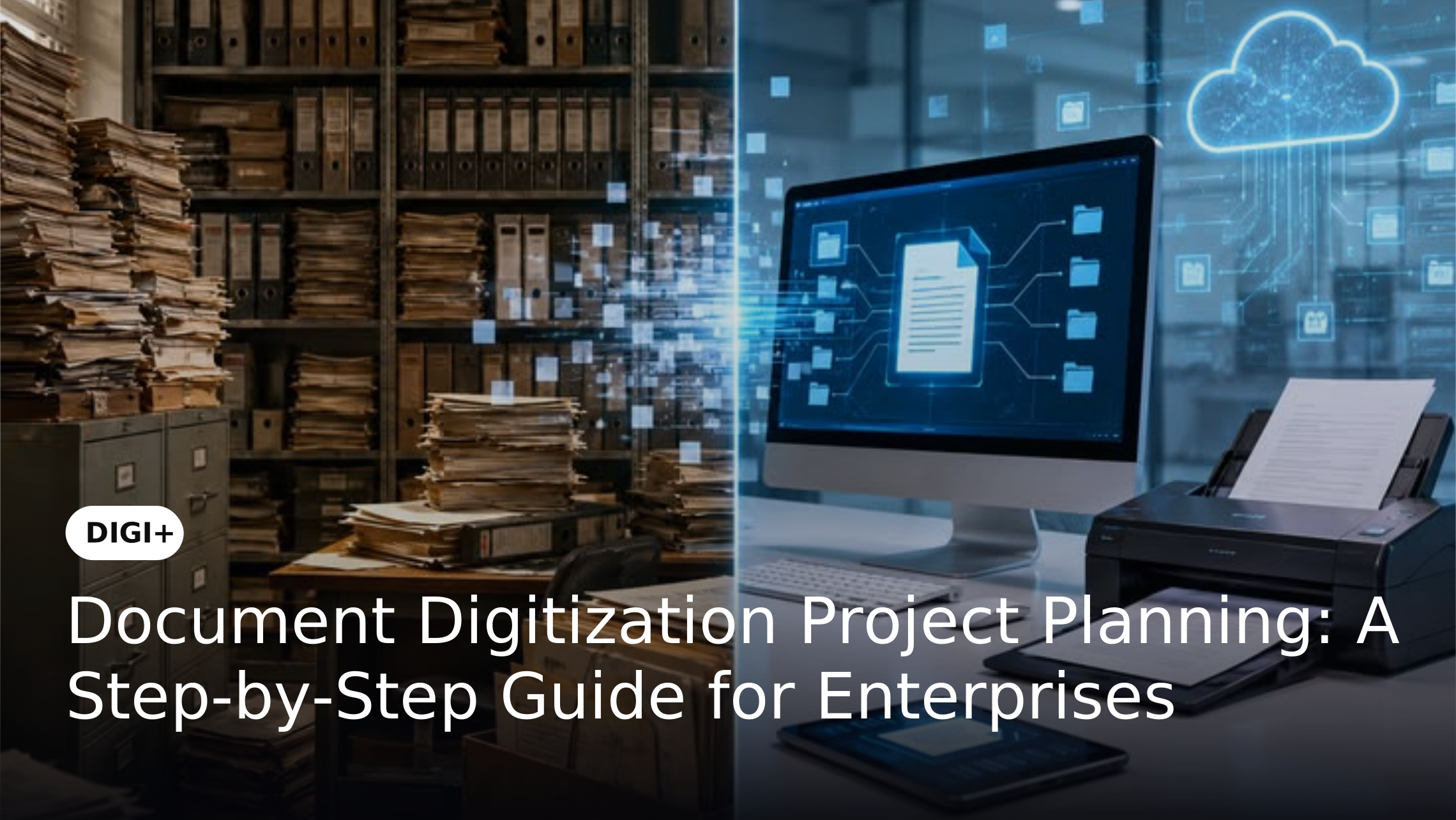
This makes it suitable for institutions looking to modernize historical archives while retaining the information contained within their physical records. Organizations planning a larger digitization initiative can also explore Document Digitization Project Planning: A Step-by-Step Guide for Enterprises for guidance on preparing and structuring a digitization project.
Frequently Asked Questions
Why should universities digitize student records?
Digitizing student records can improve retrieval speed, reduce dependence on physical archives and make historical academic information easier for authorized staff to access.
Can scanned mark sheets and certificates be made searchable?
Yes. OCR can convert text within scanned documents into machine-readable information, allowing users to search relevant content within digitized records.
What types of academic documents can be digitized?
Institutions can digitize mark sheets, transcripts, degree certificates, diplomas, student files, examination records and other historical academic documents.
How does OCR help with academic record digitization?
OCR converts text from scanned documents into searchable digital information. This can make it easier to locate records using details such as names, enrollment numbers or other information captured from the document.
How can universities protect digitized student records?
Institutions can use appropriate access controls, security measures and governance practices to restrict access to sensitive academic information and maintain accountability around its use.
Conclusion
For universities and schools, student records are more than files. They represent an institution’s academic history and provide essential evidence for verification, accreditation and student services. Keeping these records accessible and protected becomes increasingly difficult when decades of information remain stored in physical archives.
With DIGI+, institutions can digitize, index and organize academic records to make them easier to search and retrieve while supporting long-term preservation. From historical mark sheets and transcripts to certificates and student files, a structured digitization approach can help educational institutions move from paper-dependent archives toward more accessible digital records.
Ready to digitize your academic records?
Explore how DIGI+ can help your institution convert physical academic records into structured, searchable digital information.