Introduction
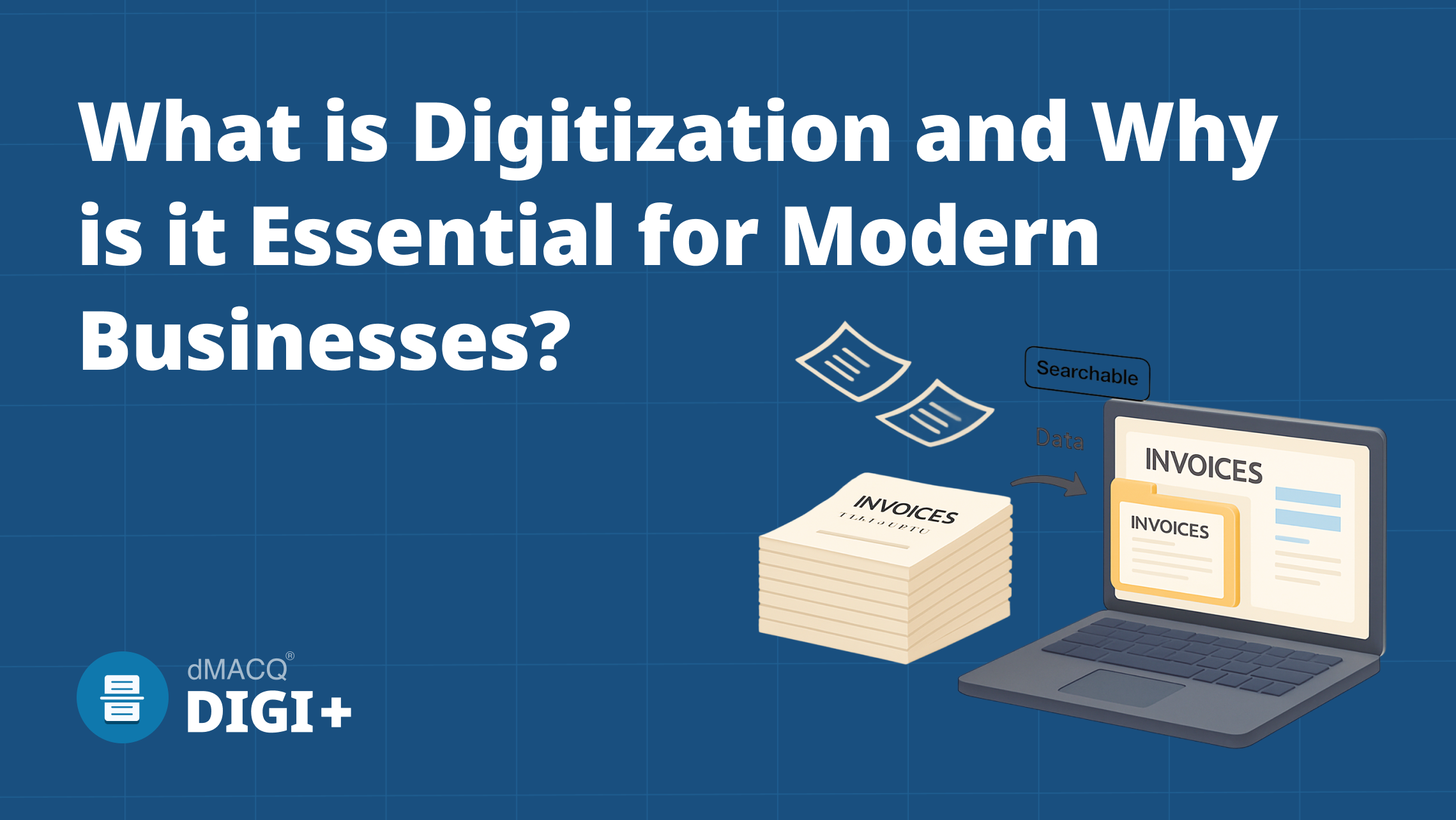
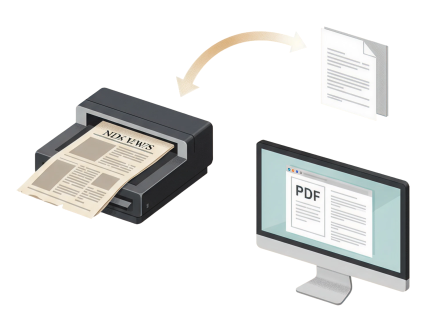
Data digitization enables enterprises to convert information locked in paper records, scanned documents and other physical or unstructured sources into digital information that can be searched, processed and used across business operations. However, digitization is not simply the process of scanning documents. The quality of source records, accuracy of data extraction, indexing standards, validation procedures, security controls and required output formats can all influence the usefulness of the final digital information.
These challenges become more complex when enterprises are working with large and diverse document collections accumulated across departments, branches or years of operations. Without proper planning, organizations can end up with incomplete scans, inaccurate extracted data, inconsistent metadata or digital files that remain difficult to search and integrate. Understanding the most common data digitization challenges helps enterprises design a process that produces accurate, structured and usable digital information.
What Makes Data Digitization Challenging for Enterprises?
Enterprise data digitization typically involves several interconnected stages. Physical records must be prepared and captured before images can be enhanced, text can be recognized and relevant information can be extracted. The resulting information may then need classification, indexing, metadata assignment, validation and delivery into another system.
Each stage can introduce different risks. A clean printed document may be relatively straightforward to process while handwritten records, damaged documents, mixed formats, complex tables or inconsistent historical records may require additional processing. The objective should therefore be defined before production begins: enterprises need to determine whether they require digital images, searchable documents, structured data or a combination of these outputs.
Common Data Digitization Challenges Enterprises Face
1. Poor Quality or Damaged Source Documents
Physical records are rarely consistent across a large enterprise archive. Some documents may be faded, folded, torn, stained or printed using outdated typefaces. Others may contain handwriting, stamps, annotations or low-contrast text. These conditions can affect scan quality and reduce the reliability of OCR and automated extraction.
The first step is to assess document condition before large-scale processing. Records can then be grouped according to complexity so scanning settings, image enhancement, OCR methods and manual validation can be applied appropriately. This approach reduces the risk of using a single processing method for document collections with significantly different characteristics.
2. OCR and Data Extraction Errors
OCR converts text within document images into machine-readable content, but recognition does not guarantee accurate data. Errors can occur when documents have poor image quality, unusual layouts, multiple columns, tables, handwritten information or characters that are difficult to distinguish.
Enterprises should define which information must be extracted and how accuracy will be validated before processing begins. Critical fields such as identifiers, dates, reference numbers or financial values may require validation rules or human review. The objective should be usable data rather than simply a high volume of processed pages.
3. Unstructured and Inconsistent Information
Digitizing a document does not automatically make the information within it structured. Different departments may use different naming conventions, document classifications or indexing practices. Historical records may also contain inconsistent terminology or missing information.
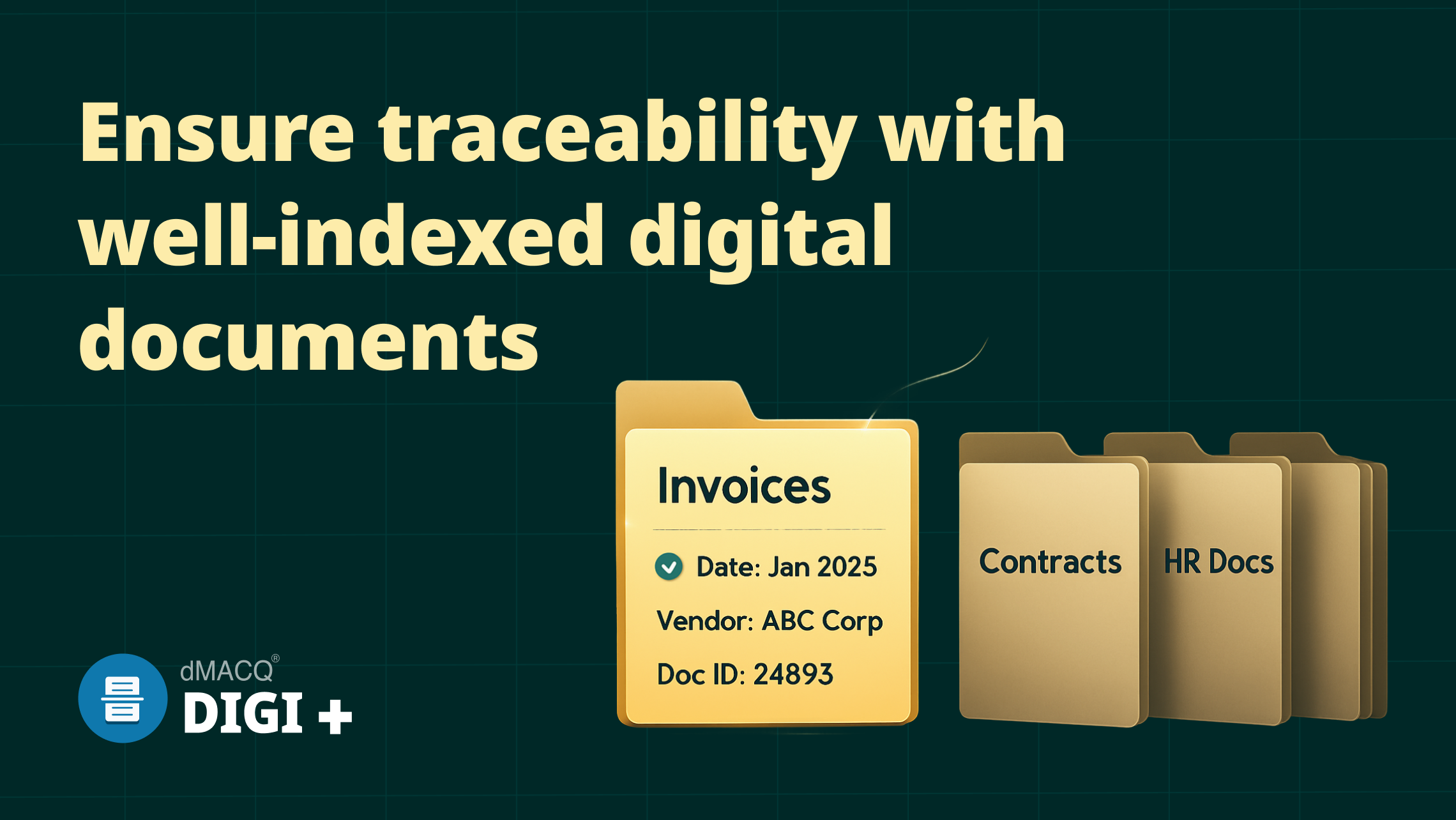
Organizations should establish a standard data structure before production. Defining document types, metadata fields, naming conventions, identifiers and classification rules creates consistency across the digitized collection. This is particularly important when information needs to be retrieved across departments rather than from isolated document folders.
For more on the importance of structured indexing, see Ensure Traceability with Well-Indexed Digital Documents.
4. Large Volumes of Records
Enterprise archives can contain records accumulated over many years across offices, branches, departments and storage locations. Processing such volumes without a defined prioritization strategy can create operational bottlenecks and make quality control harder to maintain.
A phased approach can make large projects more manageable. Enterprises can prioritize records based on business importance, frequency of use, regulatory requirements, document condition or processing complexity. This allows production processes to be tested and refined before they are applied to the full archive.
5. Inconsistent Quality Control
A digitization project can process large quantities of information while still producing incomplete or inaccurate outputs. Missing pages, incorrect page order, poor image quality, incorrect classification and inaccurate metadata can all reduce the value of the final dataset.
Quality control should therefore be built into the production workflow rather than treated as a final inspection. Enterprises can establish checks for image quality, page completeness, OCR accuracy, metadata accuracy and document classification. Sampling and exception-based review can also help focus manual verification on higher-risk records.
6. Security and Confidentiality Risks
Enterprise records can contain confidential contracts, financial information, customer records, employee information, intellectual property and other sensitive data. Digitization introduces security considerations across physical handling, scanning, processing, storage, transfer and final delivery.
Security requirements should be defined before production begins. Organizations should consider access controls, secure handling procedures, data transfer controls, storage security, auditability and document disposal requirements. The level of control should reflect the sensitivity and regulatory importance of the records being processed.
7. Difficulty Integrating Digitized Data With Existing Systems
Digitized information can remain operationally isolated if the output cannot connect with the systems where employees need to use it. For example, extracted information may need to move into a database, ERP, CRM, document repository or another business application rather than remain in standalone files.
Integration requirements should therefore be established before digitization begins. Enterprises should identify the destination systems, required data structures, metadata fields and output formats in advance. This allows the digitization process to produce information that is compatible with the organization's broader technology environment.
8. Unclear Output Requirements
Not every digitization project requires the same type of output. Some enterprises may need searchable PDF documents while others may require image files, structured data, metadata files or information prepared for integration with another application.
Unclear output requirements can lead to reprocessing after the project is completed. Organizations should define the intended use of the digitized information at the beginning and work backwards to determine the required capture, OCR, extraction, indexing and validation processes.
9. Difficulty Handling Different Document Types
Enterprise archives often contain more than standard office documents. They may include invoices, contracts, forms, drawings, logbooks, certificates, registers and historical records. Each format can introduce different capture and processing requirements.
Enterprises should categorize documents before production and identify which categories require specialized handling. This makes it easier to assign suitable scanning methods, OCR approaches, extraction rules and validation procedures to each document group.
10. Lack of a Clear Digitization Strategy
One of the broader challenges is treating digitization as a technical conversion exercise rather than an information strategy. An enterprise may successfully convert thousands of documents while still lacking a clear approach to classification, search, governance, integration or future use.
A digitization strategy should therefore define the purpose of conversion, priority records, required outputs, data standards, quality thresholds, security requirements and downstream systems. A structured project approach can prevent organizations from creating large digital collections that remain difficult to use.
For a broader planning approach, see Document Digitization Project Planning: A Step-by-Step Guide for Enterprises.
How Enterprises Can Overcome Data Digitization Challenges
Assess Records Before Starting Production
The first step should be a detailed assessment of the records that will be digitized. Enterprises should evaluate volume, document types, physical condition, information density, sensitivity, locations and intended business use.
This assessment helps determine whether different document groups require different scanning, OCR, extraction, indexing or validation methods. It also allows organizations to prioritize records rather than attempting to process the entire archive using one standardized approach.
Define Data, Indexing and Metadata Standards
Enterprises should establish their data structure before processing begins. Depending on the document type, this may include fields such as document category, customer or employee identifier, date, reference number, department, location or retention information.
Consistent standards make information easier to search and retrieve after digitization. They also give quality-control teams defined criteria for checking whether extracted and indexed information has been processed correctly.
Establish Quality Standards Before Digitization
Quality requirements should be defined before production rather than after the first batches have been processed. These requirements can cover image readability, page completeness, OCR accuracy, extraction accuracy, classification and metadata.
A pilot batch using representative documents can help identify problems before full-scale production. The sample should include difficult records rather than only clean and easy-to-process documents so the process is tested against realistic conditions.
Match Technology to Document Complexity
Technology selection should follow the characteristics of the records. Basic printed documents may require scanning and OCR while complex layouts, tables, handwriting or mixed document collections may require more advanced extraction and classification capabilities.
Enterprises should evaluate the complete processing chain rather than focusing on scanner specifications alone. Scanning, image enhancement, OCR, classification, extraction, indexing and validation should work together according to the intended output.
Plan Security Throughout the Process
Security should cover the complete document lifecycle from physical collection through digital delivery. This includes how records are handled, who can access them, how digital information is transferred and where it is stored.
Sensitive document collections should have defined access and handling procedures. Enterprises should also ensure that security requirements are incorporated into vendor processes and project documentation where external digitization services are involved.
Design the Output Around Future Use
The final output should be designed according to how the organization intends to use the information. If employees need searchable records, the project should include appropriate OCR and indexing. If extracted information needs to support another application, the data structure and output format should be established accordingly.
This approach reduces the risk of creating technically complete digital archives that still require significant manual work. Digitization should prepare information for its next stage rather than simply reproduce the physical archive in digital form.
A Practical Framework for Managing Data Digitization Challenges
A useful way to assess an enterprise digitization initiative is to divide the requirements into five areas: source, capture, intelligence, control and delivery.
Reviewing these five areas before production helps enterprises identify gaps early. It also shifts the focus from the number of pages converted to the quality, structure and usability of the resulting digital information.
How Data Digitization Connects With Broader Digital Operations
Data digitization is often the first stage of a broader information modernization journey. Once physical records have been converted into searchable and structured digital information, enterprises may need a controlled environment to store, classify, retrieve and manage those records.
This is where a document management platform can become relevant. DMS+ can provide the management layer for digital documents and associated information while workflow automation can help move digitized information through defined business processes. For enterprises, the important distinction is that digitization creates usable digital information while downstream platforms help manage and operationalize it.
How DIGI+ Supports Enterprise Data Digitization
Enterprise digitization may require more than document scanning. Depending on the records and intended output, organizations may need high-volume capture, OCR, data extraction, indexing, metadata capture, classification and quality control as part of the same process.
DIGI+ supports these requirements by helping enterprises convert physical records into searchable and structured digital information. The appropriate processing approach can be aligned with document type, volume, extraction requirements, indexing standards and expected output so organizations can move beyond basic digital image creation.
Frequently Asked Questions
What are the most common data digitization challenges?
Common challenges include poor source document quality, OCR and extraction errors, inconsistent data structures, large record volumes, inadequate quality control, security risks and difficulty integrating digitized information with existing systems.
How can enterprises improve data digitization accuracy?
Enterprises can improve accuracy by assessing documents before production, defining extraction requirements, establishing indexing standards, using suitable capture technologies and implementing validation throughout the digitization workflow.
Why is metadata important in data digitization?
Metadata provides information that helps identify, classify and retrieve digital records. Consistent metadata allows users and systems to locate documents using attributes such as document type, identifier, date, department or other business-specific fields.
Is OCR enough to digitize enterprise data?
No. OCR can make text machine-readable but does not automatically create structured or validated data. Depending on the use case, enterprises may also require classification, extraction, indexing, metadata and quality-control processes.
How should enterprises approach large-scale data digitization?
Large-scale initiatives should begin with a record assessment and clearly defined business requirements. Enterprises should establish document priorities, output formats, data standards, security requirements and quality controls before moving into phased production.
Conclusion
Data digitization challenges extend well beyond scanning physical documents. Source quality, OCR accuracy, inconsistent information, large record volumes, quality control, security, integration and unclear output requirements can all affect whether digitized information becomes genuinely useful to the enterprise. Addressing these challenges requires organizations to design the complete conversion process before production begins.
The strongest digitization initiatives focus on what happens to information after it is converted. By combining appropriate capture technologies with structured extraction, indexing, metadata, validation, security and integration requirements, enterprises can turn physical and unstructured records into digital information that is searchable, manageable and ready for broader business use.