Introduction
Digital transformation has become a business imperative for organizations seeking to improve efficiency, enhance customer experiences, strengthen compliance and remain competitive in an increasingly digital economy. While investments in modern technologies continue to grow, many transformation initiatives fail to achieve their intended outcomes because organizations focus on technology without first establishing a strong information foundation. Incomplete records, paper-based processes and disconnected information often become significant barriers to long-term success.
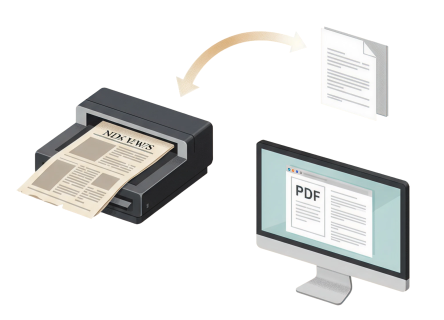
A successful digital transformation starts with making business information accessible, accurate and ready for use. Document digitization enables organizations to convert physical records into searchable digital assets that support faster decision-making, improved collaboration and greater operational efficiency. By establishing a reliable digital information foundation, businesses can confidently adopt new technologies, streamline processes and scale future transformation initiatives.
Why Digital Transformation Requires More Than Technology
Many organizations associate digital transformation with implementing new software or migrating to the cloud. While technology plays an important role true transformation involves improving the way information people and processes work together.
Without structured information organizations often experience:
Digitizing business information is often the first practical step because it enables organizations to access reliable information quickly and supports future automation initiatives.
Best Practice 1: Build a Strong Information Foundation
Digital transformation depends on accurate and accessible business information. Organizations should first understand what information they own where it is stored and how it supports daily operations.
Many enterprises continue to rely on paper records spread across departments storage facilities and regional offices. These disconnected repositories make collaboration difficult and slow business processes.
Assess Existing Business Records
Before beginning any transformation initiative organizations should evaluate:
This assessment helps identify which records should be prioritized for digitization.
Prioritize High-Value Documents
Not every document needs immediate digitization.
Organizations should begin with information that directly supports business operations such as:
Digitizing high-value information first allows organizations to realise faster operational improvements while reducing project complexity.
Best Practice 2: Define Clear Business Objectives
Successful digital transformation projects focus on measurable business outcomes instead of technology implementation alone.
Organizations should identify the specific challenges they want to solve before selecting technology solutions.
Typical objectives include:
Clearly defined objectives help organizations prioritize investments and measure project success.
Establish Measurable KPIs
Every transformation initiative should include measurable performance indicators such as:
Tracking these metrics demonstrates the long-term value of digital transformation.
Best Practice 3: Standardize Information Before Automating Processes
Many organizations attempt to automate inefficient paper-based processes without first organizing their information.
Automation delivers better results when documents are consistently classified indexed and managed.
Create Standardized Metadata
Metadata enables employees to search retrieve and manage information efficiently.
Organizations should define consistent fields such as:
Well-structured metadata improves searchability while supporting governance and compliance.
Establish Document Governance
Document governance ensures business information remains accurate secure and properly maintained throughout its lifecycle.
Organizations should implement:
Once documents are digitized DMS+ provides centralized management capabilities that improve information governance and reduce the risk of outdated or duplicate records.
Best Practice 4: Integrate Information Across Business Processes
Digital transformation should eliminate disconnected systems rather than create new ones.
Digitized information should flow seamlessly across departments and enterprise applications enabling employees to work from a single source of truth.
Connect Document Management with Workflow Automation
After documents are digitized they should become part of everyday business operations.
For example:
By integrating Digi+ with Flow+ organizations can automate approvals notifications and document routing while reducing manual effort and improving process consistency.
Enable Enterprise-Wide Collaboration
Centralized digital information allows teams across different departments and locations to access approved documents quickly without relying on physical files.
Improved collaboration accelerates decision-making and enhances operational efficiency across the organization.
Best Practice 5: Measure Progress and Scale Strategically
Digital transformation is an ongoing journey rather than a one-time initiative. Once the initial implementation is complete organizations should continuously evaluate results identify improvement opportunities and expand successful practices across departments.
Starting with a focused initiative allows teams to validate processes gather user feedback and refine their approach before undertaking larger transformation programmes.
Monitor Business Performance
Regularly measuring project outcomes helps organizations determine whether transformation initiatives are delivering the expected business value.
Key performance indicators may include:
Tracking these metrics provides valuable insights for future optimization and supports data-driven decision-making.
Expand Digital Transformation in Phases
Instead of digitizing every department simultaneously organizations should adopt a phased implementation strategy.
A typical roadmap may include:
Phase 1
Digitize critical business records.
Phase 2
Implement centralized document management through DMS+.
Phase 3
Automate document-driven workflows using Flow+.
Phase 4
Replace paper-based forms with Forms+.
Phase 5
Extend automation to finance processes such as invoice management using AccountsPayable+.
This gradual approach minimizes operational disruptions while ensuring sustainable long-term adoption.
Common Challenges During Digital Transformation
Even well-planned initiatives encounter obstacles. Understanding these challenges helps organizations prepare effective mitigation strategies.
Resistance to Change
Employees accustomed to paper-based processes may hesitate to adopt new digital workflows.
Organizations should provide training communicate the benefits clearly and involve end users throughout the transformation journey to encourage adoption.
Poor Data Quality
Incomplete inaccurate or duplicate information reduces the effectiveness of digital transformation initiatives.
Before digitization organizations should cleanse and validate business records to improve information quality.
Lack of Cross-Department Collaboration
Digital transformation often affects multiple business functions.
Without collaboration between IT, Operations, HR, Finance Compliance and business teams projects may become fragmented resulting in inconsistent processes and duplicated efforts.
Treating Digitization as the End Goal
Converting paper documents into digital files is only the beginning.
Organizations realize greater value when digitized information becomes part of integrated document management workflow automation and enterprise business processes.
Benefits of Following Digital Transformation Best Practices
Organizations that adopt a structured approach to digital transformation achieve long-term operational and strategic benefits.
1. Faster Access to Business Information
Digitized records can be searched and retrieved within seconds improving productivity and enabling faster decision-making.
2. Increased Operational Efficiency
Automated workflows reduce repetitive manual tasks streamline approvals and improve collaboration across departments.
3. Stronger Regulatory Compliance
Centralized document management helps organizations maintain accurate records support retention requirements and simplify audit preparation.
4. Better Customer Experiences
Employees can quickly access customer information contracts and supporting documents enabling faster response times and improved service quality.
5. Lower Operational Costs
Reducing paper handling storage printing and manual administrative work lowers operating expenses while improving overall efficiency.
6. Greater Business Agility
Digital information allows organizations to adapt more quickly to changing business requirements regulatory updates and market opportunities.
Real-World Examples
Manufacturing
A manufacturing company begins its digital transformation by digitizing production records engineering drawings quality manuals and inspection reports using Digi+. These documents are managed centrally through DMS+ while Flow+ automates engineering approvals quality reviews and corrective action processes improving operational efficiency and compliance.
Healthcare
A healthcare organization digitizes patient administration records consent forms clinical documentation and equipment maintenance logs. Digital access improves collaboration between departments reduces document retrieval times and strengthens regulatory compliance while enabling secure document management through DMS+.
BFSI
A financial institution digitizes customer onboarding files loan documentation account records and compliance documents. Integrated workflows accelerate approvals improve customer experiences and reduce manual processing across lending and compliance operations.
Government
A government department digitizes citizen records permits land documents and historical archives. Employees retrieve information instantly while automated workflows streamline approvals improve service delivery and reduce dependence on physical record rooms.
Why Document Digitization Is the Foundation of Digital Transformation
Successful digital transformation depends on trusted accessible and well-governed business information. Without a strong information foundation organizations struggle to automate processes integrate enterprise systems or deliver consistent customer experiences.
Document digitization services provide the first step by converting physical records into structured digital assets that support collaboration compliance and operational excellence. Once digitized information is centrally managed and connected to business workflows organizations can unlock greater value from every stage of their digital transformation journey.
Conclusion
Digital transformation is not simply about adopting new technologies. It requires a strategic approach that begins with understanding business information establishing clear objectives standardizing documents integrating processes and continuously measuring outcomes. Organizations that follow these best practices are better positioned to improve efficiency strengthen governance reduce operational costs and respond more effectively to changing business demands.
Digi+ helps organizations establish this foundation by transforming paper-based information into searchable digital assets. When integrated with DMS+ for centralized document management Flow+ for workflow automation Forms+ for digital data capture and AccountsPayable+ for finance document automation organizations can build a connected digital workplace that supports long-term growth compliance and enterprise-wide digital transformation.