Introduction
Manufacturing companies manage extensive supplier networks across raw materials, equipment, maintenance, logistics and indirect services. As operations expand across plants and business units, accounts payable can become increasingly difficult to manage through disconnected processes. Finance teams need greater control over invoice activity while supporting the operational demands of a production-driven business.
AP automation helps manufacturers create a more structured financial operation by connecting invoice processing with purchasing and approval activities. Its value extends beyond faster processing by improving cross-location visibility, strengthening financial controls, supporting supplier operations and giving finance teams greater capacity to manage a growing transaction environment.
Why AP Automation Matters in Manufacturing
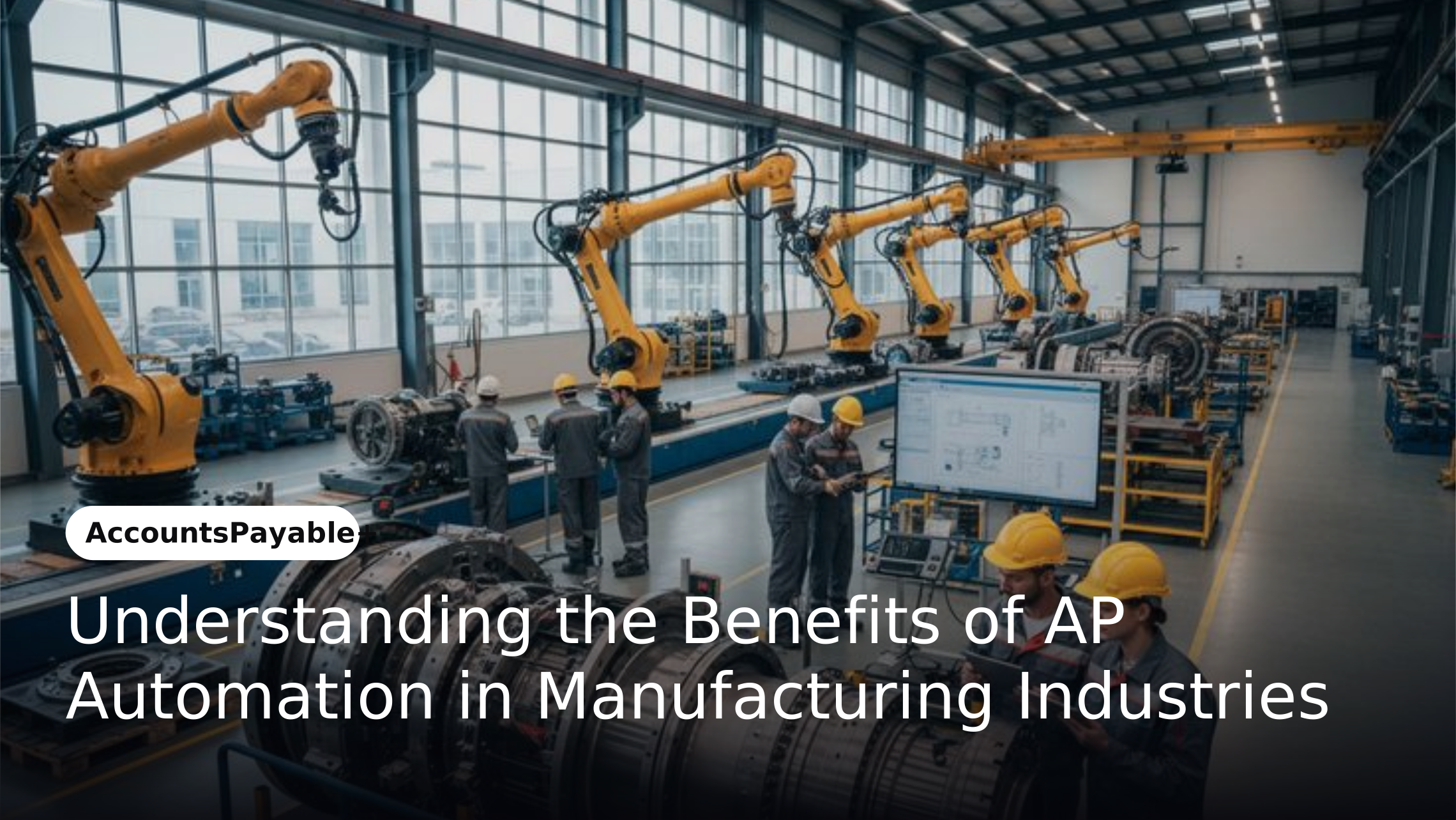
Manufacturing AP operates within an environment where purchasing activity is closely connected to production requirements. A single organization may manage thousands of suppliers across different facilities while handling invoices for materials, machinery, utilities, transportation and specialized services.
This complexity makes standardization increasingly important. AP automation can establish consistent processes across locations while giving finance teams a centralized view of transactions. This helps manufacturers manage growing invoice volumes without relying entirely on manual coordination between plants, procurement teams and finance departments.
Key Benefits of AP Automation in Manufacturing
1. Standardized AP Operations Across Multiple Plants
Manufacturing organizations with multiple facilities may have different teams handling invoices and approvals. AP automation creates standardized workflows that can be applied across locations while maintaining appropriate approval structures for individual plants or business units.
This creates greater consistency in how invoices are processed and monitored. Finance leaders can also gain a consolidated view of AP activity without requiring every location to manage its processes independently.
2. Greater Visibility Across Manufacturing Locations
Centralized AP data gives finance teams greater visibility into invoice activity across plants, suppliers and business units. Instead of relying on separate spreadsheets or manual updates, teams can monitor invoice status through a unified system.
This broader visibility helps finance leaders understand where transactions are in the process and identify operational patterns across different locations. It also provides a stronger foundation for managing a distributed manufacturing finance function.
3. Better Control Over High-Volume AP Operations
Manufacturing companies can generate significant invoice volumes from suppliers across different categories. Processing these transactions manually can place considerable pressure on finance teams as the organization grows.
AP automation provides structured workflows for capturing and processing invoices at scale. This allows finance teams to handle increasing transaction volumes through standardized processes rather than continuously expanding manual administrative effort.
4. Stronger Coordination Between Procurement and Finance
Manufacturing purchasing involves multiple stakeholders including procurement teams, plant managers and finance departments. When invoice and purchasing information is disconnected it becomes harder to maintain consistent financial oversight.
AP automation can connect invoice information with purchasing records and approval processes. This creates better coordination between procurement and finance while helping both teams work from more consistent information.
5. Improved Financial Control Across Business Units
Manufacturing organizations often have different spending requirements across plants and departments. AP automation allows organizations to define approval rules and access permissions based on their internal structures.
This creates greater control over who can review and approve financial transactions. Automated records also provide finance teams with a clearer history of activities throughout the AP process.
6. More Productive Finance Teams
Manual invoice handling requires finance professionals to spend time entering information, checking documents and following up on routine transactions. As invoice volumes increase these activities can consume a significant portion of available team capacity.
Automation reduces repetitive administrative work and allows finance professionals to focus more attention on exceptions, supplier issues, financial analysis and other activities that require human judgment.
7. Faster Identification of AP Exceptions
Not every manufacturing invoice follows the expected process. Differences in quantities, pricing, supplier information or supporting documentation can require additional review.
Automated validation can help identify transactions that require attention and direct them to the appropriate team. This enables finance professionals to focus on exceptions rather than manually reviewing every transaction with the same level of effort.
8. Improved Supplier Payment Predictability
Manufacturers depend on suppliers for materials, equipment and essential services. Consistent payment processes can therefore contribute to more predictable supplier operations.
By providing greater visibility into invoice status and processing stages AP automation can help finance teams identify transactions requiring attention. This supports more consistent payment management without making supplier relationship management the primary focus of the AP process.
9. Easier Scaling as Manufacturing Operations Grow
Manufacturing companies may expand through new facilities, acquisitions, additional production lines or larger supplier networks. AP processes need to scale alongside these changes without becoming increasingly dependent on manual administration.
Automation provides a standardized foundation that can accommodate additional transactions and business units. This makes AP easier to scale as the organization's operational footprint expands.
10. Stronger Audit Readiness
Manufacturers need reliable financial records to support internal reviews and external audits. Scattered invoices and approval records can make it difficult to establish a complete transaction history.
AP automation creates structured digital records across invoice processing and approvals. Centralized documentation and audit trails make it easier for finance teams to retrieve transaction information when required.
How AP Automation Supports Different Manufacturing Environments
Manufacturing is not a single operating model. A discrete manufacturer may have different AP requirements from a process manufacturer or a company operating multiple production facilities. The value of automation therefore depends on how the organization structures procurement, finance and production operations.
Multi-Plant Manufacturers
Organizations operating several plants can use centralized AP automation to establish consistent processes across locations. Finance leadership can maintain broader visibility while individual facilities continue following their relevant approval structures.
High-Volume Manufacturers
Companies processing large numbers of supplier invoices can benefit from automated data capture and standardized workflows. Automation helps finance teams manage transaction growth without relying solely on additional manual processing capacity.
Manufacturers With Complex Supplier Networks
Manufacturers working with suppliers across materials, equipment, logistics and services need structured ways to manage invoice activity. AP automation provides centralized visibility while helping teams manage different invoice types and approval requirements.
Where AP Automation Creates the Most Value in Manufacturing
The greatest value often appears where manufacturing complexity creates pressure on finance operations. Multi-location structures, high transaction volumes, fragmented processes and growing supplier ecosystems can make manual AP increasingly difficult to manage.
Automation addresses these pressures by creating repeatable processes and centralized visibility. Instead of treating AP as a collection of individual transactions, manufacturers can establish a scalable operating model that supports finance teams across their broader business structure.
The Role of Workflow Invoice Processing in Manufacturing
Manufacturing invoices can pass through procurement, plant operations, department heads and finance before reaching payment. Workflow invoice processing provides a structured way to route transactions according to predefined business rules.
This reduces dependence on manual coordination and creates greater consistency across locations. Teams can define approval paths based on factors such as business unit, transaction value or responsible department while maintaining visibility into the process.
How Purchase Order Management Supports Manufacturing AP
Manufacturers rely heavily on purchasing activities for materials, equipment and operational services. Connecting AP with a purchase order management system can help finance teams validate invoice information against approved purchasing records.
This creates stronger coordination between procurement and AP while helping organizations identify discrepancies before transactions move further through the process. It also gives finance teams better context when reviewing supplier invoices.
AP Automation and Manufacturing Financial Visibility
Financial visibility becomes increasingly important as manufacturers expand across locations and supplier categories. Finance leaders need to understand outstanding invoices and transaction activity without waiting for separate teams to compile information manually.
A centralized AP environment provides a more consistent view of financial activity. This can support cash planning, management reporting and operational oversight while reducing dependence on fragmented information sources.
How AccountsPayable+ Supports Manufacturing AP
AccountsPayable+ helps manufacturers automate core accounts payable activities while creating greater visibility across invoice processing and approval workflows. The platform can support invoice capture, automated routing, purchase order matching, document management and structured AP processes.
For organizations managing multiple locations or growing transaction volumes this provides a scalable foundation for AP modernization. AccountsPayable+ can also fit into broader digital transformation initiatives where finance teams want to connect AP with other business processes.
Creating a Connected Manufacturing Finance Environment
Manufacturing finance operations extend beyond accounts payable. Procurement requests, financial documents, approval workflows and physical records can all influence how efficiently invoices move through the organization.
AccountsPayable+ can work alongside Flow+ for workflow automation and DMS+ for document management. Forms+ can support digital business forms while Digi+ can help convert physical records into digital information. Together these capabilities can support a more connected approach to manufacturing process automation.
What Manufacturers Should Consider Before Implementing AP Automation
Manufacturers should evaluate whether an AP platform can accommodate their operational structure rather than focusing only on invoice processing capabilities. The solution should support the organization's locations, supplier volumes, approval requirements and existing financial environment.
Key considerations include workflow flexibility, purchase order connectivity, ERP integration, scalability, exception handling, security, audit trails and reporting. The goal should be to establish an AP operating model that remains effective as manufacturing operations become more complex.
Frequently Asked Questions About AP Automation in Manufacturing
What is AP automation in manufacturing?
AP automation uses technology to digitize and automate accounts payable activities such as invoice capture, validation, routing, matching and approvals. In manufacturing it helps finance teams manage complex supplier environments and growing transaction volumes more efficiently.
How can AP automation help multi-plant manufacturers?
AP automation can standardize processes across multiple plants while providing centralized visibility to finance leadership. Individual locations can follow appropriate approval rules while finance teams gain a broader view of AP activity.
Can AP automation connect with a purchase order management system?
Yes. AP automation platforms can connect invoice processing with purchasing information. This allows finance teams to compare invoice details with relevant purchase order records and improve coordination between procurement and AP.
Does AP automation reduce manual work for manufacturing finance teams?
Yes. Automated data capture, routing and validation can reduce repetitive administrative tasks. Finance professionals can then spend more time handling exceptions and activities that require analysis or judgment.
Is AP automation useful for small manufacturing companies?
It can be. Smaller manufacturers may benefit from automation when invoice volumes or supplier networks begin creating administrative pressure. The appropriate solution should match current requirements while providing room for future growth.
Conclusion
AP automation can provide manufacturing organizations with benefits that extend beyond faster invoice processing. Standardized operations, multi-location visibility, stronger financial controls, improved exception management and greater scalability can help finance teams operate more effectively as manufacturing businesses expand.
The key is to view AP automation as part of the broader manufacturing finance infrastructure rather than as a standalone invoice tool. With AccountsPayable+ manufacturers can establish structured AP processes that support growing transaction volumes while improving visibility and control across their financial operations.